|
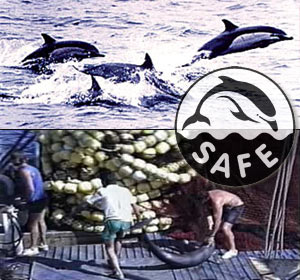
Indonesian authorities assure that dolphin deaths resulting from tuna fishing are accidental. (Photo:Samuel La Budde/Earthviews/earthisland.org
Tuna industry denies using dolphins as bait
 (INDONESIA, 5/19/2011)
Indonesia’s tuna exporters could face inconveniences as a result of two green groups’ recent footage claiming that the industry longline vessels use dolphin meat as bait, local authorities said.
US-based organisation Friend of the Sea (FoS) and the Earth Island Institute, which issue release “Dolphin Safe” labels for tuna products, posted a video and photographs online showing an interview with a local fisherman in Flores, who detailed how dolphins are captured using home-made bombs. He said the dolphins were then killed and used as bait to fish sharks for their fins, which fetch high prices.
The groups also posted pictures of whales, classified as protected species, being butchered by local fishers, reports The Jakarta Globe.
FoS and the institute warned that US importers would cease buying Indonesian tuna products if they were not deemed “Dolphin Safe.”
"[Groups] have alleged that our longline vessels intentionally capture dolphins and use the meat for bait. But the pictures they used as evidence are of sharks, not dolphins," Maritime Affairs and Fishery Ministry Fishery Resources Director Agus Apun Budhiman rebutted, reports The Jakarta Post.
"We have held a meeting with related associations and they said no such thing happens. Anyone who understands how to fish for tuna knows there is no way dolphins are captured to be used as bait for tuna," he continued.
Any dolphin or whale deaths resulting from tuna fishing would have been accidental, he assured.
Still, authorities worry that the accusations could cause disruptions for Indonesia's tuna markets in the European Union (EU) and other countries, where the industry enjoys more plentiful business. After Japan and South Korea, Europe has been one of Indonesia’s top buyers for tuna products.
"The NGOs [that made the allegations] are US-based, but they can put strong pressure on Europe," Agus explained. "We don't want these allegations to disrupt our tuna sales ... If they continue to attack, we'll take this case to the annual tuna meetings."
Agus believes the commissions in question -- the Western and Central Pacific Fishery Commission (WCPFC), the Indian Ocean Tuna Commission (IOTC) and the Commission for the Conservation of Southern Bluefin Tuna (CCSBT) -- which hold annual meetings, would support Indonesia thanks to its important position in the global tuna production.
In recent years, Indonesia’s tuna exports and production both have escalated. The country produced 490,942 tonnes of tuna in 2008; 541,303 tonnes in 2009 and 577,430 tonnes last year.
By Natalia Real
[email protected]
www.seafood.media
Information of the company:
|
Address:
|
Buenos Aires, 45
|
|
City:
|
Milan
|
|
State/ZIP:
|
(20124)
|
|
Country:
|
Italy
|
|
Phone:
|
+39 2 5821 5791
|
|
Fax:
|
+39 2 5821 5400
|
|
E-Mail:
|
[email protected]
|
|
Skype:
|
https://www.instagram.com/friendofthesea_offi
|
More about: 
|
|
|
|








 Print
Print