|

Photo: Stockfile/FIS
Global Frozen Shrimp Market Poised for Massive Expansion, Targeting USD 32.8 Billion by 2035
 (WORLDWIDE, 11/24/2025)
Driven by rising demand for convenient protein and advanced freezing technologies, the sector is set to see a 75% total increase in value over the next decade.
The global frozen shrimp market is entering a decisive decade of growth, fueled by shifting consumer lifestyles and rapid advancements in aquaculture technology. According to data reported by the Vietnam Association of Seafood Exporters and Producers (VASEP) based on a Synthesis report, the market is forecast to surge from approximately USD 18,742.6 million in 2025 to USD 32,847.3 million in 2035.
This trajectory represents a robust Compound Annual Growth Rate (CAGR) of roughly 5.8% over the next ten years. In terms of absolute market expansion, the industry is expected to grow by approximately 75.3% by the end of the forecast period, cementing shrimp as a cornerstone of the global seafood trade.
.png)
Click on the image to enlarge it
Market Indicators and Key Segments
The data reveals a clear preference for convenience and modern retail accessibility as the primary engines of this growth.
- Market Value Forecast: Rising from ~18,742.6 million USD (2025) to ~32,847.3 million USD (2035).
- Leading Product Type: Peeled & Deveined shrimp is the dominant category, projected to account for 46.3% of the market in 2025. This highlights a consumer shift away from whole, shell-on products toward "ready-to-cook" formats.
- Primary Application: Retail Distribution will command the lion's share, representing 58.7% of the market.
- Top Distribution Channel: Supermarkets and Hypermarkets remain the critical point of sale, holding a 41.9% market share.
Drivers of Growth: Convenience and Technology
 The expansion is supported by a "perfect storm" of demand-side and supply-side factors. Primarily, there is a growing global appetite for convenient protein sources. As urbanization increases in developed markets like North America and Europe, consumers are seeking high-protein, low-fat options that fit into fast-paced lifestyles. This has boosted the popularity of meal kits and pre-prepared frozen seafood. The expansion is supported by a "perfect storm" of demand-side and supply-side factors. Primarily, there is a growing global appetite for convenient protein sources. As urbanization increases in developed markets like North America and Europe, consumers are seeking high-protein, low-fat options that fit into fast-paced lifestyles. This has boosted the popularity of meal kits and pre-prepared frozen seafood.
On the supply side, Individual Quick Freezing (IQF) technology has revolutionized the sector. Unlike traditional block freezing, IQF allows consumers to defrost only what they need, reducing waste and preserving the texture and nutritional integrity of the shrimp. This technology is critical for the food service industry, where restaurants and catering services rely on frozen shrimp for its ease of preparation and consistent quality.
Regional Powerhouses and Major Players
Geographically, Asia-Pacific remains the undisputed center of the frozen shrimp universe, serving as both the primary production hub and a rapidly growing consumer market. Countries such as Vietnam, India, Ecuador, and Thailand are heavily investing in expanding farming capacity, particularly for the resilient Litopenaeus vannamei (whiteleg shrimp) species.
The market is consolidated among powerful industry giants who are increasingly vertically integrated—controlling everything from feed mills to processing plants. The leading companies by market share include:

Charoen Pokphand Foods (CPF) Group
These corporations are driving the shift toward "value-added" products, moving beyond basic raw shrimp to offer seasoned, breaded, and tempura options that offer higher profit margins.
The Sustainability and Traceability Challenge
Despite the optimistic financial outlook, the industry faces significant headwinds. Input costs are rising, with the price of seeds, feed, logistics, and cold chain energy consumption eating into margins.
Furthermore, the market is under intense scrutiny regarding environmental impact. International buyers are increasingly demanding strict compliance with certifications such as Best Aquaculture Practices (BAP) and the Aquaculture Stewardship Council (ASC). For smaller producers in Southeast Asia and Latin America, the cost of implementing the necessary traceability systems and meeting these food safety standards can be a high barrier to entry.
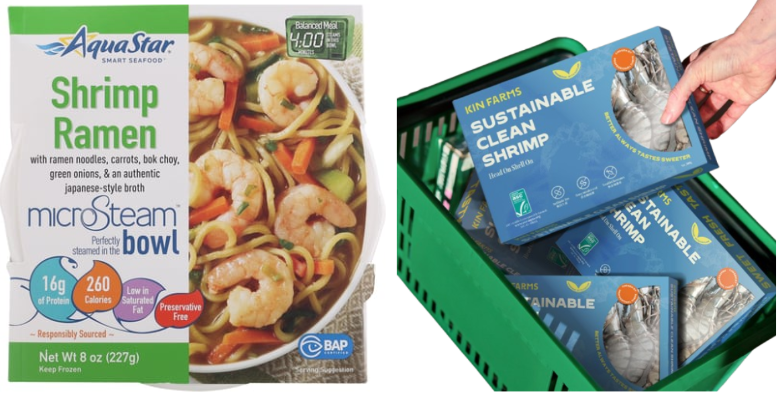
BAP and ASC Shrimp Products
Future Outlook
The global frozen shrimp market is evolving from a commodity trade into a highly sophisticated, technology-driven industry. To capitalize on the forecast 1.5x growth over the next decade, participants must navigate a complex landscape. Success will depend on balancing cost efficiency with the growing consumer demand for sustainability and total supply chain transparency.
Related news:

[email protected]
www.seafood.media
Information of the company:
|
Address:
|
Waterstraat 47
|
|
City:
|
Utrecht
|
|
State/ZIP:
|
(3511 BW)
|
|
Country:
|
Netherlands
|
|
Phone:
|
+31 30 2363 404
|
|
E-Mail:
|
[email protected]
|
More about: 
|
|
|
|






(1).png)


 Print
Print