|
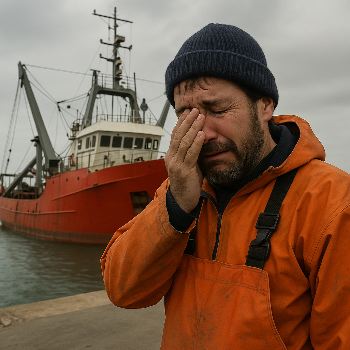
'Labour expenses alone account for 60% of a vessel's operating cost'. Photo: FIS
Argentina's Pink Gold Paradox: Fast Catches, Deep Losses – Why the Numbers Just Won't Stack Up for the Patagonian Shrimp
 (ARGENTINA, 5/29/2025)
Abundant Shrimp Resources Under Threat as Skyrocketing Costs and Farmed Competition Push Flagship Industry to Brink of Collapse.
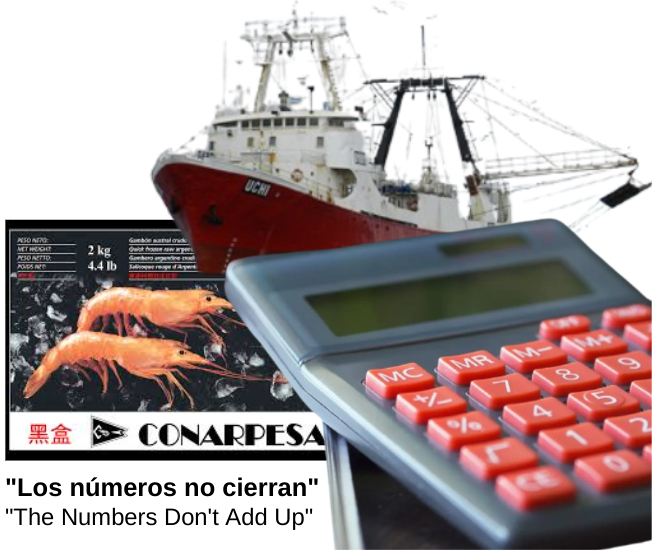
BUENOS AIRES – Argentina's highly prized wild shrimp industry, a global powerhouse for its "pink gold," is facing an existential crisis. Despite abundant resources and swift, prolific catches, the economics simply aren't adding up, pushing companies to the precipice. Fernando Álvarez Castellano, President of Continental Armadores de Pesca SA (Conarpesa), a leading player, has issued a stark warning: "The cost we have to produce a kilo of shrimp is no longer viable."
.png) Álvarez Castellano, speaking to AzM Radio, revealed that operations were already unprofitable last year. "We were losing money, and this year there was no reason to continue down the same path," he stated. "There are no more lies; we have nothing left to hold onto but to fish and sell, but they don't pay us the price we want, nor what the workers desire." Álvarez Castellano, speaking to AzM Radio, revealed that operations were already unprofitable last year. "We were losing money, and this year there was no reason to continue down the same path," he stated. "There are no more lies; we have nothing left to hold onto but to fish and sell, but they don't pay us the price we want, nor what the workers desire."
The Economic Squeeze: Labour, Fuel, and Farmed Vannamei
The core of the problem lies in crippling operational costs. Labour expenses alone account for 60% of a vessel's operating cost, exacerbated by soaring fuel, provisions, and packaging prices. This toxic mix translates directly into financial losses for operators.
Adding to the pressure is the aggressive rise of farmed Vannamei shrimp. Álvarez Castellano lamented, "More and more areas are cultivated with shrimp, and that has led to a progressive drop in the price of Argentine wild shrimp. In Europe, people no longer pay what they used to for a shrimp; they want to pay less, and they buy Vannamei."
When pressed on the possibility of continued operations, his response was unequivocal: "If we achieve a reasonable production cost, we will be able to keep fighting. Cultivated shrimp also have their costs, but we have very high salaries that were paid as long as possible. Today, many companies have their cold stores full because the market isn't paying what we need. It's not a whim: we want to be paid what it costs and leave a profit margin."
Wage Disputes and Intimidation Claims
The crisis has led to conflicts with the United Maritime Workers' Union (SOMU) over proposed wage adjustments. Álvarez Castellano clarified that the dispute isn't about base salaries but a necessary reduction in production bonuses. "That value, which was appropriate when shrimp was worth US$12 [per kilo], no longer makes sense today," he explained. "We don't say this out of malice or to make fortunes, but because reality demands it."
Disturbingly, he also reported threats against crew members willing to embark: "There are workers who confirm they will embark, but then they call me and say they are being pressured, that they fear for their families. There are already telephone threats to prevent the fleet from sailing."
Government Role and Industry Unity
Regarding the national government's role, Álvarez Castellano defended its stance. "I don't agree that the Nation isn't acting well. I can't stand in front of [Economy Minister] Caputo asking him to lower Income Tax for people who earn US$10,000. There's a very big difference between what a fishing operator earns and what any other Argentine worker earns."
Finally, he dismissed notions of coordinated pressure from business owners to halt activity. "We compete fiercely among companies – with Iberconsa, with Argenova, with everyone. But when we are united by dread, we also know how to sit down and exchange information. The reality is that the crisis affects us all."
The profound challenges facing Argentina's lucrative shrimp industry highlight the delicate balance between environmental abundance, market realities, and the pressing need for sustainable economic models in a highly competitive global seafood landscape.
[email protected]
www.seafood.media
Information of the company:
|
Address:
|
Florida 537, Piso 3º Of. 516 (1005)
|
|
City:
|
Buenos Aires
|
|
State/ZIP:
|
(1423)
|
|
Country:
|
Argentina
|
|
Phone:
|
+54 11 4803 0394
|
|
Fax:
|
+54 11 4803 2441
|
|
E-Mail:
|
[email protected]
|
More about: 
|
Approval / Accreditation / Certified / Oversight by...


|






 Print
Print