|

Image: Portland Press Herald / FIS
Ireland is testing an aquaculture system that grows 10 species at once
 (REPUBLIC OF IRELAND, 11/6/2023)
The following is an excerpt from an article published by Portland Press Herald:
The Irish seafood industry is exploring many possible ways to develop finfish, shellfish and seaweed aquaculture as a productive, environmentally sound and cost-effective way to sate Europe’s longstanding appetite for seafood.
Source: The Marine Institute
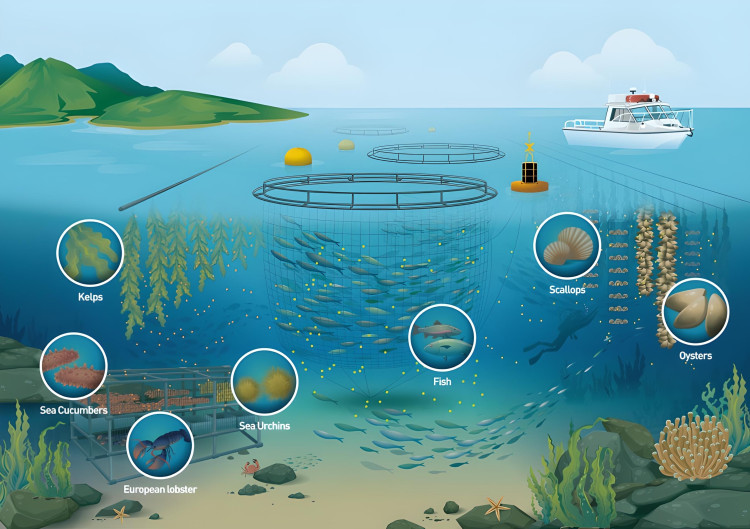
One avenue under exploration is what’s known as integrated multi-trophic aquaculture (IMTA). In this type of set up, multiple species that live in different parts of the water column (called trophic levels) are farmed together, as a potential way to reduce pollution caused by salmon farming. Scientists want to see if by farming many species together, they can improve efficiency, reduce waste, and provide ecosystem services like bio-remediation, which is when one species naturally cleans up the biological mess created by another species.
Source: The Marine Institute
In an IMTA system, plants, shellfish and invertebrates that grow on sunken long lines and suspended baskets consume food waste and feces from finfish (usually salmon) pens that sit just below the water’s surface. The fish farmers can then harvest and sell the salmon, and also the plants, shellfish and invertebrates.
 Source: The Marine Institute--> Source: The Marine Institute-->
There, Irish scientists are trying to farm a whopping 10 sea species on a single site. As the sun shone orangey and dipped behind the hills of the Iorras Aithneach peninsula, the view of the IMTA site was backlit. It resembled a watery three-ringed circus with poles and nets that reached skyward like a trapeze apparatus.
The research site is one of several in Europe and South America that contribute to an aquaculture data collection and implementation effort called the Astral Project. Operated by scientists at the Irish Marine Institute, Lehanagh Pool sits a quarter mile from the rocky shore in Bertraghboy Bay. This protected area of the Irish coast has an aquacultural history that dates back to the 1950s and includes commercially farmed salmon and experimental farmed cod.
Marine Institute scientist Pauline O’Donohoe manages the non-commercial, experimental site, which holds the first multi-species license issued in Ireland. The scientists feed the Atlantic salmon and some lumpfish that swim in the pens; the latter are being tested to see if they can help control sea lice, a common problem at commercial salmon farms.
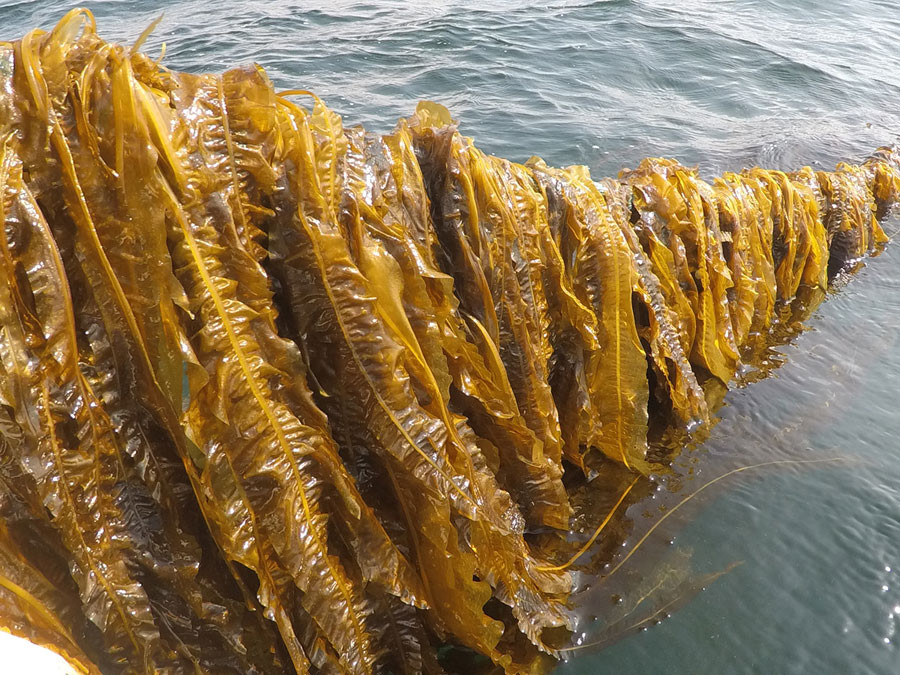
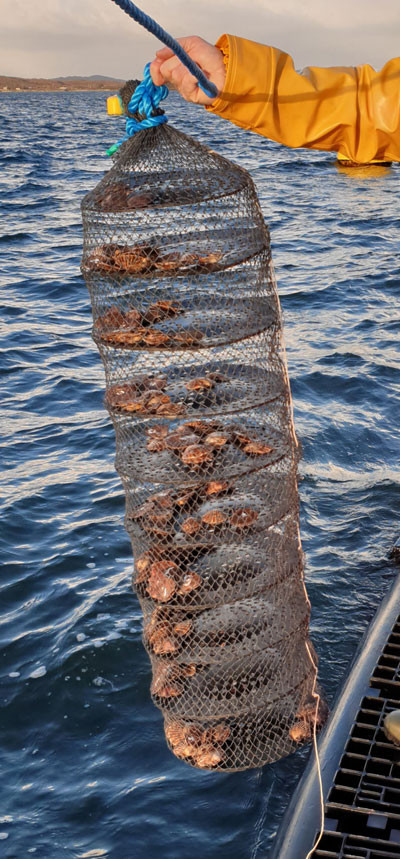
 The extractive species at Lehanagh Pool, which filter out particulate waste from the water as food, are large great (or king) scallops, smaller variegated scallops, and native Ostrea edulis oysters. Minerals and carbon already dissolved into the water are extracted by several types of seaweed. If this were a commercial operation, all these species could be sold to consumers. The extractive species at Lehanagh Pool, which filter out particulate waste from the water as food, are large great (or king) scallops, smaller variegated scallops, and native Ostrea edulis oysters. Minerals and carbon already dissolved into the water are extracted by several types of seaweed. If this were a commercial operation, all these species could be sold to consumers.
At the same time, benthic scavengers (or bottom feeders), in this case, sea cucumbers, remove particulates from the upper surface of the seafloor, such as uneaten food and waste from finfish. Again, were this a commercial IMTA, the sea cucumbers could be exported and sold to the Chinese market. [Continues...]
Author: Christine Burns Rudalevige | Portland Press Herald | Read the full article by clicking the link here
[email protected]
www.seafood.media
Information of the company:
|
Address:
|
Rinville,
|
|
City:
|
Oranmore - Órán Mór
|
|
State/ZIP:
|
Co.Galway
|
|
Country:
|
Republic of Ireland
|
|
Phone:
|
+353 91 387 200
|
|
Fax:
|
+353 91 387 201
|
|
E-Mail:
|
[email protected]
|
More about: 
|
|
|
|






 Print
Print