|
Image: Marine Research Institute / FIS
New rules on PFAS: This is what we know about the substances in seafood
 (NORWAY, 3/14/2023)
The synthetic substances have been used in various products for more than 50 years. The EU and Norway are now introducing strict limit values for PFAS in both food and the environment.
Source: Southeast Alaska Conservation Council
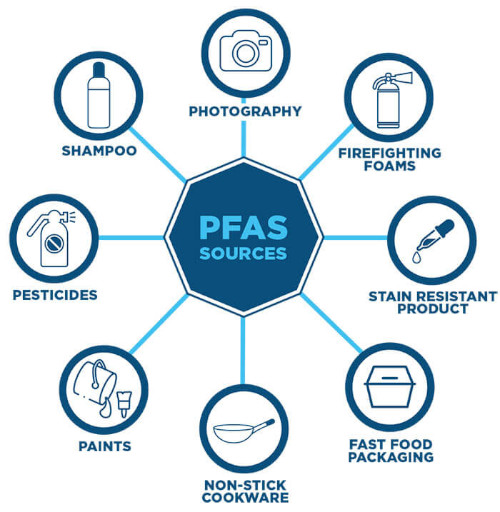
PFAS are a large group of man-made synthetic substances that have been used in a wide variety of products for more than 50 years. Per- and polyfluorinated alkyl substances, as they are called by professionals, are produced in many places in the world, but not in Norway. Today there are more than 10,000 known PFAS compounds, but until recently only two of these have been strictly regulated in the EU and Norway.
 "The problem with these substances is that they are permanent. They can therefore accumulate in the environment, where animals live and food is produced. Thus, they can eventually come back to us humans through the food we eat, and they can have toxic effects", says HI researcher Stig Valdersnes. "The problem with these substances is that they are permanent. They can therefore accumulate in the environment, where animals live and food is produced. Thus, they can eventually come back to us humans through the food we eat, and they can have toxic effects", says HI researcher Stig Valdersnes.
HI is the reference laboratory
Norway and several other countries want to ban all PFASs, and in addition the EU and Norway will introduce limit values for PFASs in food in 2023. This means that for the first time there have been rules on how much of these substances can be in food to be sold and traded.
Source: Institute of Marine Research
"The Institute of Marine Research is Norway's national reference laboratory for PFAS in seafood, and we also investigate PFAS in the environment. This means that we collect data on the occurrence of PFAS in both the environment and seafood, in order to be able to give the best possible advice to authorities, administration and society", says Valdersnes.
The fact that HI is a national reference laboratory means that the institute represents the highest national competence in this area.
Important method development
In addition to monitoring the seafood, an important part of the job of Valdersnes and his research colleagues is to constantly develop and improve the analysis methods used.
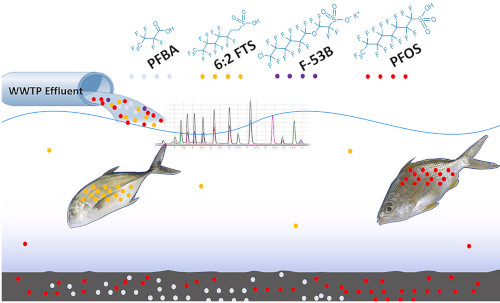
Source: Science
"Method development is a continuous process. And since all PFAS are now proposed to be banned, analytical methods are needed that can investigate the occurrence of the thousands of known and unknown PFAS that exist", says Valdersnes.
"Increasing requirements to find lower levels than before, in addition to several new technical requirements for the analysis methods, make it necessary to think anew when it comes to future analysis methodology", he adds.
In short: The fact that there are low limit values requires more sensitive analysis methods. Or put in a simplified way: When looking for even smaller pieces than before, you need a stronger glass in the microscope.
"And we are well underway with that method development at HI", says Valdersnes.
 Miljostatus(1).jpg)
PFOS and PFOSA in cod liver from Indre Oslofjord. Source : Norwegian Institute for Water Research (NIVA) | Miljostatus
Various PFAS:
- PFOS accumulates very easily in organisms and in food chains. The substance is also toxic, with long-term effects, to aquatic life.
- PFHxS accumulates very easily in organisms and in food chains.
- PFBS is highly mobile in water and is not removed by water treatment plants. Studies also indicate that the substance can alter reproduction and the hormonal system of fish.
- PFOA accumulates very easily in organisms and in food chains.
- PFCAs C9-C14 accumulate in organisms and food chains.
- PFHxA is highly mobile in water and is not removed by treatment plants. The substance can be enriched in plants.
- HFPO-DA is used as a substitute for PFOA in the production of fluoropolymers. It does not decompose in nature and is highly mobile in water. Studies have shown that the substance can cause severe and irreversible effects in rats.
Has monitored PFAS since 2007
 However, PFAS is not a new substance at HI's laboratories. However, PFAS is not a new substance at HI's laboratories.
"We have been monitoring PFAS in seafood since 2007, and therefore have a large amount of data that has been published in reports, scientific articles and in our Seafood Data portal", says head of research Monica Sanden.
In the monitoring in recent years, the HI researchers most often see that PFAS is below a measurable level in the vast majority of samples.
"Most measurable concentrations apply to a substance we call PFOS. And in recent years, almost no samples have had measurable concentrations of the other three substances, PFOA, PFNA and PFHxS, which are covered by the new limit values", says Sanden.
Two new PFAS projects
The Norwegian Institute of Marine Research has just been granted two new research projects from the Research Council of Norway which will look at PFASs in marine ecosystems and in seafood.
"It is important to have knowledge about this substance group going forward in order to be able to see changes over time", says Sanden.
Source: Institute of Marine Research
.jpg)
[email protected]
www.seafood.media
Information of the company:
|
Address:
|
Nordnesgaten 50, P.O. Box 1870 Nordnes
|
|
City:
|
Bergen
|
|
State/ZIP:
|
(N-5817 )
|
|
Country:
|
Norway
|
|
Phone:
|
+47 55 23 85 00
|
|
Fax:
|
+47 55 23 85 31
|
|
E-Mail:
|
[email protected]
|
More about: 
|
|
|
|







 Print
Print