|
Source: Far Eastern Federal University (FEFU)
Russian scientists have invented smart food packaging
 (RUSSIAN FEDERATION, 12/20/2022)
Russia has found a way to save the planet from plastic pollution.
Source: Big Asia / irecomend.ru
Scientists have created "smart" packaging for all kinds of products. It contains only environmentally friendly components and is therefore safe for both the environment and the consumer himself. An Izvestia correspondent saw a know-how capable of solving a global problem.
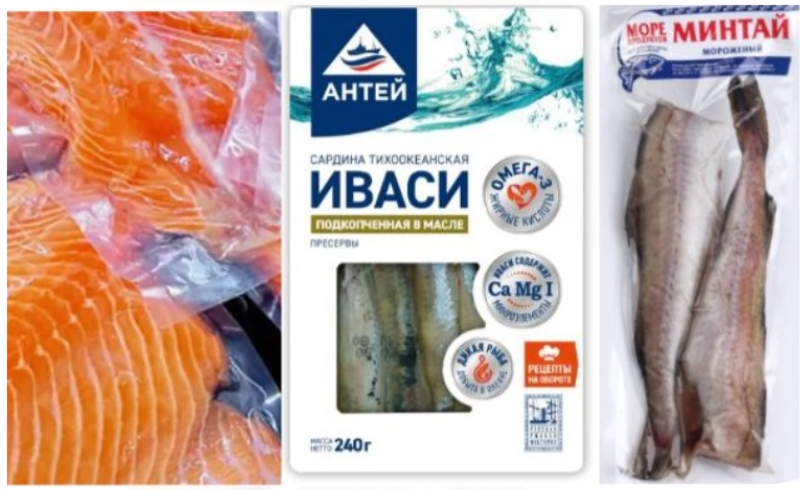
You can pack meat, fish, poultry, prepared foods and bread. This clever packaging not only protects products but also displays expiration dates for consumers.
When meat goes bad, certain biological reactions occur and its PH level changes.
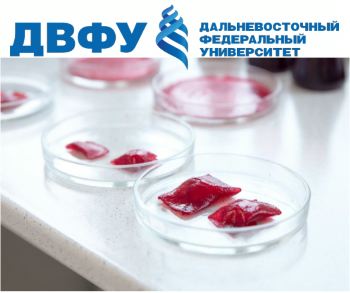
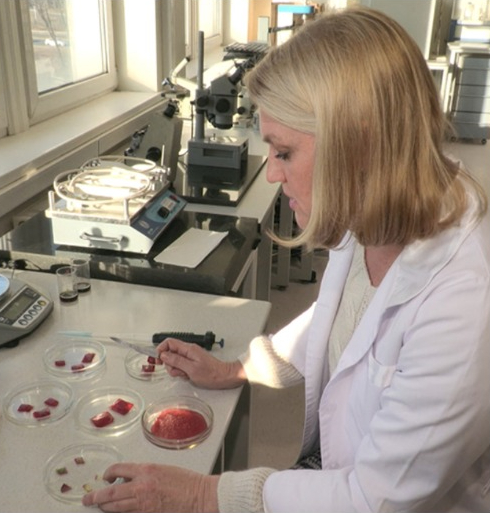
 The miraculous film reacts to acidity and changes color. However, there are no nanotechnologies. A small laboratory, more like a kitchen: among the test tubes, flasks and microscopes, there is a common stove. Anya Panchenko, a student, mixes something, boils it and pours it into molds. The miraculous film reacts to acidity and changes color. However, there are no nanotechnologies. A small laboratory, more like a kitchen: among the test tubes, flasks and microscopes, there is a common stove. Anya Panchenko, a student, mixes something, boils it and pours it into molds.
“There are two types of smart packaging: smart and active packaging. If we take an active one, it helps to preserve and prolong the useful life of the products. If we take an intellectual one, then it is designed so that depending on the color change, we can control its quality. depending on the spoilage, the packaging changes color and we can see everything,” says Natalya Chesnokova, associate professor at the Department of Food Science and Technology at the Far Eastern Federal University.
<---Source: TVC / FEFU
“This film is not only smart, environmentally friendly, but also safe to eat. The taste, of course, is specific, somewhat reminiscent of beetroot puree, only without sugar and salt. In addition, edible packaging makes the final product wrapped in it healthier. In general, it is an extract of vegetables, berries and algae”, says our correspondent.
Here is this packet of tubers, and this one is on agar agar. Prepared in a day according to the principle of gelatin. It is usable for 96 hours and is completely capable of solving the problem of contamination on the planet with food plastic.
Since the 1950s, some 6.5 billion tons of plastic have been produced worldwide. Of these, around 9% were recycled and 12% burned. The world leaders in plastic pollution of the planet are Coca-Cola, PepsiCo and Nestlé, that is, food manufacturers.
Source: Rent TV
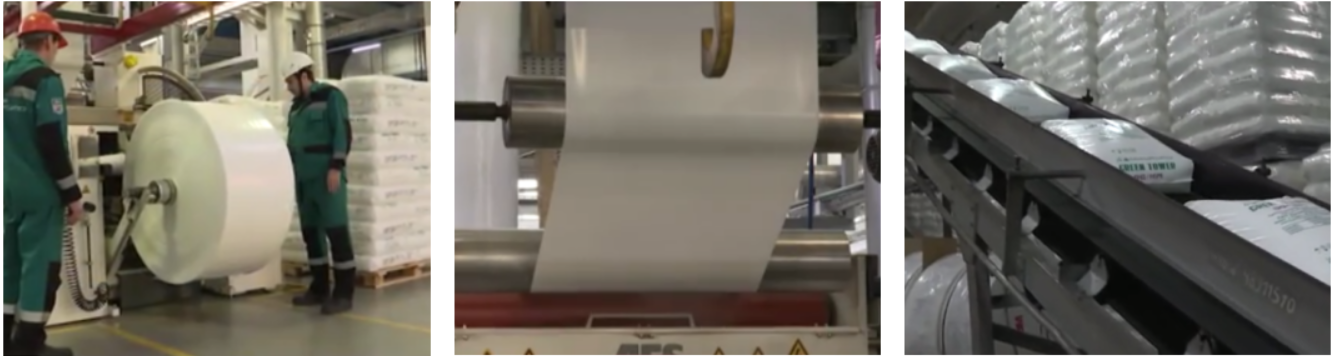
Giant islands of garbage form in the world's oceans, which can take hundreds if not thousands of years to decompose. And the production of plastic itself is not an ecological process.
“Production uses a large amount of non-renewable raw materials: oil, gas and coal. On the other hand, not all types of plastic can be disposed of in a normal, environmentally efficient way, some will still end up in the trash. Third, many types of plastic are not capable of degrading in the environment,” says Anna Pelekh, Senior Lecturer in the UNESCO Department of FEFU International.
Plastic microparticles end up in food and have been shown to cause cancer. However, every year the production of cellophane only grows.
Source: Ren TV

“The volume of production of polymer containers is gigantic, and there are no other sources from which it is possible to manufacture containers of such a volume,” says Artur Aklimzyanov, a leading process engineer for low-pressure polymer production.
There are many raw materials for smart packaging from the Far East. And even the cost of cellophane and miracle film are proportional.
World scientific journals have already taken an interest in the developments. However, the ecology of the planet now depends on whether there will be investors ready to launch mass production.
Source: foodnewsweek.ru
[email protected]
www.seafood.media
|





 Print
Print