IN BRIEF - Salmon Evolution ASA: Q4 2024 operational update
NORWAY
Thursday, January 09, 2025
Salmon Evolution (OSE: SALME) harvested 1,729 tonnes HOG in Q4, including 105 tonnes LW post smolt, taking full year harvest volume to 4,891 tonnes HOG including post smolt.
The quarter showed strong feeding and biomass gain, especially in the second half of November and December.
Q4 operational summary:
All-in price realization on harvested fish of NOK ~82/kg.
Successful post smolt delivery.
Total harvest of 1,729 tonnes HOG, including 105 tonnes LW post smolt.
Average harvest weight of ~3.8 kg (HOG), up 15% from last quarter, with continued excellent product quality and a superior grade share of 95%.
Biomass production of 1,518 tonnes LW, second highest on record and up 11% Q/Q.
Standing biomass of 2,023 tonnes LW end Q4.
"Salmon Evolution achieved significant milestones in 2024 with solid growth in harvest volumes and strong operational progress through the year”, CEO of Salmon Evolution, Trond Håkon Schaug-Pettersen said.“We are especially proud of our excellent biological results, introducing a new standard of salmon farming and giving us a great momentum going into 2025”, he said.
New transparency standard will open fisheries data to public scrutiny
Fiji became the first Pacific Island nation to commit to the FiTI Standard. Minister Alitia Bainivalu signed an MoU with FiTI to improve access to verified data on vessels, permits, catches and revenues, strengthening fisheries management and the fight against IUU fishing.
Peltola and Sullivan pledge tougher action to protect salmon
At a Kodiak fisheries debate, Mary Peltola targeted factory trawlers, while Sen. Dan Sullivan highlighted his Bycatch Reduction Act, due for a committee vote. Both backed changes to federal fisheries management amid concern over declining Western Alaska salmon runs.
Minister Ribanataake Tiwau visits Rarotonga to examine regulatory, scientific and environmental frameworks for ocean resources.
Kiribati Fisheries Minister Ribanataake Tiwau led a delegation to the Cook Islands to study its seabed minerals governance. Talks covered regulation, institutions, scientific research and environmental protection, while exploring future knowledge sharing, capacity-building and Pacific cooperation on ocean-resource management
U.S. demand and rapid growth in Southeast Asia boost Japan’s processed fish-paste trade
Japan exported 6,186 tonnes of processed fish-paste products in January–July 2026, up 9% year-on-year, according to Japan’s Ministry of Finance data reported by Minato Shimbun. The U.S., the largest market, increased purchases by about 10%, while exports to Thailand quadrupled and shipments to Vietnam rose 2.2-fold. Sales also increased to Taiwan, Singapore and Norway. The figures cover processed products such as kamaboko, not frozen surimi blocks used as raw material.
Representatives from Chile, Ecuador, and Peru have come to an initial agreement regarding management of the region’s giant squid (Dosidicus gigas) fishery.
Peru Deputy Minister of Fisheries and Aquaculture Jesús Barrientos, Chile Undersecretary of Fisheries Oswaldo Urrutia, and Ecuador Deputy Minister of Aquaculture and Fisheries Hugo Vera recently met in Lima, Peru – along with scientists, representatives of artisanal and industrial fisheries, and NGO representatives – to attend the “Sustainability of Giant Squid in the Southeast Pacific” regional workshop organized by the United Nations’ Permanent Commission of the South Pacific (CPPS) and the Committee for the Sustainable Management of Giant Squid of the South Pacific (CALAMASUR).
Author: Christian Molinari / SeafoodSource | Read the full article here
Cross-party MPs are calling for fishing to be treated as critical infrastructure, citing food security, jobs and coastal resilience
UK fishing is being urged to move from the margins of government policy to the heart of Britain’s food-security strategy, with the sector calling for a coherent long-term plan to protect fleets, jobs and coastal communities.
The All-Party Parliamentary Group (APPG) on Fisheries’ Action Plan for a Thriving and Sustainable UK Fishing Industry sets out 38 recommendations, arguing that domestic catching, processing and seafood trade form a strategically important part of the nation’s critical infrastructure.
The volume of fishmeal produced globally during the first seven months of this year was 49% behind the same period in 2025, while fish oil output was down 30%, marine ingredients organisation IFFO said today.
Smaller forage fish volumes in Peru and Chile remained the biggest cause of the shortfall, with softer catches in the African countries and Northern Europe compounding the global decline.
Source: fishfarmingexpert | Read the full article here
The President of the Russian Federation, Vladimir Putin, received the General Secretary of the Central Committee of the Communist Party of Vietnam and President of the Socialist Republic of Vietnam, To Lam, at the Kremlin as part of a state visit.
The development of sector-specific collaboration was ratified through a Joint Statement, highlighting the relevance of fisheries and aquaculture in bilateral commercial exchange. Authorities agreed to boost mutual supplies, promote the presence of products in both markets, and encourage the establishment of specialized joint ventures.
Putin emphasized that bilateral trade nearly doubled during the first half of 2026. For his part, To Lam identified the seafood sector as a priority area for the expansion of Vietnamese investments in Russian territory.
Institutional and business dialogue will deepen from September 16 to 18 in St. Petersburg during the IX International Fishery Forum and Seafood Expo Russia, an event that will feature an official delegation from Vietnam.
Production reaches 234,525 tonnes as the country targets a regional aquaculture hub role
Tanzania boosted aquaculture production from 44,735 tonnes in 2020/21 to 234,525 tonnes in 2025/26, worth about US$170 million. With 3,343 cages, 67 hatcheries and 212.8 million fingerlings, the sector is scaling rapidly ahead of WA26T/AFRAQ26, set for December 1–4 in Dar es Salaam.
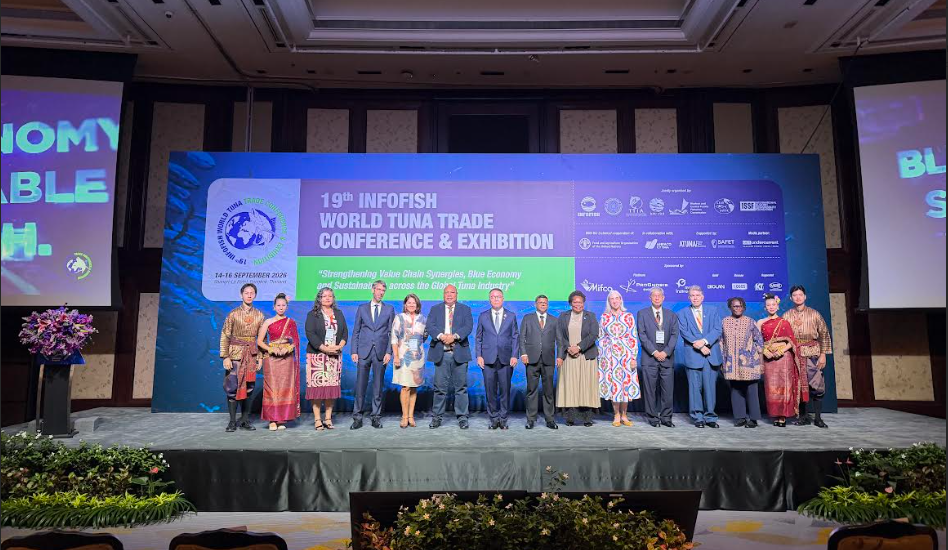
Roberto Alonso will defend fair competition, traceability and balanced market access at the global tuna forum in Bangkok
ANFACO-CYTMA participates in TUNA 2026, held September 14–16 in Bangkok, alongside more than 30 Spanish companies. Secretary General Roberto Alonso will address EU rules of origin, IUU compliance, the mandatory CATCH system and the ongoing EU–Thailand FTA, calling for fair competition, effective controls and responsible sourcing across global tuna supply chains.





 NORWAY
.png) The quarter showed strong feeding and biomass gain, especially in the second half of November and December.
The quarter showed strong feeding and biomass gain, especially in the second half of November and December. FIJI
FIJI.png)
 UNITED STATES
 COOK ISLANDS
.png)
 JAPAN
JAPAN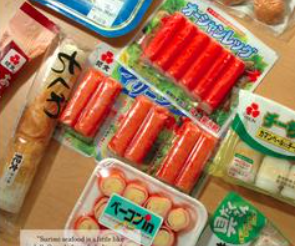
 PERU
PERU Representatives from Chile, Ecuador, and Peru have come to an initial agreement regarding management of the region’s giant squid (Dosidicus gigas) fishery.
 UNITED KINGDOM
 Cross-party MPs are calling for fishing to be treated as critical infrastructure, citing food security, jobs and coastal resilience
 WORLDWIDE
.png) The volume of fishmeal produced globally during the first seven months of this year was 49% behind the same period in 2025, while fish oil output was down 30%, marine ingredients organisation
The volume of fishmeal produced globally during the first seven months of this year was 49% behind the same period in 2025, while fish oil output was down 30%, marine ingredients organisation RUSSIAN FEDERATION
.png) The development of sector-specific collaboration was ratified through a Joint Statement, highlighting the relevance of fisheries and aquaculture in bilateral commercial exchange. Authorities agreed to boost mutual supplies, promote the presence of products in both markets, and encourage the establishment of specialized joint ventures.
The development of sector-specific collaboration was ratified through a Joint Statement, highlighting the relevance of fisheries and aquaculture in bilateral commercial exchange. Authorities agreed to boost mutual supplies, promote the presence of products in both markets, and encourage the establishment of specialized joint ventures. TANZANIA
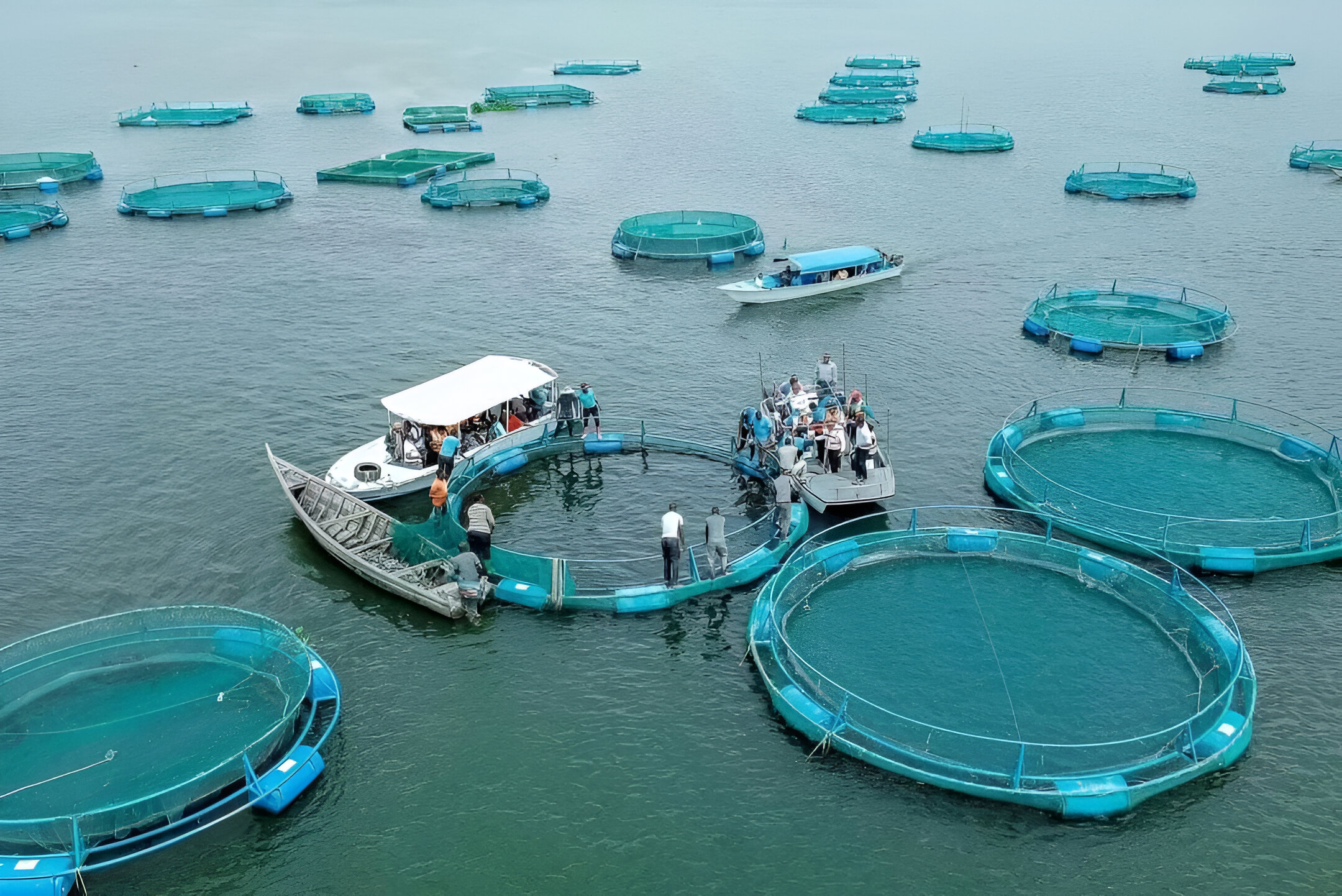 Production reaches 234,525 tonnes as the country targets a regional aquaculture hub role
 THAILAND