|

initial catches exceed those from the same period last year, yet prices continue to reflect strong concerns over raw material scarcity.
Fall Salmon Season Opens with Higher Landings, but Prices 20% to 30% Above Last Year
 JAPAN
Friday, September 11, 2026, 03:20 (GMT + 9)
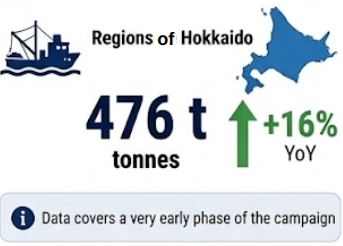
Cumulative landings of Hokkaido fall salmon reached 476 tonnes through September 8, up 16% from a year earlier. However, prices for both males and females started the campaign 20% to 30% higher, while official forecasts anticipate another season of exceptionally low availability.
HOKKAIDO — The 2026 Japanese fall salmon (Oncorhynchus keta) season has opened with an apparent contradiction: initial catches exceed those from the same period last year, yet prices continue to reflect strong concerns over raw material scarcity.
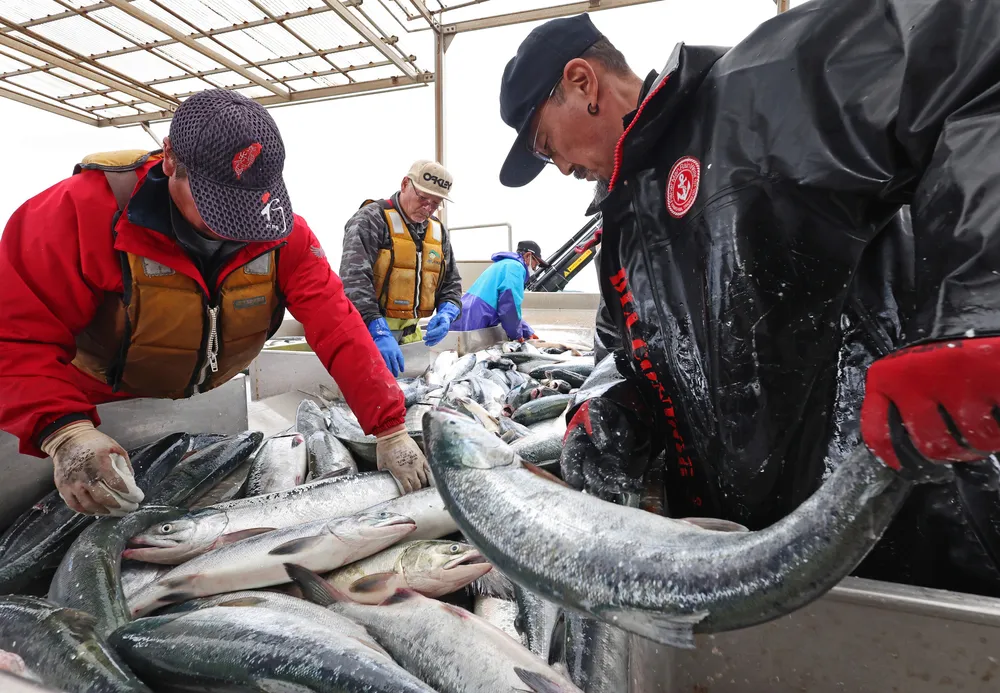
Photo: Stockfile / FIS
Through September 8, cumulative landings in Hokkaido reached approximately 476 tonnes, a 16% year-on-year increase, according to data published by Minato Shimbun. This figure still corresponds to a very early phase of the campaign, as only part of the fishing grounds were operational, with the opening expanding progressively across all of Hokkaido during the second week of the month.
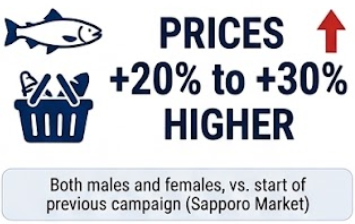
 Despite the initial volume increase, the market started with firm quotations. References for fresh fish, both males and females, stood 20% to 30% above the start of the previous campaign, according to Sapporo market operators consulted by the Japanese outlet.
A 16% Increase Does Not Yet Mean Recovery
The initial increase must be interpreted with caution. The scientific forecast for 2026 is considerably more negative than last year's.
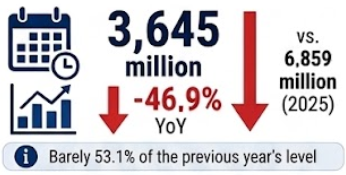
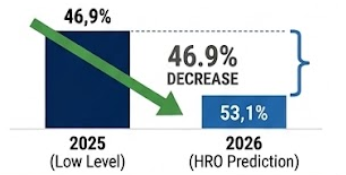
 The Hokkaido Research Organization (HRO) estimates that approximately 3.645 million salmon will return to the island this fall, compared to 6.859 million recorded in 2025. If the forecast holds, returns would decline 46.9% year-on-year and equal just 53.1% of last season's already reduced level.
The starting point is particularly delicate because 2025 had already marked the lowest level recorded since the beginning of the Heisei era in 1989. That year's return fell to 6.86 million fish, 39% of the previous year's total, falling far short of scientific model predictions.
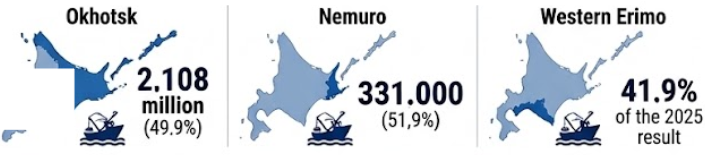
 The 2026 outlook is particularly weak in key producing regions. HRO expects around 2.108 million fish in Okhotsk, just 49.9% of last year's level, and 331,000 in Nemuro, or 51.9%. In Western Erimo, the projection drops to 41.9% of the 2025 outcome.
Pressure on Fresh Fish and Ikura
 The forecasted scarcity has implications reaching far beyond the whole fish market. Hokkaido fall salmon simultaneously supplies fresh consumption, fillet production, salted and frozen items, and a major ikura and sujiko processing industry made from female roe.
Consequently, elevated fish prices at the start of the season can quickly translate into higher costs across several product chains.
The market also enters the new season with a complex roe inventory situation. Prior to the start of fishing, Minato Shimbun estimated around 800 tonnes of carryover ikura stocks from the previous season. Production in 2025 was exceptionally low, but high prices weakened sales, leaving significant inventory ahead of the new harvest.
This creates an unusual market dynamic: a risk of new raw material shortages exists while processed inventory from the previous year still needs to find commercial outlets.
Market Awaits Full Hokkaido
Opening Developments during the second half of September will be decisive in determining whether the strong start in landings reflects a genuine departure from forecasts or merely an early-season anomaly.
Industry participants will closely monitor entry rates in Okhotsk and Nemuro—two critical areas for total volume—alongside male-to-female ratios, average weight, and the supply of fish suitable for roe processing.
Photo: Stockfile / FIS
The scientific forecast itself carries an element of uncertainty. HRO notes that recent shifts in salmon maturation age have reduced the accuracy of traditional predictive models, prompting adjustments to the data used in their projections.
For processors, wholesalers, and retailers, the 476 tonnes and initial 16% growth offer a positive signal, but one that remains insufficient to declare a recovery.
Photo: Stockfile / FIS
The dominant figure governing the market remains unchanged: Japan faces a season in which scientific projections expect barely more than half the salmon returns seen in 2025.
Until that uncertainty is resolved through several weeks of landings, prices 20% to 30% higher demonstrate that buyers and sellers continue to value Hokkaido fall salmon as a scarce commodity.
🇯🇵 日本語 (Japanese Version) | AIによる自動翻訳
秋鮭漁が開幕、水揚げ増も価格は20〜30%高でスタート
9月8日までの北海道産秋鮭(Oncorhynchus keta)の累計水揚げ量は476トンに達し、前年同期比16%増となった。しかし、オスメスともに相場は前年同期を20〜30%上回る高値で推移しており、公的予測では今期も記録的な不漁が続くと見込まれている。
北海道 — 2026年の日本産秋鮭漁は一見矛盾する形でスタートした。初期の水揚げ量は前年同期を上回っているものの、相場は原料不足に対する強い懸念を反映し続けている。
みなと新聞が公表したデータによると、9月8日時点の北海道における累計水揚げ量は約476トン(前年同期比16%増)となった。ただし、漁期の第2週にかけて北海道全域へ順次拡大していく段階であり、操業を開始しているのは一部の漁場に限られているため、依然として極めて初期の数値にとどまっている。
初期水揚げ量の増加にもかかわらず、市場は高値で取引を開始した。札幌市場関係者によると、鮮魚向けのオス・メスともに、指標価格は前年同期の開幕時を20〜30%上回る水準で推移している。
16%の増加は回復を意味しない 初期の増加傾向は慎重に受け止める必要がある。2026年の科学的予測は、前年よりも大幅に厳しい内容となっているためだ。
北海道立総合研究機構(HRO)の予測によると、今秋北海道に来游する秋鮭の総数は約364万5,000尾と見込まれ、2025年の685万9,000尾から減少する見通しである。予測通りになれば、来游数は前年比46.9%減となり、すでに記録的不漁であった昨季の53.1%の水準にとどまることになる。
2025年の来游数が1989年(平成1年)の統計開始以来、過去最低の686万尾(前年比39%)まで落ち込み、科学的予測を大幅に下回っていたことから、比較の起点自体が非常に深刻な状況にある。
2026年の予測は、主要産地において特に厳しい。HROは、オホーツク地域で前年比49.9%となる約210万8,000尾、根室地域で同51.9%となる33万1,000尾と予測している。えりも以西地域では、2025年実績の41.9%まで減少する見通しである。
鮮魚およびいくらへの影響 不漁の予測は、丸魚市場にとどまらない影響を及ぼしている。北海道産の秋鮭は、生鮮消費、切身加工、塩蔵・冷凍品向けだけでなく、筋子やいくらといった卵加工品産業の重要原料でもあるためだ。
そのため、漁期初期における原料高は、複数の製品チェーン全体のコストへ迅速に波及する可能性がある。
また、今漁期は卵製品の在庫状況が複雑な中で開幕を迎えた。みなと新聞の試算によると、漁期開始前における前年産のいくら在庫は約800トンに達していた。2025年産の生産量は極めて少なかったものの、高値による販売停滞が影響し、新漁期を前に一定の在庫が残留することとなった。
これにより、新物の原料不足リスクが存在する一方で、前年産の加工在庫の消化も進めなければならないという、異例の市場環境が生じている。
全域での本格操業を待つ市場 水揚げ初期の好調が予測の反転を意味するのか、あるいは単なる一時的な現象に過ぎないのかは、9月後半の推移が決定づけることになる。
業界関係者は、全体の水揚げ量を左右するオホーツクおよび根室地域での漁獲ペースをはじめ、オスメスの比率、平均魚体サイズ、卵加工に適した原料の確保状況を慎重に見極める必要がある。
科学的予測自体にも不確実要素が含まれている。HROは、近年の秋鮭の成熟年齢の変化により従来の予測モデルの精度が低下したことを認め、使用するデータの見直しを行っている。
加工業者、卸売業者、小売業者にとって、476トンという数値と初期の16%の増加は明るい兆しではあるものの、回復と判断するには時期尚早である。
市場を支配する主たる要因に変わりはない。日本は、科学的予測において2025年の来游数のわずか半数程度しか期待できない漁期に直面している。
今後数週間の水揚げによって不透明感が解消されるまでは、前年比20〜30%高という価格水準が示す通り、買い手・売り手ともに北海道産秋鮭を希少な原料として評価し続けることとなる。
🇨🇳 中文 (Simplified Chinese Version) | 由人工智能自动翻译
秋鲑季开捕产额有所增加,但价格同比上涨20%至30%
截至9月8日,北海道秋鲑(Oncorhynchus keta)累计捕捞量达到476吨,同比增长16%。然而,公鱼和母鱼的开盘价格均比上一产季高出20%至30%,而官方预测显示,本产季资源量仍将处于极低水平。
北海道 — 2026年日本秋鲑产季在显而易见的矛盾中拉开帷幕:尽管初期捕捞量高于去年同期,但市场价格依然反映出对原料短缺的强烈担忧。
根据《水产经济新闻》(Minato Shimbun)发布的数据,截至9月8日,北海道累计捕捞量约为476吨,同比增长16%。由于只有部分渔场投入作业,且捕捞活动将在该月第二周逐步扩大至北海道全境,因此这一数字仍处于产季的极早期阶段。
尽管初期捕捞量有所增长,但市场开盘价依然坚挺。据札幌市场交易商透露,鲜鱼(包括公鱼和母鱼)的指标价格比上一产季开捕时高出20%至30%。
16%的增长并不意味着资源复苏 初期的增长必须谨慎看待。2026年的科学预测比去年更为悲观。
北海道立综合研究机构(HRO)预计,今年秋季返回北海道的秋鲑数量约为364.5万尾,而2025年记录的数量为685.9万尾。如果预测属实,洄游量将同比下降46.9%,仅相当于上一产季本已较低水平的53.1%。
对比基数本身已非常严峻,因为2025年已创下自1989年(平成1年)有记录以来的最低水平。该年的洄游量降至686万尾,仅为前一年水平的39%,且大幅低于科学模型的预测值。
2026年的预测在主要产区尤为低迷。HRO预计鄂霍次克海地区的洄游量约为210.8万尾,仅为去年的49.9%;根室地区预计为33.1万尾,占51.9%。在襟裳以西地区,预测值降至2025年实际结果的41.9%。
鲜鱼及鲑鱼籽承压 资源预计短缺的影响已超出了整鱼市场的范围。北海道秋鲑同时供应鲜食消费、鱼排加工、盐渍和冷冻产品,此外还是利用母鱼卵制成的鲑鱼籽(ikura)和带膜鲑鱼籽(sujiko)加工业的重要原料。
因此,产季初期较高的原料价格可能会迅速传导至多个产品链条的成本中。
此外,新产季在鲑鱼籽库存状况复杂的背景下开启。据《水产经济新闻》在开捕前估计,上一产季结转的鲑鱼籽库存约为800吨。虽然2025年的产量极低,但高昂的价格抑制了消费,导致在新产季开始前留存了相当数量的库存。
这引发了不同寻常的市场动态:在新原料面临短缺风险的同时,上一年度的部分加工成品仍需寻找市场出路。
市场等待北海道全面开捕 9月下半月的捕捞进展将是决定初期捕捞量增长是代表趋势逆转还是仅为开局异常的关键。
水产行业需密切关注鄂霍次克和根室这两个决定总量的核心产区的捕捞节奏,同时关注公母比例、平均鱼体规格以及适合鲑鱼籽加工的原料供应情况。
科学预测本身也存在不确定性。HRO承认,近年来鲑鱼成熟年龄的变化降低了传统预测模型的准确性,促使其对模型所使用的数据进行了调整。
因此,对于加工商、批发商和零售商而言,476吨的捕捞量和初期16%的增长是一个积极信号,但仍不足以表明行业已走向复苏。
主导市场的主因依然明确:日本正面临一个科学预测洄游量仅略高于2025年半数水平的产季。
在未来几周的卸货数据消除这一不确定性之前,价格同比上涨20%至30%表明,买卖双方继续将北海道秋鲑视为紧缺原料。
[email protected]
www.seafood.media
|





 Print