Smir Group Acquires Aquaculture Technology Firm Ambiente Aqua AS
NORWAY
Friday, September 20, 2024
Smir Group, a leader in aquaculture technology and services, has finalized an agreement to acquire Ambiente Aqua AS, a technology company based in Årland, Norway. As part of the acquisition, all rights to Ambiente Aqua's proprietary technologies will be transferred to Smir Group.
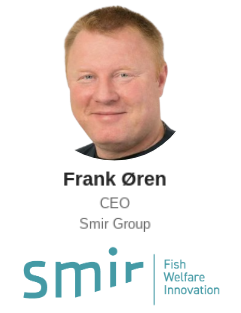
"We've been collaborating closely on two key projects that leverage UV-LED technology, and we view this as a promising area of investment for Smir Group. Ambiente's innovative solutions align perfectly with our goals, which led us to pursue this acquisition,"said Frank Øren, CEO of Smir Group, in a press release.
Ambiente Aqua AS, founded in 2021 by Kurt Magne Berge, Roald Rø, and Gunder Andre Johansen, specializes in developing advanced light and energy systems, with a particular focus on UV-LED technology.
Øren highlighted the strategic value of this acquisition for Smir Group:
"One of our primary objectives is to offer preventive solutions for the aquaculture industry, and we see significant potential in UV-LED technology when applied effectively. As we continue to innovate and develop new preventive concepts, we are excited about the additional opportunities that Ambiente’s technology will create when integrated with our existing solutions."
This acquisition follows Smir Group's earlier purchase of the service and diving company KB-Gruppen AS in Rørvik, further strengthening its presence in the aquaculture sector.
The Consumers and Users Organization (OCU) has reviewed the quality of canned mussels on the market and, after analyzing 24 different brands, concludes that all yield good or very good results, although the best are those containing Galician bivalves.
This high rating given by the OCU is based on nutritional value, food safety, and flavor. It is precisely in this last aspect that "cans made with Galician mussels, of the species Mytilus galloprovincialis, cultivated on rafts in the Galician estuaries, stand out, compared to cans containing Chilean mussels," or chorito, which corresponds to the variety Mytilus chilensis.
The mussels also passed the test in terms of nutrition, receiving a good or very good rating. They may find "a slight excess of salt" in some brands, which the OCU (Spanish Consumers' Organization) attributes to the pickling process.
Source: La Voz de Galicia | Read the full article here
Pure Salmon France has secured a major milestone in its plans to develop a large-scale land-based salmon farm in Verdon-sur-Mer, following a positive opinion from the public inquiry commission on environmental and construction permitting.
The decision marks a significant step forward for the €275 million project, validating several years of technical and environmental studies and allowing the company to move into the next phase of approvals. Construction is targeted for the second half of 2026, with first production expected by 2030.The proposed facility will use recirculating aquaculture system technology to produce up to 10,000 tonnes of Atlantic salmon annually.
Avinor, the state-owned operator of Oslo Airport – a key export hub for the country’s seafood industry – has proposed moving the cargo area as part of plans to ensure the airport keeps pace with growing demand.
Norway depends on a strong and well-functioning shipping system for seafood and other critical goods. Seafood is the country’s second largest export (after fossil fuels), and Oslo Airport is a key hub in the global transport chain.The establishment of freight on the west side will also free up space and capacity that can be used for further development of passenger traffic and new routes.
Source: fishfarmingexpert | Read the full article here
The leading food tech event will bring together industry leaders to explore the sector’s future amid inflation, trade tensions, and energy and climate challenges Global experts from Nestlé, Unilever, Danone, and Ferrero, among many others, will share their insights from May 27 to 28 at the Food 4 Future World Summit.
Food production has become a strategic asset in a global context shaped by trade tensions, climate crises, and increasing competition for resources. In this scenario, F4F – Expo FoodTech 2026 and Pick&Pack for Food Industry, the major technology event for the food and beverage sector.
The Food 4 Future World Summit will bring together senior executives such as Jorge Escudero, CEO of Nueva Pescanova; Cristóbal Valdés, CEO of Deoleo, the world’s largest olive oil company; Susana Entero, CEO of Kellanova, owner of brands such as Corn Flakes, Special K,and Pringles; and Jordi Llach, CEO of Nestlé Iberia.
Salmon Evolution ASA (OSE: SALME) announced its Q1 2026 operational update, highlighting a major shift in growth following adjustments to feed and farming protocols.
The company reported a harvest of 1,765 tonnes HOG, in line with guidance, achieving an all-in price of approximately 84 NOK/kg. While biomass growth during the quarter was temporarily impacted by an adaptation phase linked to the introduction of new feed and operational testing, performance improved significantly toward the end of the period.
Management noted a clear “step-change” in growth after implementation, reinforcing confidence in future targets. Key conditions are now in place to drive stronger biomass development in upcoming quarters, with expected positive effects on harvest volumes and fish weights in the second half of 2026.
Additionally, the company confirmed that the first smolt phase 2 transfer is scheduled within 14 days, marking another milestone in its expansion strategy.
Research warns that energy volatility affects the profitability of fishing fleets and could compromise access to seafood in various regions of the world.
The price of oil is becoming a critical structural factor for global fishing activity, with direct effects on fleet profitability, resource sustainability, and food security. This is the conclusion of the research study "Impact of Oil Prices on Global Food Supply, Profitability, and Sustainability of Fishing Fleets," conducted by Rene Pallalever, which analyzes this relationship from an integrated bioeconomic and energy perspective.
The Danish Fishers Producer Organisation (DFPO) has put forward a far-reaching reform of European fisheries policy: less regulatory micromanagement and more individual responsibility for vessels, all under a system of complete electronic documentation of fishing activity. Their proposal, outlined in a report published in February 2026, argues that the future of demersal fishing in the EU should be based on a results-oriented model, incentives, and remote electronic monitoring using CCTV, artificial intelligence, and digital catch records.
The Danish organization believes that the current Common Fisheries Policy remains trapped in a tangle of technical rules, landing obligations, and overly detailed procedures that, in their view, stifle the sector's capacity for adaptation and innovation.
Spotlight on African Women in Aquaculture as the AUDA-NEPAD,World Aquaculture Society (African Chapter) and Partners commemorate the UN International Year of the Woman Farmer 2026
Women are central to fisheries and aquaculture value chains in Africa, fulfilling critical roles across producing, harvesting, processing, trading, and retail, and often underpinning household food security and local economies. Women comprise a significant proportion—particularly in post-harvest segments—where their labour adds value, reduces losses, and sustains market systems, yet their contributions remain largely informal and undervalued.
According to AUDA-NEPAD, empowering women in fisheries and aquaculture value chains is a matter of equity, and also a strategic imperative for achieving inclusive economic growth, improved nutrition, and resilient aquatic food systems. Evidence shows that when women have equitable access to resources, finance, technology, and decision-making platforms, productivity increases, incomes rise, and benefits are more likely to be reinvested in families and communities. Strengthening women’s roles in fisheries and aquaculture also accelerates progress toward continental priorities, while unlocking the full potential of aquatic foods as a driver of sustainable development
This webinar marks the beginning of a undertake this year. This journey will involve outreach initiatives to identify women aquaculture farmers across various regions of Africa, along with regional webinar sessions and other online engagements and activities – following up to the Communications Handbook and Toolkit.
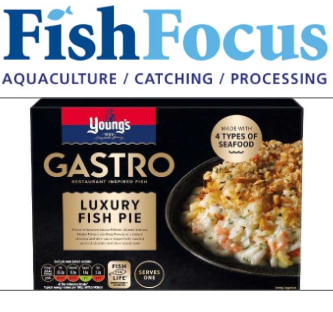
Young’s, the UK’s No.1 seafood brand, is expanding its restaurant-inspired range ‘Gastro’ with the launch of the Young’s Gastro Luxury Fish Pie, designed to attract more shoppers into frozen seafood by offering a richer, more indulgent meal occasion.
Rolling out into major retailers over the coming weeks, the single-serve Luxury Fish Pie brings together four types of seafood – Atlantic Salmon, Pollock, Smoked Pollock and King Prawns – in a mature cheddar and white wine sauce, topped with mashed potato, and a cheddar and chive breadcrumb for added texture and depth of flavour..
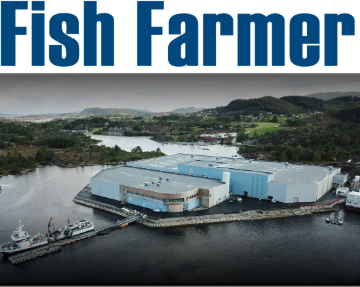
The Lerøy Seafood Group has reported higher salmon and trout volumes during the first three months of this year.
In a first quarter trading update, the group said in a Stock Exchange announcement that it harvested 39,900 metric tons (GWT) compared to 38,200 tons a year earlier, representing an increase of nearly 5%.
The figures exclude harvest volumes from Scottish Sea Farms which will become available when the full Q1 report is published next month.
Author: Vince McDonagh / Fish Farmer | Read the full article here




 NORWAY
 "We've been collaborating closely on two key projects that leverage UV-LED technology, and we view this as a promising area of investment for Smir Group. Ambiente's innovative solutions align perfectly with our goals, which led us to pursue this acquisition,"
 SPAIN
SPAIN.png) This high rating given by the OCU is based on nutritional value, food safety, and flavor. It is precisely in this last aspect that "cans made with Galician mussels, of the species Mytilus galloprovincialis, cultivated on rafts in the Galician estuaries, stand out, compared to cans containing Chilean mussels," or chorito, which corresponds to the variety Mytilus chilensis.
This high rating given by the OCU is based on nutritional value, food safety, and flavor. It is precisely in this last aspect that "cans made with Galician mussels, of the species Mytilus galloprovincialis, cultivated on rafts in the Galician estuaries, stand out, compared to cans containing Chilean mussels," or chorito, which corresponds to the variety Mytilus chilensis. FRANCE
 Pure Salmon France has secured a major milestone in its plans to develop a large-scale land-based salmon farm in Verdon-sur-Mer, following a positive opinion from the public inquiry commission on environmental and construction permitting.
 Avinor, the state-owned operator of Oslo Airport – a key export hub for the country’s seafood industry – has proposed moving the cargo area as part of plans to ensure the airport keeps pace with growing demand.
.png) The leading food tech event will bring together industry leaders to explore the sector’s future amid inflation, trade tensions, and energy and climate challenges Global experts from Nestlé, Unilever, Danone, and Ferrero, among many others, will share their insights from May 27 to 28 at the Food 4 Future World Summit.
The leading food tech event will bring together industry leaders to explore the sector’s future amid inflation, trade tensions, and energy and climate challenges Global experts from Nestlé, Unilever, Danone, and Ferrero, among many others, will share their insights from May 27 to 28 at the Food 4 Future World Summit.
 WORLDWIDE
 Research warns that energy volatility affects the profitability of fishing fleets and could compromise access to seafood in various regions of the world.
 DENMARK
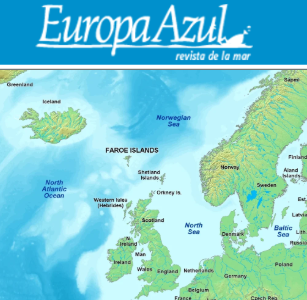 The Danish Fishers Producer Organisation (DFPO) has put forward a far-reaching reform of European fisheries policy: less regulatory micromanagement and more individual responsibility for vessels, all under a system of complete electronic documentation of fishing activity. Their proposal, outlined in a report published in February 2026, argues that the future of demersal fishing in the EU should be based on a results-oriented model, incentives, and remote electronic monitoring using CCTV, artificial intelligence, and digital catch records.
 TANZANIA
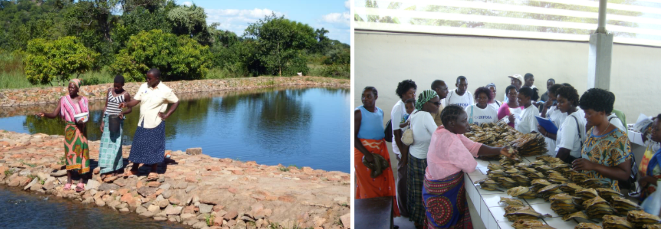 According to AUDA-NEPAD, empowering women in fisheries and aquaculture value chains is a matter of equity, and also a strategic imperative for achieving inclusive economic growth, improved nutrition, and resilient aquatic food systems. Evidence shows that when women have equitable access to resources, finance, technology, and decision-making platforms, productivity increases, incomes rise, and benefits are more likely to be reinvested in families and communities. Strengthening women’s roles in fisheries and aquaculture also accelerates progress toward continental priorities, while unlocking the full potential of aquatic foods as a driver of sustainable development
.png)
 UNITED KINGDOM
 Young’s
 The
The