IN BRIEF - Yemeni Fisheries Ministry Denounces UAE's Use of Fish Centers as Military Barracks
YEMEN
Saturday, August 03, 2024
Yemen's Ministry of Fisheries condemned the ongoing aggression by UAE occupation forces, who have been converting fish landing centers into military barracks in the south of the country.
In a statement, the ministry described these actions as a blatant violation of the rights of fishermen and the fishing sector. It condemned the arbitrary measures taken by the occupying UAE forces to close fish landing centers in the Al-Shihr area of Hadhramaut Province, with the aim of converting them into military barracks for the enemy.
The ministry stressed that these facilities are vital public property essential for the continuous and smooth operation of the fishing process and daily fish production.
The ministry warned of the consequences of the UAE occupation forces' systematic targeting of fish landing centers in the areas they control, including those in the Al-Shihr area. This targeting deprives thousands of fishermen of their ability to work daily, despite their difficult living conditions, and leads to severe consequences.
The Fisheries Ministry also denounced the shameful silence of the Saudi-backed government regarding these arbitrary measures against fishermen and the blatant violations affecting fish landing centers in several southern areas of the country.
The Ministry of Fisheries, with the support of the General Fisheries Commission for the Mediterranean (GFCM) of the UNFood and Agriculture Organization (FAO), has commissioned the Spanish Institute of Oceanography (IEO-CSIC) to conduct an international scientific campaign. Launched yesterday and running until July 22, the campaign will assess the impact of semi-pelagic trawl doors—known as "flying doors"—on the seabed. The survey will take place in waters off the coast of Alicante (Mediterranean), where the switch from conventional doors has allowed the fishing fleet to increase its days of activity.
Source: La Voz de Galicia | Read the full article here
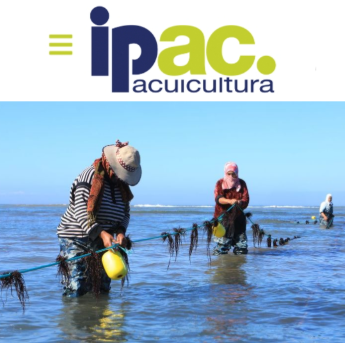
Morocco currently has 224 active aquaculture projects with an annual production capacity of around 90,000 tonnes, "reflecting growing investor confidence in the sector's potential and the effectiveness of established support schemes." This was highlighted during the 27th session of the Board of Directors of the National Agency for the Development of Aquaculture (ANDA), held this Tuesday, July 14, and chaired by Zakia Driouich, Secretary of State at the Ministry of Agriculture, Maritime Fisheries, Rural Development and Water and Forests.
The agenda for this ANDA Board of Directors meeting covered the Agency's achievements during the 2025 fiscal year, an assessment of progress on key projects launched within the sector, and a review of prospects for aquaculture development.
Source: iPac.acuicultura | Read the full article here
In 2023, the European Commission highlighted what is likely one of the major structural challenges facing the fishing industry since the establishment of the 200-mile exclusive economic zones: the need to begin addressing the decarbonization of the fishing sector.
It is worth putting that moment into context. Three years ago, the sector was still reeling from the chain of crises that had erupted at the start of the decade—most notably the war in Ukraine and its massive impact on fuel prices. Rising operating costs and the blow to corporate profitability—stemming from a heavy reliance on fossil fuels—forced Europe and individual states to mobilize funds to ensure the survival of businesses.
Source: Industrias Pesqueras | Read the full article here
Orkney Crab has become the first fishery in the world to achieve certification under the Community Catch standard for small-scale fisheries, marking a significant milestone for responsible seafood production and sustainable fishing communities.
Awarded by NSF, the certification recognises the Orkney-based fishery’s environmental stewardship, responsible fishing practices and social compliance, while providing independent third-party verification for seafood buyers.
Small-scale fisheries account for around 40% of the world’s fish catch and employ more than 90% of global capture fishers
The modern vessel, designed by Macduff Ship Design and built by Macduff Shipyards, stands out for its energy efficiency, safety, and suitability for the sustainable fishing of Norway lobster (langoustine) and prawns in the North Sea.
Innovation in fishing vessel design has once again gained international recognition with the "Best Prawn Trawler of 2025" award going to the *Gracious*, a vessel built by the Scottish shipyard Macduff Shipyards based on a design by Macduff Ship Design. The award highlights the growing importance of energy efficiency, safety, and sustainability in the renewal of the European fishing fleet.
Vietnam has reported a record-breaking 2026 first half seafood export performance.
Seafood exports from the country totalled US $5.8 billion (£4.3 billion) between January and June, a rise of 12.8% year on year.
According to the Vietnam Association of Seafood Exporters and Producers (VASEP) The increase was driven by higher demand, market diversification, and improved product restructuring.Vietnam is now a major producer of aquaculture related seafood products, notably shrimp and basa (pangasius).
Author: Vince McDonagh / Fish Farmer | Read the full article here
Global shipping rates continue to be high as the ongoing conflict between the U.S. and Iran drives up costs, and the latest attacks by Iran on vessels in the Strait of Hormuz could cause more issues.
Trans-Pacific shipping rates appeared to moderate in early July, as spot rates for certain major routes stayed relatively flat after months of steady increases, according to shipping rate indexing and analysis firm Xeneta.
Freight rates began to tick up with the commencement of U.S. and Israeli strikes on Iran in March 2026, and have steadily increase up since then.
Author: Chris Chase / SeafoodSource | Read the full article here
The India-UK Comprehensive Economic and Trade Agreement entered into force on Wednesday, eliminating Indian import tariffs on UK exports of fresh and frozen salmon with immediate effect.
The agreement is expected to improve the competitiveness of Scottish salmon in one of the world's fastest-growing consumer markets, where imported seafood has historically faced tariffs of around 33%. The deal also removes tariffs on cod and lamb, while duties on products including whisky and chocolate will be reduced over time.
Source: SalmonBusiness | Read the full article here
The Japanese Oyster Technology Program has distributed over 5 million seeds to producers across eight regions, strengthening the diversification of small-scale aquaculture through technology transfer and technical support.
Two and a half years after its launch, the Japanese Oyster Technology Program (PTEC)—spearheaded by the Universidad Católica del Norte (UCN) and funded by Corfo—has distributed more than 5 million seeds of this species, establishing a network of over 60 beneficiaries, including associations and small-scale producers from various parts of the country.
The Chilean salmon farmer has been accused of failing to provide facilities for nursing mothers, sacking employees who have taken maternity leave, and sending warning letters for non-existent absences
A union representing processing workers employed by Chilean salmon farmer Ventisqueros has claimed that some of their members have had to use staff toilets to express breast milk “as there is no suitable, private, clean, and specially equipped space for exercising this right”.
The Ventisqueros Seafood Workers Union also claims there have be cases of female workers who, “after reporting their pregnancy, have faced actions to remove their maternity leave protections, long after their contracts had been converted to permanent positions.
Author: Jonathan Garcés / fishfarmingexpert | Read the full article here
Time for the fisheries sector Peru
Every five years, the national fishing sector once again expects the State to do justice to one of the country's greatest strengths. Peru possesses privileged conditions. Our sea, our rivers and lakes...




 YEMEN
YEMEN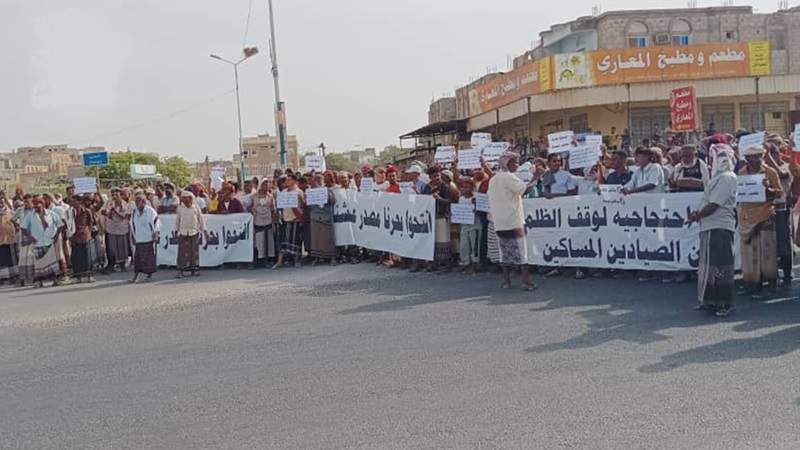
 18_22_44(1).png)
 SPAIN
SPAIN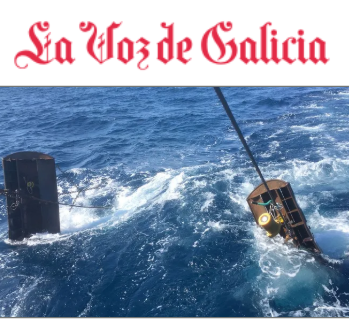 The Ministry of Fisheries, with the support of the General Fisheries Commission for the Mediterranean (GFCM) of the UN
  MOROCCO
 Morocco currently has 224 active aquaculture projects with an annual production capacity of around 90,000 tonnes, "reflecting growing investor confidence in the sector's potential and the effectiveness of established support schemes." This was highlighted during the 27th session of the Board of Directors of the National Agency for the Development of Aquaculture (ANDA), held this Tuesday, July 14, and chaired by Zakia Driouich, Secretary of State at the Ministry of Agriculture, Maritime Fisheries, Rural Development and Water and Forests.
 EUROPEAN UNION
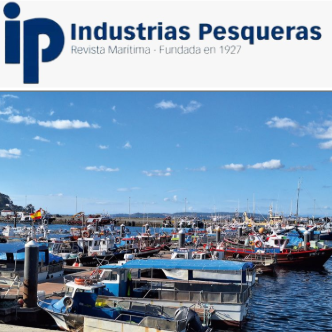 In 2023, the European Commission highlighted what is likely one of the major structural challenges facing the fishing industry since the establishment of the 200-mile exclusive economic zones: the need to begin addressing the decarbonization of the fishing sector.
 UNITED KINGDOM
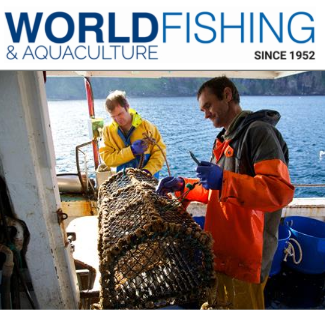 Orkney Crab has become the first fishery in the world to achieve certification under the Community Catch standard for small-scale fisheries, marking a significant milestone for responsible seafood production and sustainable fishing communities.
.png) The modern vessel, designed by Macduff Ship Design and built by Macduff Shipyards, stands out for its energy efficiency, safety, and suitability for the sustainable fishing of Norway lobster (langoustine) and prawns in the North Sea.
The modern vessel, designed by Macduff Ship Design and built by Macduff Shipyards, stands out for its energy efficiency, safety, and suitability for the sustainable fishing of Norway lobster (langoustine) and prawns in the North Sea. VIET NAM
 Vietnam has reported a record-breaking 2026 first half seafood export performance.
 WORLDWIDE
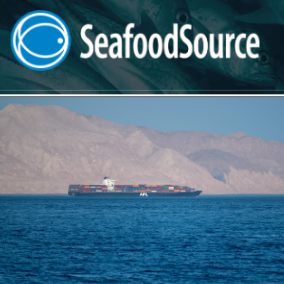 Global shipping rates continue to be high as the ongoing conflict between the U.S. and Iran drives up costs, and the latest attacks by Iran on vessels in the Strait of Hormuz could cause more issues.
 The India-UK Comprehensive Economic and Trade Agreement entered into force on Wednesday, eliminating Indian import tariffs on UK exports of fresh and frozen salmon with immediate effect.
 CHILE
CHILE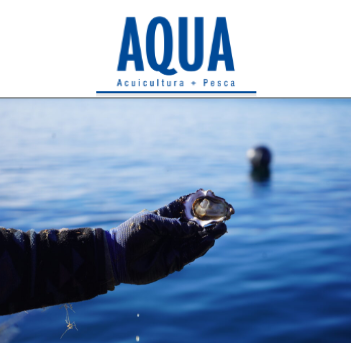 The Japanese Oyster Technology Program has distributed over 5 million seeds to producers across eight regions, strengthening the diversification of small-scale aquaculture through technology transfer and technical support.
.png) A union representing processing workers employed by Chilean salmon farmer
A union representing processing workers employed by Chilean salmon farmer