Othe Media | Worldfishing: Greenpeace fishing barrier
UNITED KINGDOM
Tuesday, September 06, 2022
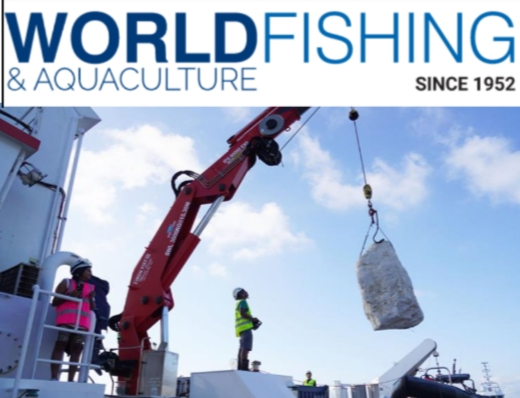
Eighteen limestone boulders have been placed on the seabed in the South West Deeps (East) marine protected area (MPA) by Greenpeace UK to block destructive industrial fishing in the area.
On 1 September, campaigners and crew onboard Greenpeace ship Arctic Sunrise sailed to the western English Channel to make a portion of the South West Deeps off-limits to bottom-trawling.
Author: Jason Holland / Worldfishing l Read the full article here
The Pacific herring (Clupea pallasii) fishery in the Russian Far East reached outstanding milestones over the past week, following an increase of 12,400 metric tons.
With this surge, cumulative landings for the year to date reached 588,700 metric tons, exceeding the volume recorded during the same period in 2025 by 153,000 metric tons. In addition, the Russian fishing fleet processed over 478,400 metric tons of this resource on board using its own raw material.
This commercial upswing aligns with evaluations from the scientific community. Experts from the Sakhalin branch of the Russian Federal Research Institute of Fisheries and Oceanography (VNIRO) point out that, over the past decade, Sakhalin-Hokkaido herring stocks have shown a steady growth trend off the southern coast of Sakhalin and the South Kuril Islands.
If current harvest intensity continues, the biomass available in the East Sakhalin subzone could conclude the cycle by setting a new landings record for the 21st century.
NUUK — Several Greenlandic fisheries are nearing their annual catch limits, according to tracking data from the Greenland Fisheries and Hunting Control (Grønlands Fiskeri- og Jagtkontrol / GFJK) updated through October 25.
Southeast Greenlandcod (Gadus morhua) stands at 5,285 metric tons out of a 5,290-ton quota, representing 99.9% uptake. The northern shrimp (Pandalus borealis) allocation for Norway in East Greenland waters has reached 99.7%, leaving a remaining margin of just four metric tons.
Also notable is the Faroese allocation of cod in Southeast Greenland, which has reached 97.1% utilization, while inshore cod harvesting in West Greenland has attained 90.7%.
These uptake levels require strict monitoring by vessel owners and processors. The GFJK notes that these recorded figures are preliminary and subject to administrative adjustment. Reaching the formal accounting limit of a quota does not automatically result in an immediate official closure order.
Commercial cod fishing in the Barents Sea is poised for recovery following an agreed 14% increase in the total allowable catch (TAC) for 2027.
The decision was confirmed by Ilya Shestakov, head of the Federal Agency for Fisheries (Rosrybolovstvo), following the annual bilateral summit of the Joint Russian-Norwegian Fisheries Commission.
The intergovernmental body oversees shared marine stock management across both the Barents Sea and the Norwegian Sea. Beyond cod, delegates established harvest quotas and regulatory frameworks for haddock, capelin, halibut, and perch, alongside quota exchange mechanisms backed by an international scientific working group.
According to Rosrybolovstvo, sustained environmental monitoring shows biomass indicators entering a positive reversal across the Northern Basin following years of stock decline, enabling the upward quota adjustment for fleet operators in Russia and Norway.
The Yamagawa Fisheries Cooperative and regional organization SEAFDEC/TD receive top honors at the JSSA 2026 awards
The Executive Committee of the Japan Sustainable Seafood Award announced the winners of its seventh edition in Tokyo. In the National Division, the award went to the Yamagawa-cho Fisheries Cooperative (Ibusuki, Kagoshima) for its blue carbon project. Local fishers deployed 89 vegetative mats covering 445 square meters to restore seagrass beds (Zostera marina), successfully expanding the ecosystem to 1,500 square meters, certifying 1.4 tons of carbon dioxide in blue carbon credits, and commercially utilizing catches of the herbivorous lowfin chub (Kyphosus vaigiensis).
In the newly established Asia Division, the award went to the Training Department of the Southeast Asian Fisheries Development Center (SEAFDEC/TD), affiliated with ASEAN. Backed by the Japanese Trust Fund, the initiative consolidated a database tracking 5,370 fishing vessels across 28 parameters, trained more than 800 fisheries inspectors, and deployed an electronic catch documentation system to combat illegal, unreported, and unregulated (IUU) fishing.
The National Institute of Fisheries Science develops a system that reduces ammonia-related mortality in containers bound for the United States
The National Institute of Fisheries Science (NIFS), led by Director Kwon Soon-wook, has successfully developed and validated a technology designed to mitigate ammonia accumulation and preserve the freshness of live seafood during extended transoceanic routes.
The maritime voyage to the Port of Long Beach in the western United States takes approximately four weeks in total, with a specific sailing time inside live fish transport containers of around 15 days for olive flounder (Paralichthys olivaceus). Through a collaborative project launched in 2024 with local exporters, NIFS engineered an ammonia-reduction device. During real-world testing at destination—which extended to 22 days of transit due to operational delays—the system reduced ammonia concentrations in the tanks by 14.2% and blood ammonia levels in the specimens by 22.2%, while also lowering physiological stress markers. This breakthrough will allow higher loading volumes per container and facilitate market expansion to distant destinations in the Eastern United States and Europe.
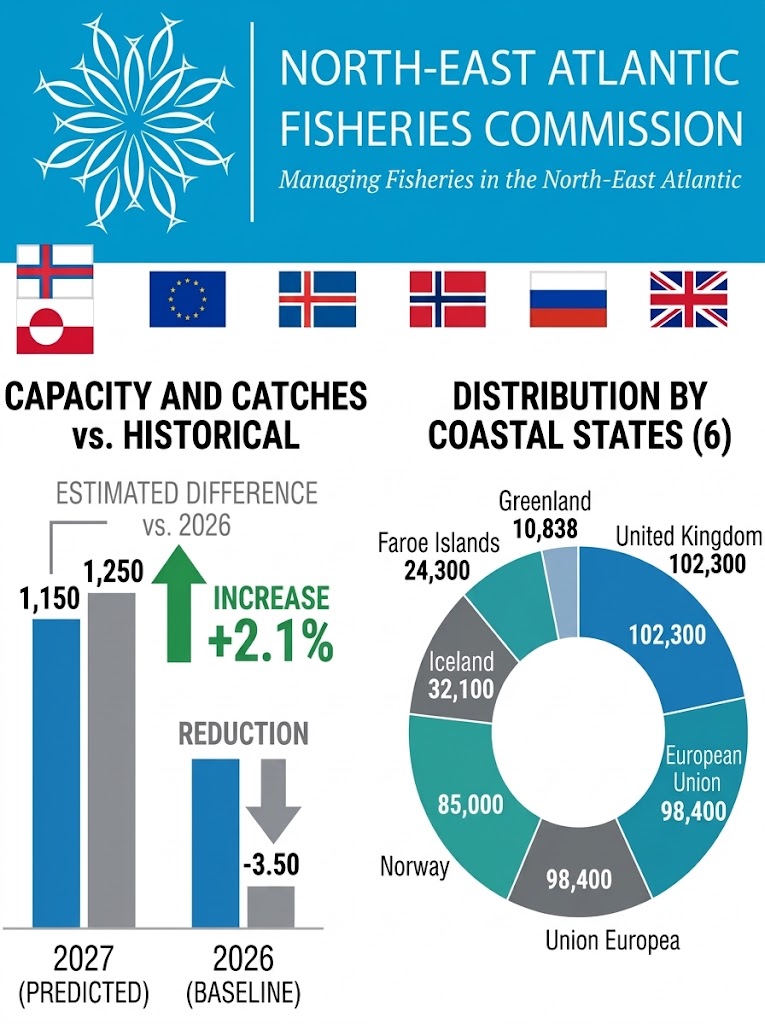
The six coastal states formally concluded their multilateral consultations at the London headquarters of the North-East Atlantic Fisheries Commission (NEAFC) without formalizing a binding catch-sharing agreement for the 2027 season.
Despite exhausting the official schedule of dialogue, delegations from the United Kingdom, the European Union, Norway, Iceland, the Faroe Islands, and Greenland failed to reach a consensus on the political distribution of quota shares.
The main bone of contention centered on reconciling historical catch rights with demands for territorial access. The persistence of an earlier four-party framework that sidelined the European Union has led, in practice, to accumulated unilateral allocations that exceed sustainable biological limits.
Negotiators reviewed scientific advice from the International Council for the Exploration of the Sea (ICES), which recommended a total allowable catch (TAC) ceiling of 352,938 tonnes for 2027. Although the spawning stock biomass registered a favorable 4.5% increase above the biological limit point, the industry laments that the lack of a comprehensive settlement will perpetuate operational uncertainty.
Sector consumed 92% of the fishmeal sold in 2025, with almost half of that going to China
Demand from the expanding aquaculture sector was responsible for 96% of a 372,000-tonne increase in fishmeal consumption last year, members of marine ingredients organisation IFFO have been told.The sector consumed 92% of the 5.8 million tonnes of fishmeal sold last year, and 72% of the fish oil, IFFO market research director Enrico Bachis said in a presentation to the organisation’s annual conference in Buenos Aires, Argentina, this week.
Author: Gareth Moore / fishfarmingexpert | Read the full article here
Moscow — The governments of Russia and China agreed to promote and expand commercial trade in seafood products, following the conclusion of the 31st regular meeting between the heads of government of both nations. The high-level summit was led by Russian Prime Minister Mikhail Mishustin and Chinese Premier Li Qiang.
As confirmed in the final joint communiqué, both delegations established a priority technical agenda for the fisheries sector. Among the key agreements, both nations will work in coordination to restore the export status of key enterprises and advance the formal registration of fishing companies in both jurisdictions.
Furthermore, the parties agreed to expand the list of accredited suppliers, expedite review and processing timelines for commercial applications, and deepen bilateral cooperation mechanisms aimed at ensuring food quality and safety standards across reciprocal shipments of aquatic products.
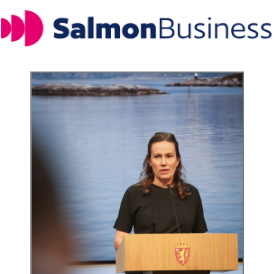
Norway’s fisheries minister has defended a further cut to salmon farming capacity in western Norway, arguing that the environmental benefits justify restrictions on production and employment.
Marianne Sivertsen Næss was responding to Conservative MP Bård Ludvig Thorheim, who asked the government to assess the economic consequences of repeated cuts under Norway’s traffic-light system.
The system divides the coast into 13 production areas. Every two years, each receives a colour based on the assessed impact of sea lice from fish farms on wild salmon. A red designation requires a 6% reduction in permitted farming capacity.
Source: SalmonBusiness | Read the full article here
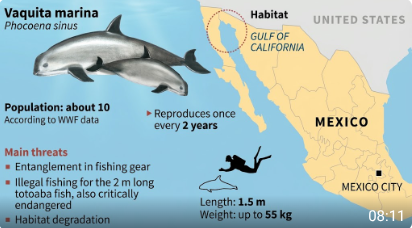
From November 2–6, CITES will review Mexico's efforts against illegal gillnets in Geneva.With only around 12 vaquitas remaining in the Gulf of California, the meeting will assess whether deployed concrete blocks can effectively protect the critically endangered species.
SUNY Morrisville Joins Initiative to Fully Use Each Fish United States
New York institution becomes sixth educational organization to sign the 100% Great Lakes Fish Pledge
(Morrisville, Nueva York) – SUNY Morrisville has signed the 100% Great Lakes Fish Pledg...




 UNITED KINGDOM
 Eighteen limestone boulders have been placed on the seabed in the South West Deeps (East) marine protected area (MPA) by
  RUSSIAN FEDERATION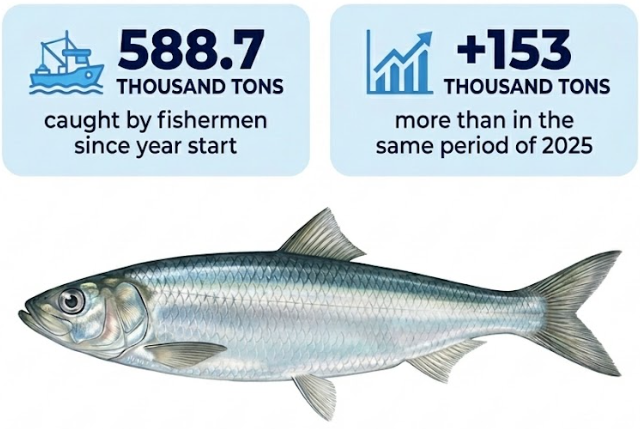
 GREENLAND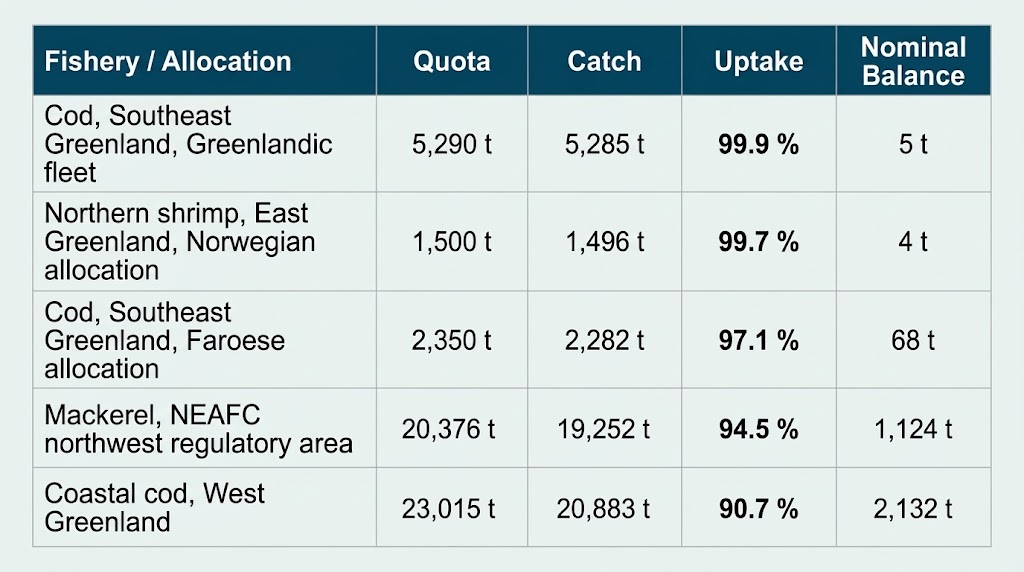
.png) The decision was confirmed by Ilya Shestakov, head of the Federal Agency for Fisheries (Rosrybolovstvo), following the annual bilateral summit of the Joint Russian-Norwegian Fisheries Commission.
The decision was confirmed by Ilya Shestakov, head of the Federal Agency for Fisheries (Rosrybolovstvo), following the annual bilateral summit of the Joint Russian-Norwegian Fisheries Commission. JAPAN
JAPAN.png)
 SOUTH KOREA
.png)
.png) Demand from the expanding aquaculture sector was responsible for 96% of a 372,000-tonne increase in fishmeal consumption last year, members of marine ingredients organisation
Demand from the expanding aquaculture sector was responsible for 96% of a 372,000-tonne increase in fishmeal consumption last year, members of marine ingredients organisation.jpeg)
 NORWAY
 Norway’s fisheries minister has defended a further cut to salmon farming capacity in western Norway, arguing that the environmental benefits justify restrictions on production and employment.
 MEXICO
 Illegal totoaba fishing threatens its survival.