Other Media | The Fish Site: European giant grouper RAS firm secures €38.5m for expansion
GERMANY
Monday, August 24, 2026
Oceanloop, a German aquaculture technology company developing software-driven recirculating aquaculture systems (RAS), has secured up to €38.5 million to scale its technology and expand production of giant grouper in Europe.
After several years of biological and technical development, Oceanloop has become the first company to farm giant grouper in Europe. Sales from its existing land-based farm in Strande near Kiel began in April 2026 through Oceanloop’s sister company Honest Catch, marking the transition from research and development to commercial production. The existing facility is expected to supply approximately 20to 30 tonnes per year.
Data from the SFPA reveal significant disparities in the uptake of fishing opportunities allocated for 2026: albacore has reached 116%, saithe stands at 170%, sole at 169%, blue whiting at 118%, and hake at 94%, while numerous other quotas remain below 20%.
The utilization of fishing quotas allocated to Ireland for 2026 shows significant imbalances, with more than four months still remaining in the year. Data published by the Sea-Fisheries Protection Authority (SFPA) highlight stocks where usage already exceeds available limits, alongside others where only a small fraction has been caught. This situation reflects a combination of fleet strategies, resource availability, and the complexity of the European quota management system.
Peru’s Production Ministry (PRODUCE) has canceled the North-Central anchovy fishery for the season, leaving over 1 million metric tons (MT) of available quota uncaught.
Peru set a lower quota for the North-Central season of 1.9 million MT, which was down from the 3 million MT total allowable catch set for the same fishery in 2025. Despite the season kicking off in early April, fishers had only caught 471,000 MT, according to official data, with 51.6 percent of that catch comprising juvenile anchovies.
PRODUCE announced in El Peruano that the percentage of juvenile anchovy in the fishery remained at a rate too high to allow fishing, largely due to warming waters caused by El Niño
Author: Chris Chase / SeafoodSource | Read the full article here
The keen interest sparked within the British sector by the "octopus bloom"—the massive proliferation of *Octopus vulgaris* in the waters off southwest England and the western English Channel that began in 2025—has prompted the government to take action. After establishing a working group to advance the management of this fishery—which, until a year ago, was negligible—the Marine Management Organisation (MMO) has now launched an information website aimed at the general public, the fishing industry, and the scientific community. "The octopus proliferation has understandably generated enormous interest, and we want to ensure that everyone can easily find reliable, up-to-date information in one place."
Source: Industrias Pesqueras | Read the full article here
PFAS, or ‘forever chemicals’, are commonly used to make textiles and other materials resistant to water and fire. However, because they persist in the environment and build up in living organisms, they pose growing risks to human health and ecosystems.
To help address this challenge, Venice-based start-up Algae Scope transforms residual seaweed biomass into a bio-based additive with natural fire- and water-repellent properties, offering manufacturers an alternative to PFAS.
China Southern Airlines has launched a new direct cargo route between Oslo and Shanghai, with capacity expected to carry around 200 tonnes of Norwegian salmon to China each week.
The route began operations on August 19 and will operate twice weekly using Boeing 777F freighters, with capacity of around 100 tonnes per flight, Norwegian airport operator Avinor said.
China Southern said it expects the service to carry 200 tonnes of Norwegian salmon a week during its initial operating phase.
Source: SalmonBusiness | Read the full article here
El Niño, the climate pattern marked by the warming of surface waters in the central and eastern tropical Pacific Ocean, is currently having a significant impact on global fishmeal and fish oil production, marine ingredients association IFFO said today.
Peru, which typically accounts for around 20% of world fishmeal production, has been particularly affected by El Niño. This has significant implications for global supply of marine ingredients, which remain an important part of aquaculture diets.
Source: fishfarmingexpert | Read the full article here
The shrimp fishery in Argentine waters is crucial to the financial performance of Galician-owned companies operating in the country through joint ventures. In fact, the multinational Iberconsa attributes a 5% drop in its business volume to the conflict that curtailed last year's season—and consequently, catch levels. While the 2025 season ended with a total of 63,800 tonnes, over 155,000 tonnes have already been landed by the middle of this month, according to Radio 3 Cadena Patagonia. The fleet and processing companies face a potential early closure, driven both by the volume of the catch and by the fact that rising levels of hake bycatch are affecting the yield of the shrimp fishery.
Source: La Voz de Galicia | Read the full article here
El Niño is hitting the Pacific hard. According to the latest report from ENFEN—Peru’s multisectoral commission responsible for studying the El Niño phenomenon—"if anomalous warm conditions persist, the anchoveta is expected to remain concentrated near the coast and at greater depths than usual over the coming weeks, leading to increased depletion of their energy reserves." In fact, NOAA estimates that the event will intensify heading into autumn—a prediction shared by the World Meteorological Organization (WMO), which acknowledges that "El Niño continues to intensify steadily and is expected to have a decisive influence on global climate patterns during the August–October 2026 period."
Source: iPac.acuicultura | Read the full article here
RationFEED turns wasted pellets into feeding intelligence.
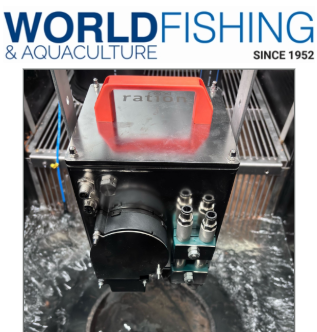
Icelandic aquaculture technology company Ration has developed RationFEED, an out-of-water computer-vision system that detects and counts uneaten feed pellets in the effluent from land-based fish tanks. The data can be used to automatically adjust feeding in real-time, helping farms reduce feed loss, protect water quality, and respond more accurately to changes in fish appetite.
Mounted above the tank effluent, RationFEED combines specialized optics, AI, and computer vision to distinguish pellets from fish waste. The system can connect to existing feeding equipment and control it automatically.
Islanders on Coll have invited Mowi to explore building another fish farm in Scotland’s Hebridean archipelago, in a move the company says will bring more jobs and families back to the island, and help tackle a housing shortage.
At the request of some members of the community, Mowi Scotland gave a presentation at the An Cridhe centre in Arinagour on 11 May, about the possibilities for Coll, its plans for the newly acquired uninhabited island of Sanda, and its operations off Muck, Rum and Colonsay.
Mowi said the possible development on Coll, which could produce 3,500 tonnes of biomass, employ 14 people, and build several new homes on the model of its Colonsay site, would “only progress … with the majority support of the local community”.
Author: Sandy Neil / Fish Farmer | Read the full article here





 GERMANY
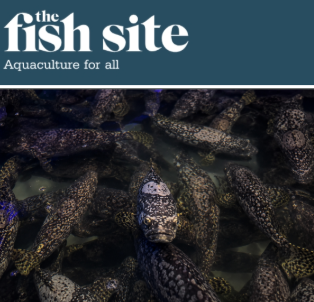 Oceanloop, a German aquaculture technology company developing software-driven recirculating aquaculture systems (RAS), has secured up to €38.5 million to scale its technology and expand production of giant grouper in Europe.
 REPUBLIC OF IRELAND
.png) Data from the SFPA reveal significant disparities in the uptake of fishing opportunities allocated for 2026: albacore has reached 116%, saithe stands at 170%, sole at 169%, blue whiting at 118%, and hake at 94%, while numerous other quotas remain below 20%.
Data from the SFPA reveal significant disparities in the uptake of fishing opportunities allocated for 2026: albacore has reached 116%, saithe stands at 170%, sole at 169%, blue whiting at 118%, and hake at 94%, while numerous other quotas remain below 20%. PERU
PERU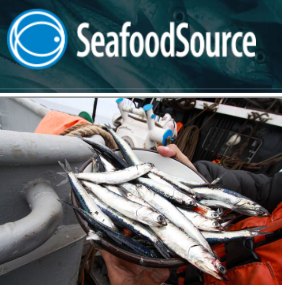 Peru’s Production Ministry (
 UNITED KINGDOM
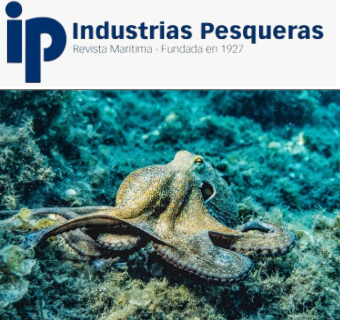 The keen interest sparked within the British sector by the "octopus bloom"—the massive proliferation of *Octopus vulgaris* in the waters off southwest England and the western English Channel that began in 2025—has prompted the government to take action. After establishing a working group to advance the management of this fishery—which, until a year ago, was negligible—the Marine Management Organisation (MMO) has now launched an information website aimed at the general public, the fishing industry, and the scientific community. "The octopus proliferation has understandably generated enormous interest, and we want to ensure that everyone can easily find reliable, up-to-date information in one place."
 ITALY
ITALY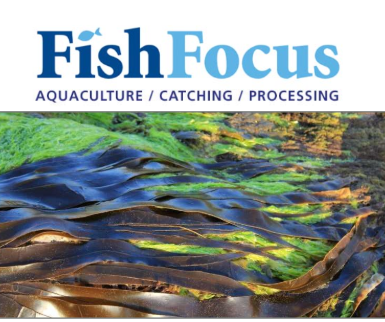 PFAS, or ‘forever chemicals’, are commonly used to make textiles and other materials resistant to water and fire. However, because they persist in the environment and build up in living organisms, they pose growing risks to human health and ecosystems.
 CHINA
CHINA China Southern Airlines has launched a new direct cargo route between Oslo and Shanghai, with capacity expected to carry around 200 tonnes of Norwegian salmon to China each week.
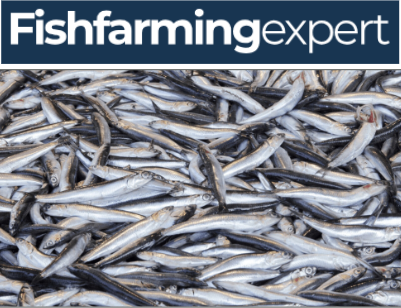 El Niño, the climate pattern marked by the warming of surface waters in the central and eastern tropical Pacific Ocean, is currently having a significant impact on global fishmeal and fish oil production, marine ingredients association
  ARGENTINA
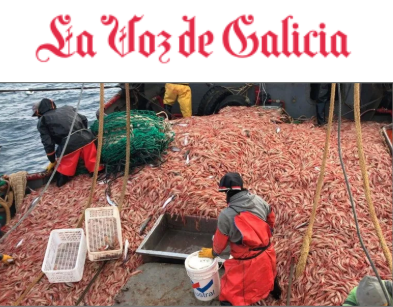 The shrimp fishery in Argentine waters is crucial to the financial performance of Galician-owned companies operating in the country through joint ventures. In fact, the multinational Iberconsa attributes a 5% drop in its business volume to the conflict that curtailed last year's season—and consequently, catch levels. While the 2025 season ended with a total of 63,800 tonnes, over 155,000 tonnes have already been landed by the middle of this month, according to Radio 3 Cadena Patagonia. The fleet and processing companies face a potential early closure, driven both by the volume of the catch and by the fact that rising levels of hake bycatch are affecting the yield of the shrimp fishery.
 WORLDWIDE
 El Niño is hitting the Pacific hard. According to the latest report from ENFEN—Peru’s multisectoral commission responsible for studying the El Niño phenomenon—"if anomalous warm conditions persist, the anchoveta is expected to remain concentrated near the coast and at greater depths than usual over the coming weeks, leading to increased depletion of their energy reserves." In fact, NOAA estimates that the event will intensify heading into autumn—a prediction shared by the World Meteorological Organization (WMO), which acknowledges that "El Niño continues to intensify steadily and is expected to have a decisive influence on global climate patterns during the August–October 2026 period."
  ICELAND
 RationFEED turns wasted pellets into feeding intelligence.
 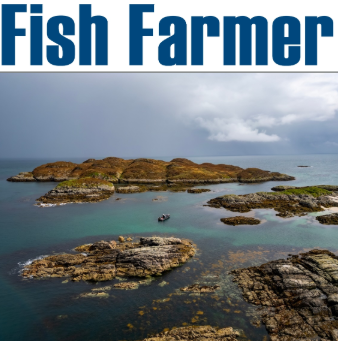 Islanders on Coll have invited