The convention, signed by Miguel Ríos (ABANCA Mar) and Ricardo Herbón (OPMEGA), aims to modernize the sector and facilitate its adaptation to new tax requirements.
Key points of the agreement:
Fiscal Transition: In light of the IRPF (Income Tax) campaign, specific financing solutions are being launched to handle tax payments, preventing liquidity issues caused by the change in fiscal regime.
Tailored Financing: Highlights include a 5-year credit policy (with no fees) to cover treasury deficits derived from seasonality or red tide closures.
Fleet Modernization: The naval mortgage is promoted for the construction and repair of vessels and mussel platforms (bateas) to ensure they are more efficient and sustainable.
Comprehensive Support: Access to financing plans through SGRs (Mutual Guarantee Societies) and the benefits of the ABANCA Services Program.
Since 2016, the ABANCA Mar unit has consolidated its support for the maritime value chain in Galicia with custom-designed financial products.
Seafood New Zealand is urging all sector participants to raise their voices as the Fisheries Amendment Bill enters a critical phase in Parliament. With the Select Committee now accepting public submissions, the industry has until April 29th to provide essential feedback on the proposed reforms.
Last year, 300 industry members participated in initial consultations. Now, Seafood New Zealand emphasizes that even greater engagement is needed to ensure decision-makers understand the practicalities of working on the water.
Key Aspects of the Bill:
Modernization: Updating systems to better integrate current technology and data.
Sustainability: Strengthening protections for fish populations and the marine environment.
Privacy Protections: Formalizing the exclusion of raw onboard camera footage from the OIA, maintaining the status quo where MPI releases data quarterly.
The organization stresses that if those in processing, science, and fishing do not share their "real-world experience," the outcome may be shaped by those who do not understand the NZ sector.
In the heart of Western Victoria, the Budj Bim cultural landscape stands as a testament to the sophisticated engineering of the Gunditjmara people. Featuring one of the world’s oldest and most extensive aquaculture systems, the site has fundamentally reshaped our understanding of early Indigenous populations.
Using the ancient basalt lava flows from the dormant Budj Bim volcano, Indigenous farmers constructed a complex network of channels, dams, and weirs to trap and harvest eels. Recent carbon-dating findings estimate that at least one of the five major systems is approximately 6,600 years old—predating the Egyptian Pyramids and Stonehenge.
In 2019, the site earned a prestigious spot on the UNESCO World Heritage List. Notably, it was the first Australian site inscribed exclusively for its cultural significance, honoring the enduring connection between the Gunditj Mirring Traditional Owners and their ancestral lands. This recognition validates a history of sedentary farming that lasted for millennia, proving that these ancient "fish traps" were part of a highly organized, permanent society.
A high-level delegation from Sri Lanka, led by Fisheries Minister Ramalingam Chandrasekar, concluded a strategic visit to Oslo aimed at revolutionizing the nation’s marine industry.
Colombo: Central to the talks with the Norwegian Ministry of Trade, Industry and Fisheries was the modernization of Sri Lanka’s aquatic sector through technology transfer. A key highlight involved discussions with Gunnar Stølsvik regarding the Blue Justice programme. Sri Lanka is seeking free access to a satellite-based vessel monitoring system to track fishing activity and combat illegal operations. Norway has signaled its intent to provide technical training for this implementation.
Further sessions with Anita Utheim Iversen of the Global Action Network focused on food security. Sri Lanka was invited to an international knowledge-sharing platform, allowing the National Aquatic Resources Research and Development Agency (NARA) to adopt global standards in fish nutrition and market value.
Minister Chandrasekar, supported by Secretary B. K. Kolitha Kamal Jinadasa and Director General S. J. Kahawatta, emphasized that this partnership will align local practices with international benchmarks. Formal cooperation agreements are expected in the coming months.
Karachi is set to become the heart of Pakistan’s blue economy with the establishment of a comprehensive Fisheries and Aquaculture Research Centre. Functioning as a complete “Aqua Ecosystem,” the facility will integrate the entire supply chain—from sustainable catching and farming to high-tech processing and international export.
Managed under the vision of Junaid Anwar Chaudhry, the center will feature hatcheries, quality testing laboratories, and aquaculture trial units. A primary focus will be placed on high-value species, including shrimp, tilapia, seabass, and pomfret.
To overcome coastal space limitations, the project will deploy IoT-based Recirculating Aquaculture Systems (RAS). This cutting-edge technology utilizes sensors and real-time analytics to treat and reuse water, drastically reducing waste. While Chaudhry acknowledged risks like water pollution and disease, the project aims to mitigate these through controlled farming and habitat protection.
By fostering partnerships with universities and private investors, the initiative expects to boost seafood exports and create vital jobs in logistics, research, and processing.
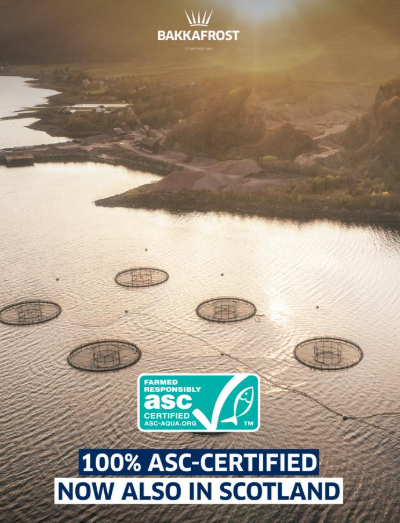
The Bakkafrost Group has officially reached a major sustainability milestone, achieving 100% ASC certification across its entire salmon farming portfolio in the Faroe Islands and Scotland.
Following the successful certification of its Faroe Islands operations in 2020, the Group has now brought its Scottish sites up to the same rigorous global standard. The Aquaculture Stewardship Council (ASC) badge is widely regarded as the industry’s gold standard for environmental and social responsibility.
Key Highlights of the Achievement:
Full Traceability: Ensures transparency across the entire value chain.
Rigorous Standards: Compliance with strict audits regarding fish welfare, biosecurity, and environmental care.
Consumer Trust: Provides independent assurance of responsible farming practices.
"Reaching 100% ASC certification is a significant milestone," says Anna Johansen, Group QESH Director. "It reflects the hard work of our teams and our commitment to continuous improvement in everything we do."
A wave of price hikes has hit the aquaculture industry in South China, with dozens of major producers—including industry giants Haid Group and Tongwei—announcing significant increases for water-based feed.
Starting April 20, 2026, these companies implemented price hikes ranging from $28 to $55 (200–400 yuan) per ton. This surge comes despite a downward trend in some raw materials; for instance, soybean meal prices continued to slide on April 20, settling at approximately $408 (2,950 yuan) per ton.
However, the market for high-protein additives remains under pressure. Fishmeal prices stay firm and elevated, currently trading between $2,583 and $2,625 (18,700–19,000 yuan) per ton.
Mauritania’s Ministry of Fisheries, Maritime and Port Infrastructure has officially announced a total moratorium on cephalopod fishing, including octopus and squid, within its sovereign waters.
The suspension is set to take effect on May 1 and will apply to all sectors, including conventional, coastal, and deep-sea fishing operations.
This strategic pause follows critical scientific recommendations issued by the Mauritanian Institute of Marine and Fisheries on April 10. Data suggests that a biological rest period is essential to allow for the regeneration of fish stocks and to ensure the long-term sustainability of marine resources.
By enforcing this temporary ban, the Ministry aims to strengthen industry governance and promote sustainable management practices. The move is seen as a vital step in safeguarding Mauritania’s biological diversity against the pressures of overfishing, ensuring that the nation's maritime economy remains viable for future generations.
Alaska fears that new digital traceability requirements could end up acting as a trade barrier for some of its salmon exports, while Brussels defends the system as a key element in the fight against illegal fishing
The entry into force of the European Union's digital CATCH system, designed to strengthen the traceability of fish imports and block products linked to illegal, unreported, and unregulated fishing, has opened a front of concern in the US fishing industry.
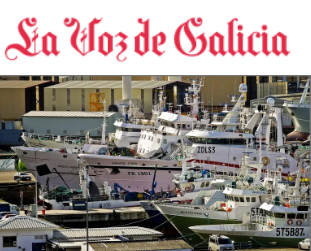
The Patagonian squid is back. The Galician fleet fishing in the Falkland Islands will conclude its first campaign of the year next week and return to Galicia with over 42,000 tons of Patagonian squid. This information comes from industry sources familiar with the current fishing season, which has shown improved yields, although they urge caution.
The 16 vessels, jointly owned by Galician and private companies, began fishing on February 22nd, following the encouraging survey of the fishing grounds conducted by the fishing vessel Monteferro. Two months later, the fleet is entering its final phase in the Falklands and is pleased to have completed the planned 64 days of fishing.
Author: Alejandra Pascual / La Voz de Galicia | Read the full article here
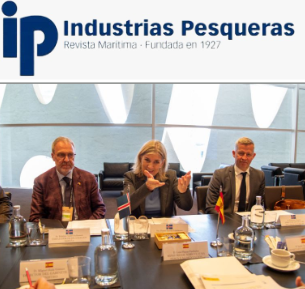
The Ministry of Agriculture, Fisheries and Food is maintaining intense bilateral activity at Seafood Expo Global. To this end, Minister Luis Planas has held meetings with the Icelandic Minister of Industry and Innovation, Hanna Katrín Frioriksson; the UK Minister of State for Food Safety and Rural Development, Angela Eagle; and the Norwegian Minister of Fisheries and Ocean Policy, Marianne Sivertsen.
In his meeting with the Icelandic representative, both officials agreed on the importance of defending sustainable fishing as a fundamental pillar of international cooperation and emphasized the need to maintain demanding standards in fisheries management as a basis for guaranteeing the sector's long-term viability.
Source: Industrias Pesqueras | Read the full article here
Why the West is a Lifeline for the World’s Bluefin Tuna United States
Decades of tracking data reveal that North American waters serve as a vital "safety zone" for migratory Mediterranean stocks.
A groundbreaking international study has confirmed that the Wes...
Peruvian Squid Prices Rally: Market Recovers Amid Supply Shift China
Domestic Rebound Ignites Trade for Giant Squid (Dosidicus Gigas) Following Prolonged Slump
In a decisive turn for the seafood industry, Week 16 saw a significant rebound in the domestic deep-sea mark...





 SPAIN
SPAIN.png)
 NEW ZEALAND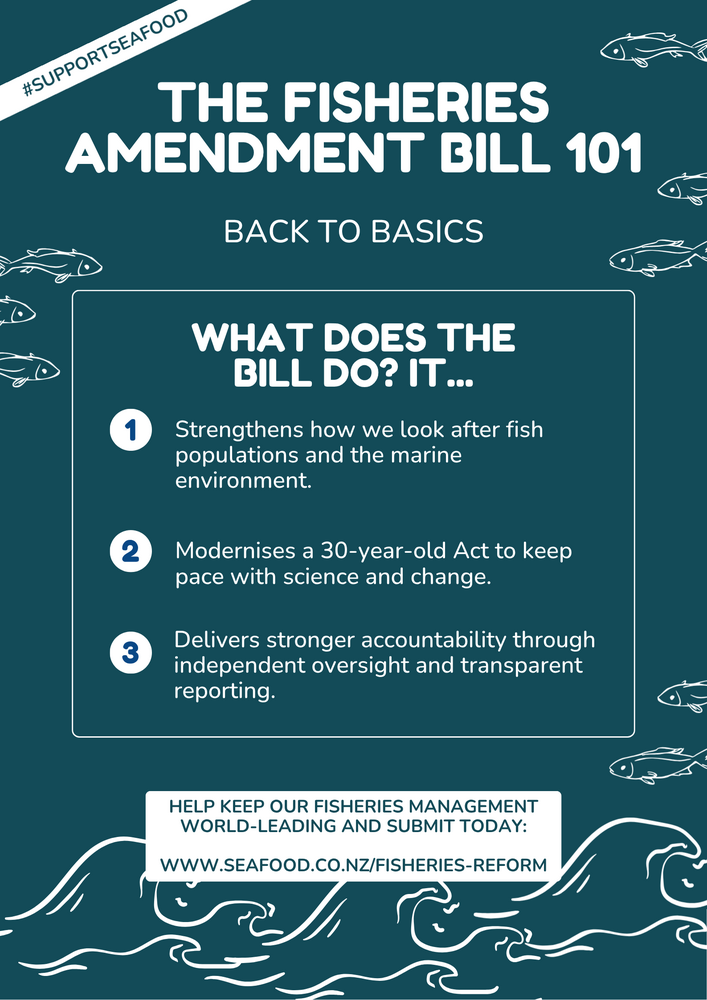
 AUSTRALIA
 SRI LANKA
 PAKISTAN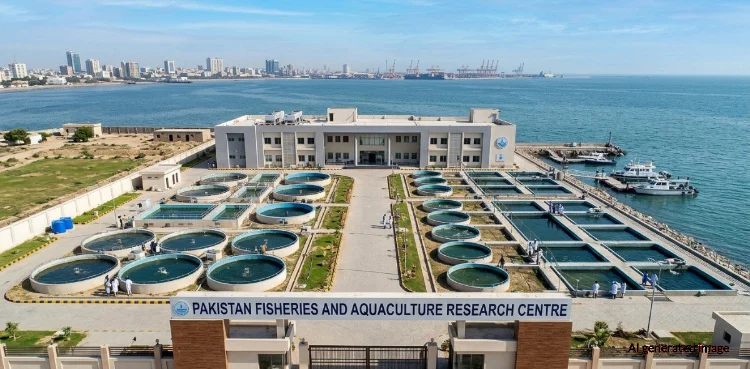
 FAROE ISLANDS
 Following the successful certification of its Faroe Islands operations in 2020, the Group has now brought its Scottish sites up to the same rigorous global standard. The Aquaculture Stewardship Council (ASC) badge is widely regarded as the industry’s gold standard for environmental and social responsibility.
 CHINA
CHINA.png) Starting April 20, 2026, these companies implemented price hikes ranging from $28 to $55 (200–400 yuan) per ton. This surge comes despite a downward trend in some raw materials; for instance, soybean meal prices continued to slide on April 20, settling at approximately $408 (2,950 yuan) per ton.
Starting April 20, 2026, these companies implemented price hikes ranging from $28 to $55 (200–400 yuan) per ton. This surge comes despite a downward trend in some raw materials; for instance, soybean meal prices continued to slide on April 20, settling at approximately $408 (2,950 yuan) per ton. MAURITANIA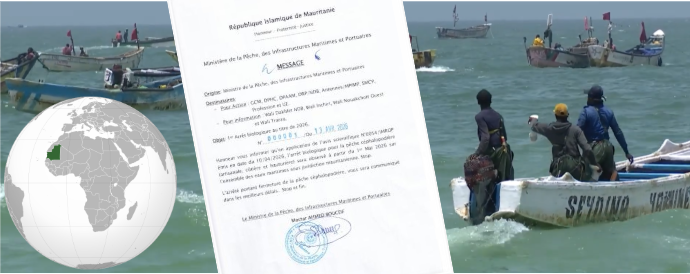
 UNITED STATES
 Alaska fears that new digital traceability requirements could end up acting as a trade barrier for some of its salmon exports, while Brussels defends the system as a key element in the fight against illegal fishing
 FALKLAND ISLANDS
 The Patagonian squid is back. The Galician fleet fishing in the Falkland Islands will conclude its first campaign of the year next week and return to Galicia with over 42,000 tons of Patagonian squid. This information comes from industry sources familiar with the current fishing season, which has shown improved yields, although they urge caution.
 The Ministry of Agriculture, Fisheries and Food is maintaining intense bilateral activity at