IN BRIEF - Press Release on the Activity of the ARVI Fleets in the Southwest Atlantic
SPAIN
Friday, September 05, 2025
The Vigo fishing sector defends the environmental and social sustainability of its fleet in the Southwest Atlantic.
Vigo—In relation to the information campaign initiated by the NGO EJF regarding cephalopod fisheries in the Southwest Atlantic, ARVIwould like to state that the fleets of Spanish companies, with both Spanish and Southwest Atlantic area country flags, operate respectfully with regard to current environmental and social measures.
ARVI agrees on the need for the EU to adopt the necessary measures to effectively prevent the entry of fisheries products obtained through forced labor and poor environmental practices, which in the case of the Southwest Atlantic are those caught by fleets with Asian capital operating in the area.
In addition, and as it has been proposing for several years, ARVI is fully in favor of taking the necessary steps in the Southwest Atlantic to create a Regional Fisheries Organization that can sustainably manage all fishing activity, reaching the levels of those deployed by the fleets represented in ARVI.
At the 33rd annual meeting in Vancouver, Canada, Vladimir Belyaev, Advisor to the Director of the Russian Research Institute of Fisheries and Oceanography (VNIRO), was elected President of the North Pacific Anadromous Fish Commission (NPAFC). This appointment underscores the authority of Russian fisheries science and strengthens the country's role in managing transboundary marine resources.
The NPAFC, comprising five member countries, has established critical objectives for the upcoming term. Key priorities include tracking the migration, abundance, and survival of Pacific salmon. Following below-average catch volumes in 2025, the commission will focus on developing data-driven recommendations to protect vulnerable populations. Additionally, member states will coordinate strict measures to combat illegal fishing across the high seas.
"Conserving salmon stocks cannot tolerate disunity," stated Belyaev. "Sustainability depends on honest cooperation to forecast population dynamics and ensure protection in the convention area."
Atlantic Sapphire has entered into a restructuring agreement with a group of major shareholders and convertible loan holders aimed at securing long-term financing, reducing debt, and taking the land-based salmon farmer private.
The investor group includes Nordlaks Holding, Condire Management, Nokomis Capital, Strawberry Capital, and Joh. Johannsson Eiendom. Together, the group represents around 63% of Atlantic Sapphire’s shares and 93% of its outstanding convertible loan.
The transaction includes a voluntary offer of NOK 0.80 (€0.07) per share, followed by a planned squeeze-out of minority shareholders and a delisting from Euronext Oslo Børs.
Source: SalmonBusiness | Read the full article here
A new free trade deal in the Middle East is expected to provide a boost for Scottish exports amid global economic uncertainty, Scotland’s salmon farming trade body has said.
Salmon Scotland said the deal between the UK and the Gulf Cooperation Council (GCC) ensures permanent tariff-free access for UK goods to the United Arab Emirates (UAE), Oman, Qatar, Kuwait, Saudi Arabia and Bahrain, removing five per cent tariffs on some salmon exports.
Salmones Austral officially launched its direct operations in Asia with the opening of its new commercial office in Tokyo, under the name Japón Austral.
The launch event took place on May 19 at the Grand Hyatt Hotel in the Japanese capital. The event brought together approximately 50 attendees, including key clients from the region, trade attachés from ProChile, and senior company executives, marking a strategic milestone in the firm's internationalization plan.
The new Japón Austral office will primarily focus on coordinating and expanding the company's business in various Asian markets, excluding China.
The Chilean Undersecretariat of Fisheries and Aquaculture (Subpesca) is monitoring and evaluating a new situation affecting the jack mackerel fishery, this time in the Atacama and, to a lesser extent, Coquimbo regions, where artisanal and industrial vessels have detected a high presence of the resource, but with specimens that do not reach the minimum legal catch size.
This situation adds to the difficulties already faced by the Biobío Region, where to date only about 34% of the available quota has been caught due to the low presence of jack mackerel in the area, explains Subpesca, which is maintaining constant monitoring of the situation.
Source: Industrias Pesqueras | Read the full article here
The Nueva Pescanova group has launched a research project applying technological solutions based on sensors and artificial intelligence (AI) to optimize the detection of foreign bodies in fish products and advance automation, as announced this Thursday in a press release.
According to the statement, the project, called Sensomare, will be developed by a multidisciplinary consortium made up of technology and food sector companies, with the collaboration of the canning industry association Anfaco and the University of Vigo.
Source: La Voz de Galicia | Read the full article here
After nearly four years of work, the AquaWind project, coordinated by the Canary Islands Agency for Research, Innovation and the Information Society (ACIISI), has demonstrated that, under real-world conditions, renewable energy production and aquaculture can not only coexist but also complement each other to optimize the use of the sea.
The prototype combining floating offshore wind and aquaculture is no longer just a concept; it is a physical reality in the Atlantic. Following this technological success, the next step is administrative. As indicated at the results presentation, the main bottleneck is no longer technical but regulatory and administrative, in addition to the need to strengthen public acceptance.
Source: iPac.aquaculture | Read the full article here
Scotland’s salmon industry has been given a big new lift following a key trade deal between the UK and the Middle East.
It follows a similar trade agreement with South Korea last December.
The industry trade body Salmon Scotland said the deal between the UK and the Gulf Co-operation Council (GCC) ensures permanent tariff-free access for UK goods to the United
Arab Emirates (UAE), Oman, Qatar, Kuwait, Saudi Arabia and Bahrain, removing five per cent tariffs on some salmon exports. Scottish salmon exports to the region hit £6.5 million in 2025 with 670 tons.
Author: Vince McDonagh / Fish Farmer | Read the full article here
Inmarsat Maritime has partnered with Argentinian technology provider Ingenieros Electrónicos Asociados (IEA) to deploy its NexusWave connectivity service across the fleet of fishing company Glaciar Pesquera.
The rollout is aimed at supporting Glaciar’s operational efficiency goals while also improving onboard welfare for crew working on long voyages.
NexusWave is a fully managed bonded multi-network service designed to provide secure, high-speed and unlimited connectivity at sea. According to the companies, the solution removes concerns around data overages and unpredictable communication costs, while improving network stability and operational reliability.
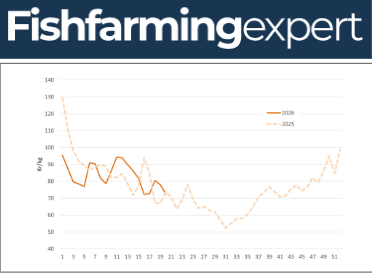
According to sector statistics provider Akvafakta, the spot price of Norwegian farmed salmon decreased by NOK 5.38 (£0.43) per kilo last week (week 20), down to NOK 72.56 (£6.08) per kilo.
This is a price that is almost NOK 1 below the price in the same week last year.
The average spot price so far this year is NOK 83.44/kg, compared to the equivalent of NOK 86.85 in 2025.
Author: Pål Mugaas Jensen / fishfarmingexpert | Read the full article here



 SPAIN
SPAIN.png)
 RUSSIAN FEDERATION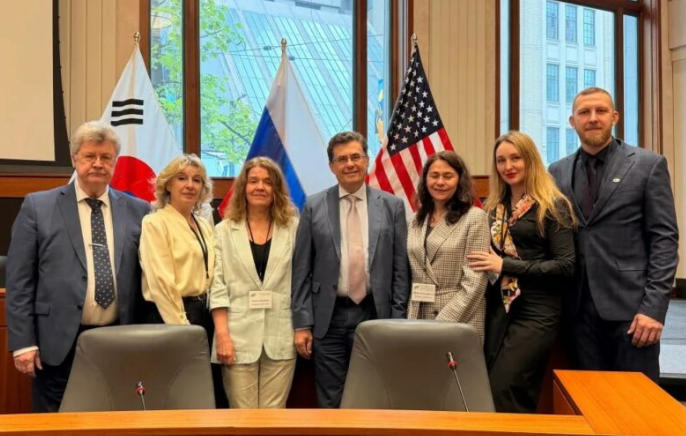
 NORWAY
 Atlantic Sapphire
  UNITED KINGDOM
.png) A new free trade deal in the Middle East is expected to provide a boost for Scottish exports amid global economic uncertainty, Scotland’s salmon farming trade body has said.
A new free trade deal in the Middle East is expected to provide a boost for Scottish exports amid global economic uncertainty, Scotland’s salmon farming trade body has said. JAPAN
JAPAN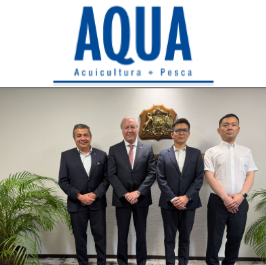 Salmones Austral
 CHILE
CHILE The Chilean Undersecretariat of Fisheries and Aquaculture
 .png) The
The 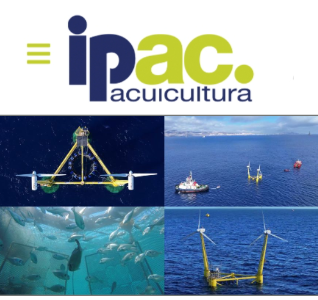 After nearly four years of work, the AquaWind project, coordinated by the Canary Islands Agency for Research, Innovation and the Information Society (ACIISI), has demonstrated that, under real-world conditions, renewable energy production and aquaculture can not only coexist but also complement each other to optimize the use of the sea.
 UNITED ARAB EMIRATES
 Scotland’s salmon industry has been given a big new lift following a key trade deal between the UK and the Middle East.
 ARGENTINA
.png)
 According to sector statistics provider Akvafakta, the spot price of Norwegian farmed salmon decreased by NOK 5.38 (£0.43) per kilo last week (week 20), down to NOK 72.56 (£6.08) per kilo.