IN BRIEF - Genetic Divide in Icelandic Shrimp Revealed: Inshore vs. Offshore Populations
ICELAND
Tuesday, April 15, 2025
New research uncovers distinct genetic stratification between shallow-water and northern shrimp, with temperature linked to diversity in offshore populations.
A recently published article details the genetic stratification observed between inshore shrimp (common in shallower waters) and offshore shrimp (northern shrimp, Pandalus borealis) populations in northern Iceland. The study analyzed reduced representative genome sequence data from shrimp samples collected across three key areas: Arnarfjörður bay in the Northwest, Skjálfandi bay in the North, and extending offshore to Kolbeinsey island, located approximately 100 kilometers off Iceland's northern coast. [Click here to read the article]
The research revealed minimal genetic differentiation within the inshore shrimp populations. However, a clear genetic gradient was identified when comparing inshore and offshore shrimp. Notably, the study also indicated a significant aggregation of inshore shrimp outside of Skjálfandi bay.
Previous research has shown limited genetic diversity in northern shrimp despite their extensive boreal distribution. In contrast, this new study uncovered a strong correlation between bottom sea temperature and the identified genetic variation across the offshore samples collected from Skjálfandi bay to Kolbeinsey island.
Chilean fisheries and aquaculture exports reached a value of US$1,870.4 million in February 2026, registering a 12.1% increase compared to the same period of the previous year and placing them 33.9% above the average observed during the five-year period 2021-2025, according to the latest Sector Report prepared and published by the Undersecretariat of Fisheries and Aquaculture (Subpesca).
In terms of volume, shipments totaled 398,900 tons, a figure that represents a 21% increase compared to 2025 and a 49.5% increase compared to the average of the last five years, reflecting the strengthening of the presence of Chilean seafood products in international markets.
Source: MundoAcuicola | Read the full article here
Coastal El Niño Continues to Put Pressure on a Strategic Fishery for Marine Ingredients Used in Animal Feed and Aquaculture
Peru has extended the suspension of anchovy fishing in a large area of ??its north-central coast due to the persistence of conditions associated with the coastal El Niño phenomenon. The measure, which was set to expire on June 10, 2026, will remain in effect indefinitely.
The ban affects the maritime area extending from the northern limit of Peru's maritime domain to 16°00′S.
The cod fishing fleet welcomes the fact that the European Commission is finally "consistent with its words," although the new measures could generate "a supply problem."
As its name indicates, the Melkart-5 is the fifth vessel in the large family of trawlers belonging to the Russian fishing company Murman Sea Food, one of the most important firms in the sector in the country, operating from the port of Murmansk, Russia's largest in the Arctic. The company was sanctioned in May 2015 by the Council of the European Union along with Norebo JSC, another long-established player in the nation's fishing industry. Both allegedly collaborated with the Kremlin by sponsoring various "destabilizing activities" against the EU27. Acting as a kind of undercover agent, they were caught red-handed amid escalating tensions between the two powers, three years after the outbreak of war in Ukraine.
Author: Jorge Garnelo / Faro de Vigo | Read the full article here
The Coalition for Fisheries Transparency (CFT) has called on parliamentarians to place fisheries transparency at the centre of efforts to build a sustainable future for the UK fishing industry.
The call comes amid concerns over declining fish stocks and continued illegal fishing activity. According to the coalition, 35% of global fish stocks are fished unsustainably, while half of the UK’s ten most important fish stocks are either critically low, overexploited or both.
The coalition says implementing the Global Charter would promote transparent, equitable and well-governed fisheries while helping eliminate harmful fishing practices, labour abuses and illegal activity across global seafood supply chains.
Skretting has introduced phytocomplexes into its health feed products for Norwegian salmon, marking the first commercial use of the plant-based ingredient combinations in the country’s salmon farming sector.
The feed manufacturer said the initiative is aimed at helping fish cope with chronic inflammation, an issue that has become an increasing challenge for Norwegian salmon producers in recent years and has been linked to reduced robustness and higher mortality.Unlike feed additives based on isolated compounds, phytocomplexes combine multiple bioactive substances derived from plants.
Source: SalmonBusiness | Read the full article here
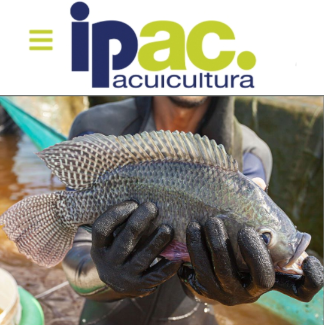
The Brazilian Aquaculture Association (PEIXE BR) has highlighted two important advances achieved in recent days regarding the import of tilapia fillets from Vietnam, the result of mobilization and collaborative work across the entire national aquaculture production chain.
On June 2, the Government of the State of São Paulo announced the publication of a decree establishing an ICMS tax on imported tilapia fillets; a measure that, according to the Association, “represents a significant step in the pursuit of greater fiscal balance and fairer competitive conditions for Brazilian producers.”
Source: iPac.acuicultura | Read the full article here
NOAA strengthens commitment to aquaculture through new cooperative institute. More than $13M invested in research partnerships to bolster American seafood competitiveness.
NOAA announces the University of New Hampshire as host institution for the new NOAA Cooperative Institute Fostering Aquaculture Research and Markets (CIFARM) to expand NOAA’s impact and strengthen efforts to boost American seafood competitiveness. After a highly competitive application process, this new five-year cooperative institute will harness partnerships with cutting-edge researchers to advance American marine aquaculture.
RaySon algal oil, an alternative source of omega-3 specially for salmon feed, improves the quality of the final product for consumers and boosts the immune system.
Xiamen Huison Biotech Co Ltd have been dedicated to the research and production of algal oil for over 20 years, with rich experience and advanced technology.
These benefits make DHA-rich feeds a key factor in improving both the health of farmed salmon and the quality of the final product for consumers.
Author: Janice Johnston / Fish Farmer | Read the full article here
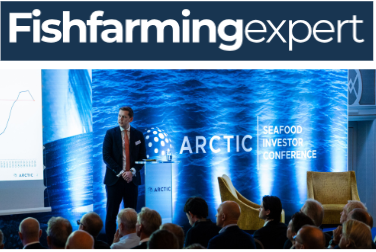
Strong biological development has led to higher salmon production and pushed prices down this year. Arctic Securities now believes in better market balance.
The market-influencing spot price of Norwegian farmed salmon will bottom out at NOK 53 (£4.22) per kilo in July and August, and will average NOK 72 in the second half of the year, a seafood analyst believes.
While weaker prices are often associated with challenges in the industry, Nordby believes that the explanation this time is largely the opposite.High harvest weights, high superior share, and low mortality in Norway have contributed to more salmon coming on to the market.
Author: Therese Soltveit / fishfarmingexpert | Read the full article here
A few months before the event, the Center for Applied Research, CIA-INCAR², confirmed the sponsorship of the National Fisheries and Aquaculture Service (Sernapesca) for the International Conference SRS2026. This will be the first international meeting dedicated exclusively to piscirickettsiosis, a disease caused by the bacterium Piscirickettsia salmonis. This disease causes significant economic losses for Chilean salmon farming and is currently generating increasing interest in other countries of the Northern Hemisphere.
Source: MundoAcuicola | Read the full article here
Macroeconomic Uncertainty in the US Seafood Market United States
The dual impact of disputed refunds under IEEPA and new tariff threats under Section 301 creates a commercial stalemate.
The regulatory and fiscal framework applied to seafood imports in the United S...




 ICELAND
 A recently published article details the genetic stratification observed between inshore shrimp (common in shallower waters) and offshore shrimp (northern shrimp, Pandalus borealis) populations in northern Iceland. The study analyzed reduced representative genome sequence data from shrimp samples collected across three key areas: Arnarfjörður bay in the Northwest, Skjálfandi bay in the North, and extending offshore to Kolbeinsey island, located approximately 100 kilometers off Iceland's northern coast. [
 CHILE
CHILE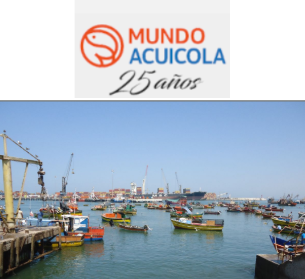 Chilean fisheries and aquaculture exports reached a value of US$1,870.4 million in February 2026, registering a 12.1% increase compared to the same period of the previous year and placing them 33.9% above the average observed during the five-year period 2021-2025, according to the latest Sector Report prepared and published by the Undersecretariat of Fisheries and Aquaculture
  PERU
PERU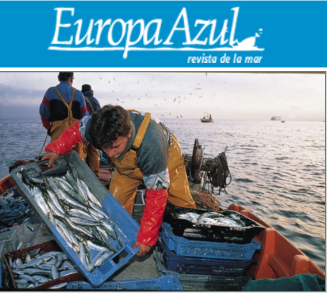 Coastal El Niño Continues to Put Pressure on a Strategic Fishery for Marine Ingredients Used in Animal Feed and Aquaculture
 EUROPEAN UNION
.png) As its name indicates, the Melkart-5 is the fifth vessel in the large family of trawlers belonging to the Russian fishing company Murman Sea Food, one of the most important firms in the sector in the country, operating from the port of Murmansk, Russia's largest in the Arctic. The company was sanctioned in May 2015 by the Council of the European Union along with Norebo JSC, another long-established player in the nation's fishing industry. Both allegedly collaborated with the Kremlin by sponsoring various "destabilizing activities" against the EU27. Acting as a kind of undercover agent, they were caught red-handed amid escalating tensions between the two powers, three years after the outbreak of war in Ukraine.
As its name indicates, the Melkart-5 is the fifth vessel in the large family of trawlers belonging to the Russian fishing company Murman Sea Food, one of the most important firms in the sector in the country, operating from the port of Murmansk, Russia's largest in the Arctic. The company was sanctioned in May 2015 by the Council of the European Union along with Norebo JSC, another long-established player in the nation's fishing industry. Both allegedly collaborated with the Kremlin by sponsoring various "destabilizing activities" against the EU27. Acting as a kind of undercover agent, they were caught red-handed amid escalating tensions between the two powers, three years after the outbreak of war in Ukraine. UNITED KINGDOM
.png) The call comes amid concerns over declining fish stocks and continued illegal fishing activity. According to the coalition, 35% of global fish stocks are fished unsustainably, while half of the UK’s ten most important fish stocks are either critically low, overexploited or both.
The call comes amid concerns over declining fish stocks and continued illegal fishing activity. According to the coalition, 35% of global fish stocks are fished unsustainably, while half of the UK’s ten most important fish stocks are either critically low, overexploited or both. NORWAY
.png) Skretting
Skretting BRAZIL
 The
The  UNITED STATES
 NOAA
NOAA NEW ZEALAND
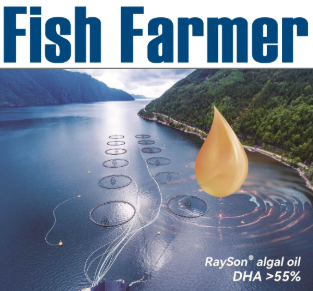 RaySon algal oil, an alternative source of omega-3 specially for salmon feed, improves the quality of the final product for consumers and boosts the immune system.
 The market-influencing spot price of Norwegian farmed salmon will bottom out at NOK 53 (£4.22) per kilo in July and August, and will average NOK 72 in the second half of the year, a seafood analyst believes.
.png) A few months before the event, the Center for Applied Research, CIA-INCAR², confirmed the sponsorship of the National Fisheries and Aquaculture Service
A few months before the event, the Center for Applied Research, CIA-INCAR², confirmed the sponsorship of the National Fisheries and Aquaculture Service