IN BRIEF - Galician Mussel Farmers Unite in Opposition to Altri Pulp Mill in Arousa Estuary
SPAIN
Friday, March 21, 2025
Mass Participation Planned for Saturday's Protest in A Pobra.
Vilagarcía de Arousa – A significant portion of Galicia's mussel farming sector ("bateeiro" sector) has confirmed its participation in the upcoming demonstration against the proposed Altri pulp mill in the Arousa estuary. "We have consistently voiced our unequivocal opposition to this project, which directly threatens our livelihoods and the ecological integrity of the estuary," representatives stated.
The mussel farmers' primary concern centers on the potential impact of the Altri plant on the Arousa estuary's water quality. The proposed mill, located in Palas de Rei, plans to extract up to 46,000 cubic meters of water daily from the Ulla River and discharge 30,000 cubic meters of treated wastewater. As the Ulla River empties into the Arousa estuary, the discharge of this treated water raises serious concerns about potential harm to the marine ecosystem, specifically water quality and shellfish and mussel ("bateeira") production.
Despite receiving environmental approval from the Xunta de Galicia, the shellfish and environmental sectors remain deeply concerned about the potential for irreversible damage. The Arousa estuary is a critical ecosystem for mussel cultivation and a vital economic engine for Galicia.
Direct grants will offset higher fuel and fertiliser costs caused by the Middle East crisis
The European Commission approved Portugal’s €30 million scheme for agriculture, fisheries and aquaculture. Companies may receive up to €50,000, including €0.10/litre for agricultural or marine diesel consumed from April 1-June 30, 2026.
The plan aims to cut regulatory burdens while strengthening science-based fisheries management.
NOAA Fisheries unveiled priorities to expand domestic seafood production after input from more than 700 stakeholders. Reforms target sustainable fishing opportunities, stronger markets and infrastructure, processing capacity and tougher action against IUU fishing.
IFOP completes the 2025–2026 phase of a key program supporting wild seed collection and production planning
Chile's IFOP, with funding from the Undersecretariat for Fisheries and Aquaculture, completed the 13th stage (2025–2026) of its mussel larval monitoring program. The initiative tracks larval abundance, spawning, wild seed availability and oceanographic conditions, helping producers identify optimal collection periods, reduce uncertainty and strengthen the sustainability of southern Chile's mussel farming industry. The closing event gathered 129 participants from industry, government, academia and research centers.
Fiskistofa will deploy unmanned aircraft throughout September 2026 to monitor fishing operations and discards.
Drone footage will be closely reviewed to identify fish discarded at sea. Fiskistofa reminds fleets that permitted releases must involve viable fish, while species and estimated kilograms discarded must be electronically recorded in fishing logbooks.
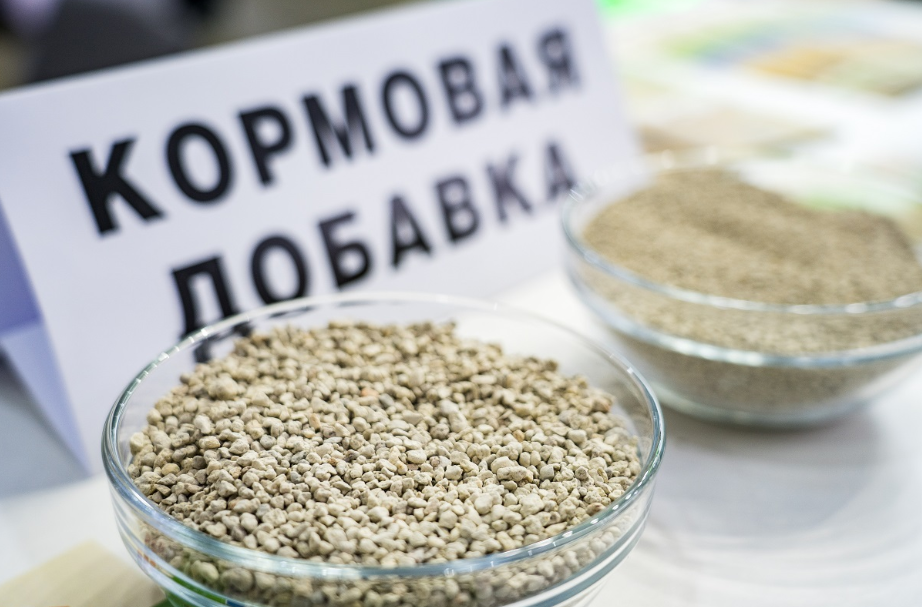
Novosibirsk State University scientists are developing a high-protein feed additive from Yarrowia lipolytica, with no current Russian equivalent.
The yeast biomass provides essential amino acids, B vitamins, lipids, phospholipids and nucleotides that may stimulate fish and poultry growth. Its beta-glucans and mannan-oligosaccharides can strengthen immunity and reduce antibiotic use.
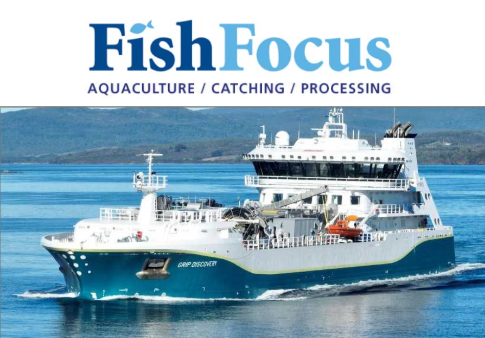
Trident Aqua Services has celebrated the naming of Grip Discovery in Puerto Montt, Chile, together with customer Multi X. Delivered from Sefine Shipyard and designed by Salt Ship Design AS, the vessel is the largest and most advanced wellboat currently operating in Chile, with a well capacity of 4,000 m³.Built to support a wide range of aquaculture operations, Grip Discovery combines advanced fish handling systems, high biosecurity standards and substantial freshwater treatment capacity. The vessel introduces a new generation of wellboat technology to the Chilean salmon industry, bringing together large-scale freshwater production, battery-hybrid propulsion and highly efficient treatment systems in a single platform.
Suspected and confirmed Infectious salmon anaemia (ISA) has been reported at three locations in the Bodø region of northern Norway over the past week.
The incidents are being seen as one of the most serious episodes in a single area for some time.
The first report, which came on August 24th is at a location in Saltdalsfjorden where both Edelfarm AS and Salten Stamfisk AS have fish at the site, which is operated by Edelfarm AS. Confirmation or otherwise is awaited.
The next incident, which has now been confirmed, happened at sea location 32397 "Storvika" in Skjerstadfjorden in Bodø.
Author: Vince McDonagh / Fish Farmer | Read the full article here
Norwegian salmon exports reached a monthly record in August, with 153,602 tonnes shipped at a value of NOK 12.3 billion (€1.14 billion).
Volumes rose 7% year on year while export value increased 19%, or NOK 2 billion (€186 million). The total was NOK 19 million (€1.8 million) above the previous monthly record set in October 2025.
The rise helped push Norway's total seafood exports to a record NOK 16 billion (€1.49 billion) for the month, up 14% year on year.
Source: SalmonBusiness | Read the full article here
The two-day conference will highlight technologies, investment and business models that turn seafood side streams into high-value products.
100% Fish for Profit, on 23–24 September in Iceland, will unite industry, researchers and investors to explore full fish utilisation, from AI and advanced processing to nutraceuticals, pharmaceuticals, cosmetics and biomaterials.
The panel will explore how collaboration across industry, research, policy and investment can accelerate innovation and scale full-utilisation solutions internationally.
Free tools eSPeKS and AquaTrack aim to simplify government support and improve production efficiency
Malaysia’s Department of Fisheries (DOF) introduced eSPeKS and AquaTrack, free digital platforms for aquaculture farmers. The tools streamline government aid applications and record stocking, feed use, harvests, FCR, production costs and break-even points, providing data to improve farm planning, productivity and financial management.





 SPAIN
SPAIN(1).png) The mussel farmers' primary concern centers on the potential impact of the Altri plant on the Arousa estuary's water quality. The proposed mill, located in Palas de Rei, plans to extract up to 46,000 cubic meters of water daily from the Ulla River and discharge 30,000 cubic meters of treated wastewater. As the Ulla River empties into the Arousa estuary, the discharge of this treated water raises serious concerns about potential harm to the marine ecosystem, specifically water quality and shellfish and mussel ("bateeira") production.
The mussel farmers' primary concern centers on the potential impact of the Altri plant on the Arousa estuary's water quality. The proposed mill, located in Palas de Rei, plans to extract up to 46,000 cubic meters of water daily from the Ulla River and discharge 30,000 cubic meters of treated wastewater. As the Ulla River empties into the Arousa estuary, the discharge of this treated water raises serious concerns about potential harm to the marine ecosystem, specifically water quality and shellfish and mussel ("bateeira") production. PORTUGAL
 Direct grants will offset higher fuel and fertiliser costs caused by the Middle East crisis
 UNITED STATES
 CHILE
CHILE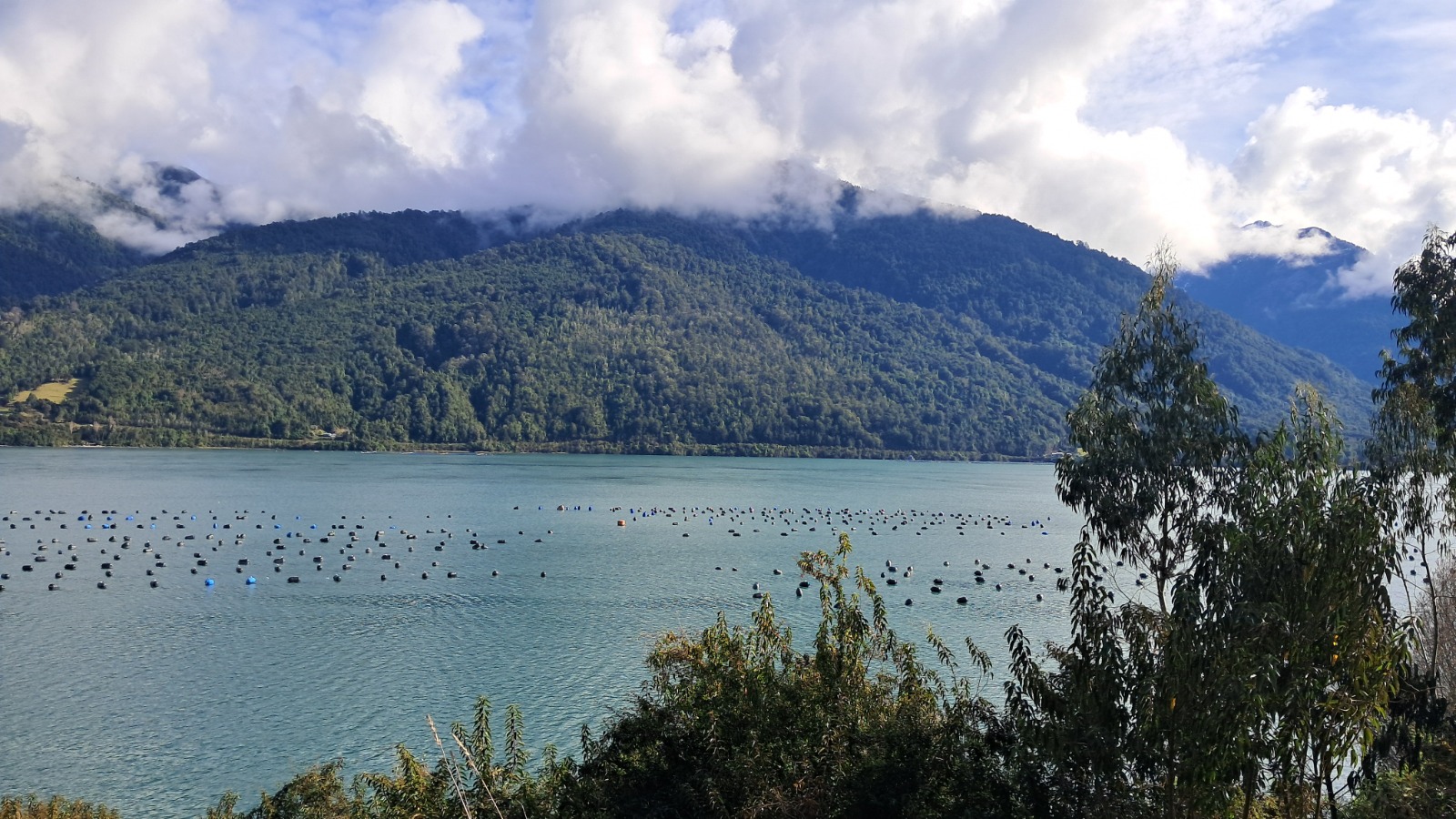
 ICELAND
.png) Fiskistofa will deploy unmanned aircraft throughout September 2026 to monitor fishing operations and discards.
Fiskistofa will deploy unmanned aircraft throughout September 2026 to monitor fishing operations and discards. RUSSIAN FEDERATION
 Novosibirsk State University scientists are developing a high-protein feed additive from Yarrowia lipolytica, with no current Russian equivalent.
 Trident Aqua Services has celebrated the naming of Grip Discovery in Puerto Montt, Chile, together with customer Multi X. Delivered from Sefine Shipyard and designed by Salt Ship Design AS, the vessel is the largest and most advanced wellboat currently operating in Chile, with a well capacity of 4,000 m³.Built to support a wide range of aquaculture operations, Grip Discovery combines advanced fish handling systems, high biosecurity standards and substantial freshwater treatment capacity. The vessel introduces a new generation of wellboat technology to the Chilean salmon industry, bringing together large-scale freshwater production, battery-hybrid propulsion and highly efficient treatment systems in a single platform.
 NORWAY
.png) The incidents are being seen as one of the most serious episodes in a single area for some time.
The incidents are being seen as one of the most serious episodes in a single area for some time.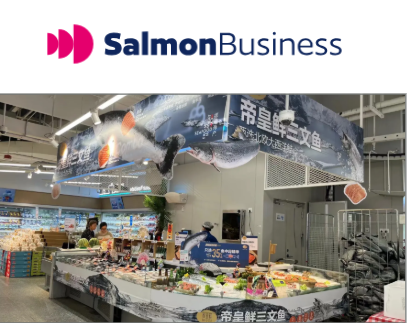 Norwegian salmon exports reached a monthly record in August, with 153,602 tonnes shipped at a value of NOK 12.3 billion (€1.14 billion).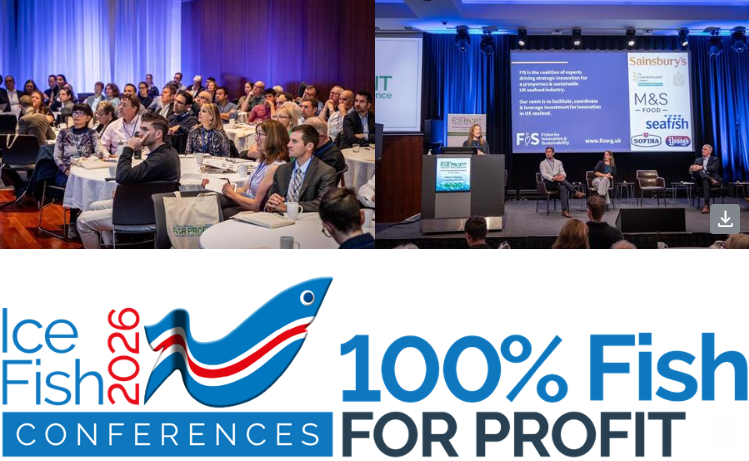
 MALAYSIA
.png)