IN BRIEF - VASEP releases 10-year Pangasius Industry Report (2015-2024)
VIET NAM
Wednesday, January 22, 2025
The Vietnam Pangasius Industry Report 2015 - 2024, conducted by the Vietnam Association of Seafood Exporters and Producers (VASEP) and released in January 2025, is expected to provide businesses, importers and state management agencies with an overview of important developments in the production and export of Vietnamese pangasius over the past 10 years.
In addition to highlighting the achievements, the report will also identify existing problems and analyze the opportunities and challenges that the pangasius industry will face in the future.
During the period from 2015 to 2024, the pangasius industry has witnessed strong growth, not only in production output but also in export turnover. With sustainable growth and stable export volume, pangasius has become one of Vietnam's key export products, bringing important foreign currency to the national economy.
However, the pangasius industry is also facing significant challenges, including environmental issues, fierce competition from other countries, and international trade barriers. This report will analyze in depth the factors affecting the development of the industry, and propose practical solutions and recommendations for the pangasius industry to continue to develop in a sustainable and effective manner.
Fisheries Minister Luis Planas had convened representatives of the Spanish fishing sector to review progress on negotiations regarding the EU's multiannual financial framework—specifically concerning the European Maritime, Fisheries and Aquaculture Fund (EMFAF)—and aid to address the crisis triggered by US and Israeli attacks on Iran. However, the discussion ended up covering a wide range of topics: training, trade agreements, fishing quotas, Mediterranean regulations, and more.
Source: La Voz de Galicia | Read the full article here
Thailand has launched its first research project to farm Atlantic salmon domestically, with scientists using a recirculating aquaculture system (RAS) to assess whether commercial production is feasible in the tropical country.
The project is being led by the Faculty of Fisheries at Kasetsart University in partnership with PTT LNG. Researchers are studying salmon growth, nutrition and the economics of production to determine whether a domestic industry could be established.The first phase of the project began after 20,000 fertilised Atlantic salmon eggs were imported from Chile in early May.
Source: SalmonBusiness | Read the full article here
Salmon farming has become one of the world’s most successful aquaculture industries. It has provided large volumes of healthy protein, created employment in coastal regions and built a global market for farmed Atlantic salmon.
For many years, the main production model has been relatively simple: produce smolt on land, transfer the fish to sea cages and grow them to harvest size in the ocean. This model has been extremely effective. It has allowed the industry to scale up and in the right locations it remains a very efficient way to produce salmon.
Author: Ivar Warrer-Hansen / Fish Farmer | Read the full article here
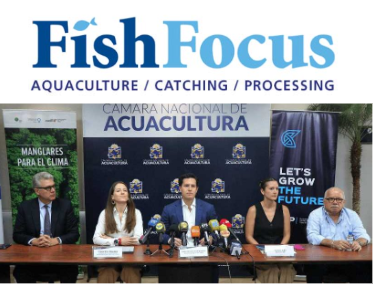
The Ecuadorian shrimp industry, through theNational Chamber of Aquaculture (CNA) and the Sustainable Shrimp Partnership (SSP), has formalised an alliance with Conservation International Ecuador (CI-Ecuador) to strengthen mangrove conservation and restoration efforts, promote sustainable shrimp aquaculture, and contribute to the climate resilience of Ecuador’s coastal ecosystems and communities.Through this agreement, the organisations will establish a framework for collaboration and implement joint actions under the Mangroves for Climate initiative.
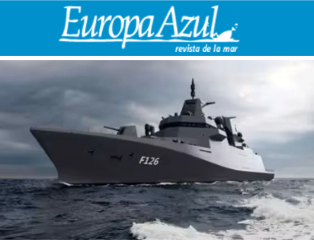
The German government scraps the heavy frigate project led by Rheinmetall and opts for TKMS's Meko frigates to modernize its Navy
The German government has decided to cancel the F126 heavy frigate program—valued at approximately €10 billion—after noting accumulated delays and rising project costs. The decision marks a significant setback for Rheinmetall, which was undertaking its first major foray into military shipbuilding following its acquisition of Naval Vessels Lürssen (NVL), and it reshapes Germany's industrial strategy regarding one of Europe's largest naval defense programs.
During the 2026 Applied AI SummIT, Mowi Chile presented its Smart Farming 4.0 strategy, which relies on artificial intelligence, real-time monitoring, and data analysis to optimize feeding, anticipate environmental risks, and strengthen decision-making in salmon production.
Artificial intelligence is playing an increasingly important role in salmon farming—not only in automating processes but also in enhancing the ability to anticipate production, environmental, and health-related events. This was one of the key takeaways shared by Mowi Chile during the 2026 Applied Artificial Intelligence SummIT hosted by Duoc UC in Puerto Montt.
Source: MundoAcuicola | Read the full article here
This year, Russia unilaterally increased its quota to 67,548 tonnes—nearly five times its 2004 quota.
Following a proposal by the European Union (EU) and recent trade restrictions targeting Russian fish, members of the North-East Atlantic Fisheries Commission (NEAFC)—with the exception of Russia—have adopted measures to curb unsustainable mackerel fishing in the North-East Atlantic. The stock is in a critical state of conservation after years of overfishing, particularly by Russia. This year, the country unilaterally raised its quota to 22.5% of the Total Allowable Catch (TAC)—equivalent to 67,548 tonnes—which is nearly five times the quota it held in 2004.
The EU, the United Kingdom, Denmark (on behalf of the Faroe Islands and Greenland), Norway, and Iceland have agreed to limit Russian mackerel catches in international waters to 1,495 tonnes.
Source: Industrias Pesqueras | Read the full article here
Marine conservation charity Oceana UK has revealed the scale of the UK’s offshore oil and gas legacy,?identifying?1,685 active or unplugged wells inside marine protected areas and warning that ageing infrastructure could pose growing risks to marine wildlife if not properly decommissioned.
The findings come as ministers prepare the?Energy Independence Bill, which is expected to legislate for an end to new oil and gas licences.?Oceana says the UK now has a major opportunity to tackle the environmental legacy of decades of offshore extraction
The Koñimo I, which was being used at a Chilean salmon farm, sank when its crew were sleeping
A fish farm service vessel that sank with the loss of six lives in Chile’s Reloncaví estuary on January 27 has been raised five months after the tragedy
Salvage operations began in early June and the recovery was completed at the weekend.
Following this, prosecutor María Angélica de Miguel reported that “now comes a very important stage, which is the carrying out of the various expert analyses that will be performed together with the Investigative Police”.
Source: fishfarmingexpert | Read the full article here
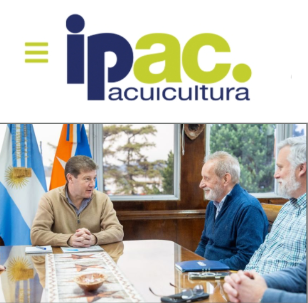
The Governor of Tierra del Fuego, Gustavo Melella, and the Argentine-Canadian firm Wanchese Cooke—a subsidiary of Cooke Canada—have signed a letter of intent. The agreement aims to establish an initial framework for dialogue, technical and institutional exchange, and the assessment of aquaculture development opportunities within the Argentine province.
This initiative aligns with Tierra del Fuego’s public policy of promoting sustainable, innovative aquaculture that generates added value, in accordance with the provincial Aquaculture Development Plan and current regulations.
Through this agreement, both parties express their commitment to advancing a preliminary work agenda.
Source: iPac.acuicultura | Read the full article here
Schouten Europe acquires Bobeldijk Food Group Netherlands
Schouten Europe increases production capacity and strengthens its position in the European market for plant-based meat and fish alternatives
The market for plant-based food in Europe is consolidating...
Alaska Golden King crab 2026/27 TAC announced United States
Steady year-over-year supply reinforces Golden King crab’s reliability in the market
EDMONDS, WA — The Alaska Department of Fish and Game (ADF&G) has announced the 2026/27 total allow...
Copyright 1995 - 2026 Seafood Media Group Ltd.| All Rights Reserved. DISCLAIMER



 VIET NAM
 In addition to highlighting the achievements, the report will also identify existing problems and analyze the opportunities and challenges that the pangasius industry will face in the future.
 SPAIN
SPAIN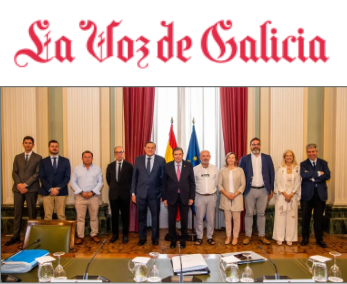 Fisheries Minister Luis Planas had convened representatives of the Spanish fishing sector to review progress on negotiations regarding the EU's multiannual financial framework—specifically concerning the European Maritime, Fisheries and Aquaculture Fund (EMFAF)—and aid to address the crisis triggered by US and Israeli attacks on Iran. However, the discussion ended up covering a wide range of topics: training, trade agreements, fishing quotas, Mediterranean regulations, and more.
 THAILAND
 Thailand has launched its first research project to farm Atlantic salmon domestically, with scientists using a recirculating aquaculture system (RAS) to assess whether commercial production is feasible in the tropical country.
 NORWAY
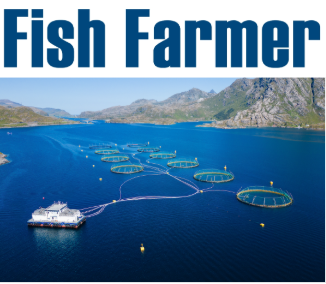 Salmon farming has become one of the world’s most successful aquaculture industries. It has provided large volumes of healthy protein, created employment in coastal regions and built a global market for farmed Atlantic salmon.
 ECUADOR
 The Ecuadorian shrimp industry, through the
 GERMANY
 The German government scraps the heavy frigate project led by Rheinmetall and opts for TKMS's Meko frigates to modernize its Navy
 CHILE
CHILE.png) During the 2026 Applied AI SummIT,
During the 2026 Applied AI SummIT,  EUROPEAN UNION
.png) Following a proposal by the European Union (EU) and recent trade restrictions targeting Russian fish, members of the North-East Atlantic Fisheries Commission (NEAFC)—with the exception of Russia—have adopted measures to curb unsustainable mackerel fishing in the North-East Atlantic. The stock is in a critical state of conservation after years of overfishing, particularly by Russia. This year, the country unilaterally raised its quota to 22.5% of the Total Allowable Catch (TAC)—equivalent to 67,548 tonnes—which is nearly five times the quota it held in 2004.
Following a proposal by the European Union (EU) and recent trade restrictions targeting Russian fish, members of the North-East Atlantic Fisheries Commission (NEAFC)—with the exception of Russia—have adopted measures to curb unsustainable mackerel fishing in the North-East Atlantic. The stock is in a critical state of conservation after years of overfishing, particularly by Russia. This year, the country unilaterally raised its quota to 22.5% of the Total Allowable Catch (TAC)—equivalent to 67,548 tonnes—which is nearly five times the quota it held in 2004. UNITED KINGDOM
 Marine conservation charity
 .png) A fish farm service vessel that sank with the loss of six lives in Chile’s Reloncaví estuary on January 27 has been raised five months after the tragedy
A fish farm service vessel that sank with the loss of six lives in Chile’s Reloncaví estuary on January 27 has been raised five months after the tragedy ARGENTINA
 The Governor of Tierra del Fuego, Gustavo Melella, and the Argentine-Canadian firm Wanchese Cooke—a subsidiary of