Belnova invests 15 million dollars in the modernization of the B/P Río Solís IV
URUGUAY
Wednesday, December 11, 2024
The vessel, which is now considered the most advanced vessel in the Uruguayan and regional fishing fleet, was officially presented to the national and port authorities of Uruguay, the country under whose flag it operates.
Originally built in 1987 at the Skála shipyards in the Faroe Islands, this vessel, 60.3 meters long and 13.4 meters wide, has a processing capacity of up to 120 tons of fish per day. Throughout its history, it has operated under various names, including Dorado, Polonus, Tunu, Akraberg, Beinir and Skalafjall. In the past, it was also part of the Deutsche Fischfang Union (DFFU) fleet.
As with the Río Solís II, Belnova once again relied on the Nodosa shipyard to carry out a comprehensive transformation of this 1,200 gross ton vessel. The ship is equipped with a 3,000 horsepower engine and has a cargo hold with a capacity for 500 net tons of cargo.
Captain Manuel Barros, of Belnova, highlighted that the Río Solís IV represents a milestone in the local fishing industry, being “the most modern vessel in the Uruguayan fleet and in the region.” For his part, Albano González Domínguez, CEO of Belnova, underlined the magnitude of the project: “It has not been a simple tune-up, but a total reconversion.”
Province shifts toward high-value, deep-processed seafood under its 2026–2030 development plan
Vietnam's Dong Thap targets 6.87% annual growth in seafood production value and 1.409 million tonnes of output by 2030. Processed seafood exports are expected to grow 10% annually, driven by pangasius, shrimp and molluscs, advanced freezing, automation and value-added products including collagen, gelatin and chitosan.
Changji extends its production season by 3.5 months as freshwater aquaculture expands
Greenhouse ponds in Changji, Xinjiang, now enable two shrimp harvests annually, extending the farming season by 3.5 months despite the region’s cold climate. The city has 12,000 mu of aquaculture area and targets 4,000 tonnes of annual output. Production reached 940 tonnes in H1 2026, up 7.7% year-on-year.
KKP acts to protect local shrimp farmers and prevent unauthorized domestic sales
Indonesia’s KKP secured 1,048 tons of shrimp from Canada, Argentina and Ecuador in East Java, suspected of being diverted to the local market. The cargo includes 885 tons of Argentine red shrimp, 144 tons of Ecuadorian vannamei and 19 tons of Canadian pink shrimp. Quality and traceability checks are underway.
New scheme targets energy, water use and grid integration
The European Commission proposed a common EU rating for data centres above 500 kW, assessing energy and water efficiency, clean power, flexibility and waste-heat reuse. First labels are expected in 2027, as EU data-centre electricity demand could reach 114 TWh by 2030.
The aquaculture and fisheries sector of Los Lagos has gained new commercial opportunities in North Asia. Companies such as Aqua Chile, Maroa Foods, and Sudmaris joined a delegation organized by ProChile—comprising over 30 domestic firms—aimed at strengthening trade ties and expanding their presence in three strategic markets: South Korea, Japan, and Taipei.
The Chile–North Asia Business Meeting, held in Seoul from September 7 to 9, featured a business matchmaking session with 80 importers and projected nearly 450 business meetings, alongside activities designed to explore consumer trends and promote Chilean food products.
Source: MundoAcuicola | Read the full article here
Cermaq Canada compliance and sustainability director Stephanie Synard-McInnis has been elected president of the Newfoundland and Labrador Aquaculture Industry Association.
Synard-McInnis succeeds Ocean Trout Canada’s Sheldon George following the association’s annual general meeting, held during the Cold Harvest & Aquaculture Canada conference in St. John’s.
Skretting Canada technical sales adviser Ben Normand was elected vice president.
Source: SalmonBusiness | Read the full article here
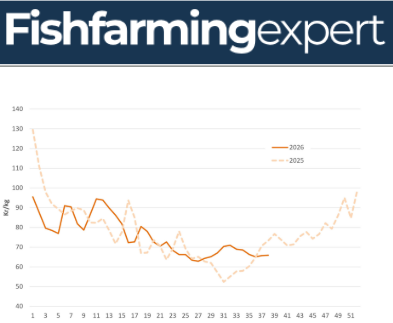
Norway set a new record for salmon exports last week, shipping 43,800 tonnes (round weight) abroad and beating the previous record set in mid-August by 245 tonnes.
The volume was 22.3% higher than in the same week in 2025.Despite the all-time high export volume, the spot price of Norwegian salmon increased last week, albeit by just NOK 0.19 (£0.015) per kilo to NOK 65.94 (£5.18) per kilo.
Author: Pål Mugaas Jensen / fishfarmingexpert | Read the full article here
Fish farmers and the companies providing support services to them are highly cost-conscious – even more so when profit margins are tight. Even so, they are continuing to make big capital investments in new and upgraded vessels.
To take a few recent examples; in August Mowi Norway took delivery of a new hybrid workboat from Damen Folla, a single-hull aluminium vessel with a hybrid diesel-electric propulsion system; in the same month, shipbuilder Grovfjord Mek Verksted 2.0 of Norway and the Shetland-based company Ocean Farm Services signed a contract for the construction of a new service catamaran, which will be part of Ocean Farm Services’ operations in the Scottish aquaculture industry with a particular focus on cleaning nets; and the big aquaculture vessel operator, Frøy, has ordered two new wellboats from China.
Author: Robert Outram / Fish Farmer | Read the full article here
New Ilorin R&D institute will support training, farmers and youth entrepreneurship
Olam Nigeria, which currently hosts about 200 NYSC Corps Members, seeks more recruits for its farms. It has completed a major aquaculture R&D institute in Ilorin, is building a factory in Asaba, and plans one-year specialist training with universities, placing graduates with farmers nationwide. Trained youth could receive Bank of Industry support to launch businesses.
Portable DNA sequencing will provide faster stock identification while strengthening Indigenous control over fisheries data.
Five Nuu-chah-nulth First Nations on Vancouver Island are building their own salmon genomics capacity using portable Oxford Nanopore DNA sequencing. The $365,000, three-year initiative will help identify Chinook and Coho salmon stocks within days instead of relying solely on DFO laboratories, supporting faster fisheries decisions, conservation and greater Indigenous data sovereignty.
SUNY Cobleskill Ag & Tech Joins Initiative to Fully Use Each Fish United States
New York institution becomes fourth research organization and 50th overall to sign the 100% Great Lakes Fish Pledge
(Cobleskill, New York) – SUNY Cobleskill Ag & Tech has signed the 100% Gr...
Northern Basin Atlantic Cod Spawning Stocks Begin Rebuilding Russia Fed.
Following a prolonged decline since 2015, Russian and Norwegian scientists observe signs of stabilization and project a Total Allowable Catch increase for 2027
The agency Rosrybolovstvo regularly mon...




 URUGUAY
.png) Originally built in 1987 at the Skála shipyards in the Faroe Islands, this vessel, 60.3 meters long and 13.4 meters wide, has a processing capacity of up to 120 tons of fish per day. Throughout its history, it has operated under various names, including Dorado, Polonus, Tunu, Akraberg, Beinir and Skalafjall. In the past, it was also part of the Deutsche Fischfang Union (DFFU) fleet.
Originally built in 1987 at the Skála shipyards in the Faroe Islands, this vessel, 60.3 meters long and 13.4 meters wide, has a processing capacity of up to 120 tons of fish per day. Throughout its history, it has operated under various names, including Dorado, Polonus, Tunu, Akraberg, Beinir and Skalafjall. In the past, it was also part of the Deutsche Fischfang Union (DFFU) fleet. VIET NAM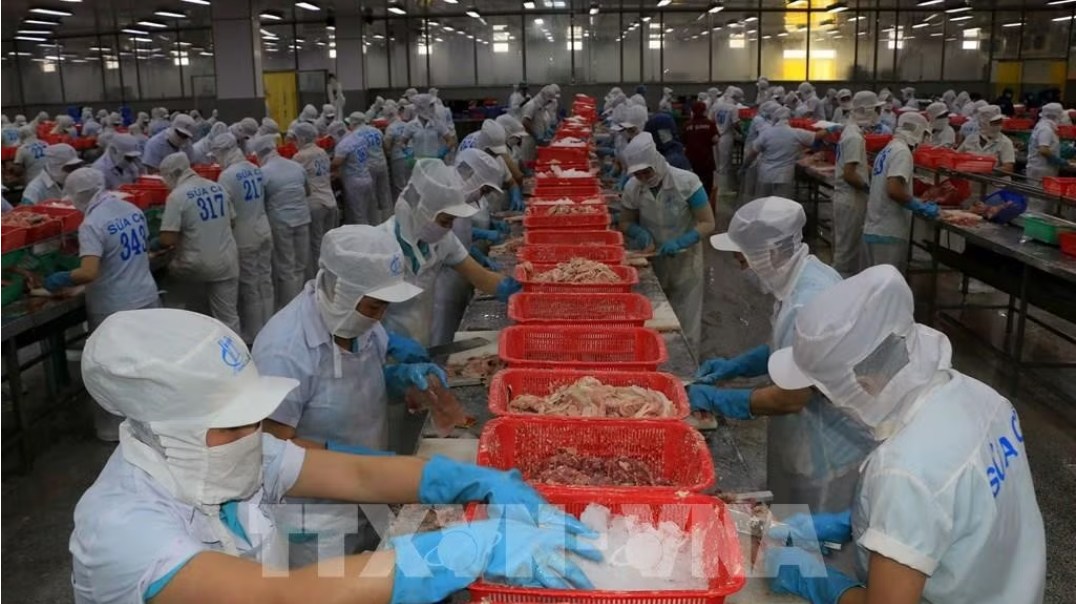
 CHINA
CHINA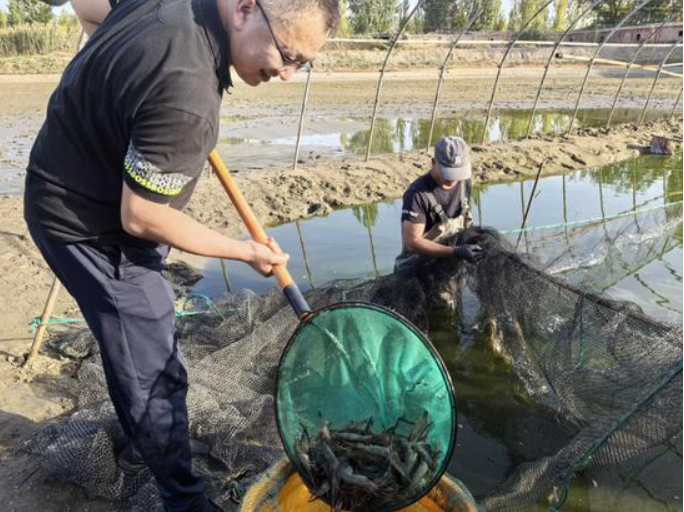 Changji extends its production season by 3.5 months as freshwater aquaculture expands
 INDONESIA
.png)
 EUROPEAN UNION
.png) New scheme targets energy, water use and grid integration
New scheme targets energy, water use and grid integration SOUTH KOREA
.png) The aquaculture and fisheries sector of Los Lagos has gained new commercial opportunities in North Asia. Companies such as Aqua Chile, Maroa Foods, and Sudmaris joined a delegation organized by
The aquaculture and fisheries sector of Los Lagos has gained new commercial opportunities in North Asia. Companies such as Aqua Chile, Maroa Foods, and Sudmaris joined a delegation organized by  CANADA
.png) Cermaq Canada
Cermaq Canada NORWAY
 Norway set a new record for salmon exports last week, shipping 43,800 tonnes (round weight) abroad and beating the previous record set in mid-August by 245 tonnes.
 WORLDWIDE
.png) To take a few recent examples; in August Mowi Norway took delivery of a new hybrid workboat from Damen Folla, a single-hull aluminium vessel with a hybrid diesel-electric propulsion system; in the same month, shipbuilder Grovfjord Mek Verksted 2.0 of Norway and the Shetland-based company Ocean Farm Services signed a contract for the construction of a new service catamaran, which will be part of Ocean Farm Services’ operations in the Scottish aquaculture industry with a particular focus on cleaning nets; and the big aquaculture vessel operator, Frøy, has ordered two new wellboats from China.
To take a few recent examples; in August Mowi Norway took delivery of a new hybrid workboat from Damen Folla, a single-hull aluminium vessel with a hybrid diesel-electric propulsion system; in the same month, shipbuilder Grovfjord Mek Verksted 2.0 of Norway and the Shetland-based company Ocean Farm Services signed a contract for the construction of a new service catamaran, which will be part of Ocean Farm Services’ operations in the Scottish aquaculture industry with a particular focus on cleaning nets; and the big aquaculture vessel operator, Frøy, has ordered two new wellboats from China. NIGERIA
.png) Portable DNA sequencing will provide faster stock identification while strengthening Indigenous control over fisheries data.
Portable DNA sequencing will provide faster stock identification while strengthening Indigenous control over fisheries data.