IN BRIEF - Four major seafood companies see revenue increase for all, three see operating profit increase
JAPAN
Wednesday, November 13, 2024
Consolidated FY2024 April-September period: mixed results for marine products
Click on the image to increase
[Financial Results] Four major seafood companies see increased revenue for all, three companies see increased operating profits/April-September 2024 consolidated period. Mixed results for seafood products
The consolidated financial results for the April-September 2024 period for the four major seafood and food companies all maintained an increase in revenue, as in the first quarter. All three companies, except Maruha Nichiro, saw an increase in operating profit. While sales in the seafood division were solid, profits were mixed depending on the products handled, such as salmon and trout, which sold well, and pollock paste, which saw a slump in market prices.
Europêche is calling for Common Fisheries Policy reform, stronger international negotiations and practical measures to support struggling European fishing fleets
Europêche has called on the European Commission to include a targeted revision of the Common Fisheries Policy (CFP) in its 2027 Work Programme, expressing disappointment with the EU’s Vision for Fisheries 2040.Following a meeting with the Commissioner for Fisheries and Oceans Costas Kadis, the fishing industry association welcomed plans for practical measures in 2027–2028 but stressed that implementation must accompany legislative reform.
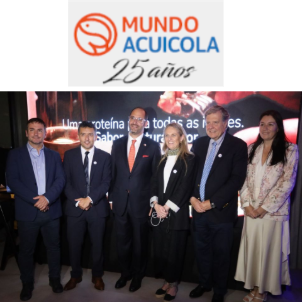
Representatives of SalmonChile carried out an institutional and commercial agenda in São Paulo that included meetings with supermarkets, the food service sector, importers, and government authorities, as well as participation in the Seafood Show Latin America 2026. A key topic of discussion was the tax treatment that will apply to salmon in Brazil.
Strengthening the presence of Chilean salmon in Brazil and advocating for conditions that maintain its competitiveness and accessibility for consumers were among the primary objectives of the agenda pursued this week in São Paulo by representatives of the national salmon farming industry.
Source: MundoAcuicola | Read the full article here
First time at China aquaculture event for Loch Duart Salmon as it prepares for Seafood Expo in Qingdao
Loch Duart Salmon will be part of the 2026 China Fisheries & Seafood Expo, the first time the heritage breed Scottish salmon producer has exhibited in the country. Taking place in Qingdao, the largest city in China’s Shandong Province, the Expo hosts over 45,000 visitors from 136 countries. Expo visitors can find Loch Duart Salmon in Hall B9 at stand 0418.
Trusted by leading chefs worldwide, Loch Duart is celebrated for its exceptional quality, consistency and versatility, from premium sushi and sashimi to innovative restaurant dishes.
OPAGAC will bring together the tuna industry on November 4, 2026.
At Palacio de Neptuno, experts, scientists and industry leaders will discuss European fleet competitiveness, regulations, trade agreements, environmental and social sustainability, generational renewal and food sovereignty, addressing key challenges facing the tuna sector.
Cooperative banks to expand financing for India's fishing sector.
Maharashtra is easing fisheries credit after granting the sector agricultural status. NABARD has earmarked Rs 1,000 crore, while the state aims to grow fisheries business from Rs 1,240 crore to Rs 5,000 crore by 2029, promoting low-interest loans.
The integration aims to boost efficiency and strengthen its nursing-care food business.
Umios will merge Yayoi Sunfoods and Umios Sun Gourmet on April 1, 2027.
The new Umios Yayoi will streamline frozen food production for hospitals and care facilities, reinforcing the group's leading position in Japan's soft-food market.
Jaffna fishing groups oppose proposed fisheries legislation.
Fishermen in Jaffna demand action against illegal Indian trawlers and withdrawal of the proposed Fisheries Bill, fearing corporate control of marine resources.They also seek subsidized fuel, affordable fishing gear and stronger protection of local livelihoods.
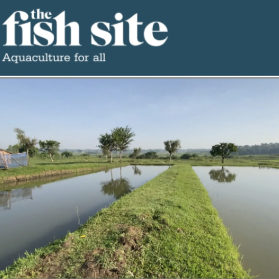
In eastern Uganda, a family-run fish farm is looking beyond production, with ambitions to become a place where the next generation of aquaculture farmers can learn and grow.
Located in Namasere, Bugiri District, along the Jinja-Busia Road in eastern Uganda, Kange Integrated Fish Farm (Kaiffa Uganda) was founded by Kange Samuel, who had a vision of promoting sustainable aquaculture and supporting local communities.
His son, Iwumba Peter, later took the helm, and is now the farm’s managing director.The farm has 12 ponds across approximately 10 acres of land.
Author: Peter Changtoek / The Fish Site | Read the full article here
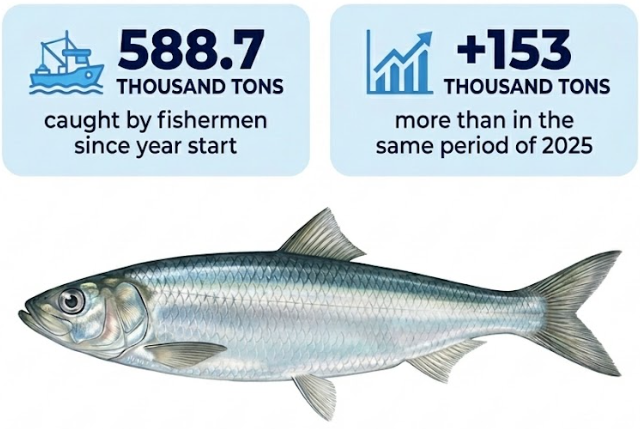
The Pacific herring (Clupea pallasii) fishery in the Russian Far East reached outstanding milestones over the past week, following an increase of 12,400 metric tons.
With this surge, cumulative landings for the year to date reached 588,700 metric tons, exceeding the volume recorded during the same period in 2025 by 153,000 metric tons. In addition, the Russian fishing fleet processed over 478,400 metric tons of this resource on board using its own raw material.
This commercial upswing aligns with evaluations from the scientific community. Experts from the Sakhalin branch of the Russian Federal Research Institute of Fisheries and Oceanography (VNIRO) point out that, over the past decade, Sakhalin-Hokkaido herring stocks have shown a steady growth trend off the southern coast of Sakhalin and the South Kuril Islands.
If current harvest intensity continues, the biomass available in the East Sakhalin subzone could conclude the cycle by setting a new landings record for the 21st century.





 JAPAN
JAPAN.png)
 BELGIUM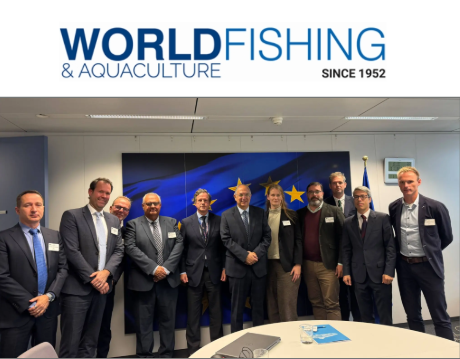
 BRAZIL
 Representatives of
  CHINA
CHINA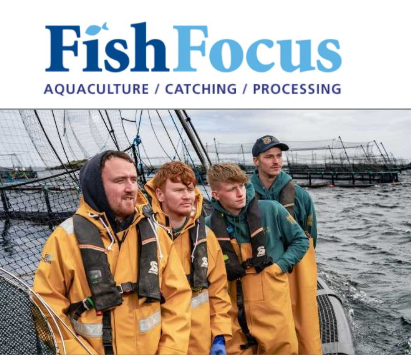 First time at China aquaculture event for
 SPAIN
SPAIN OPAGAC
 FAROE ISLANDS
.png) Deal includes pelagic fishing licenses and fishing rights.
Deal includes pelagic fishing licenses and fishing rights. INDIA
INDIA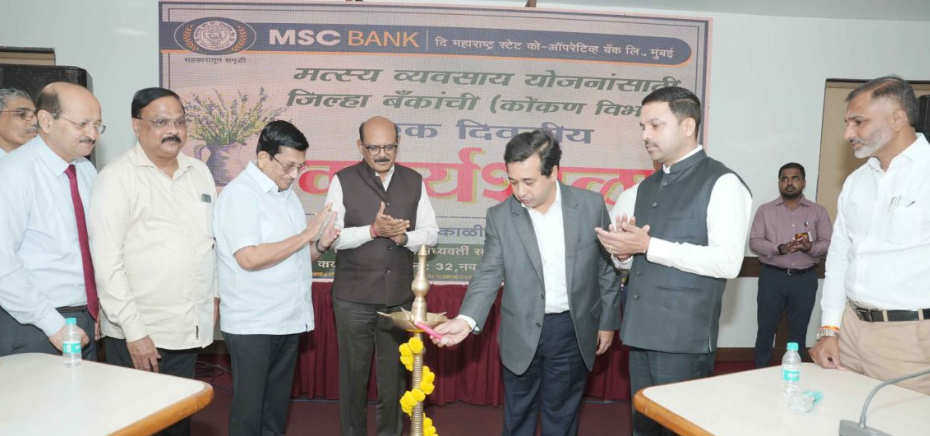

 SRI LANKA
.png) Jaffna fishing groups oppose proposed fisheries legislation.
Jaffna fishing groups oppose proposed fisheries legislation. UGANDA
 In eastern Uganda, a family-run fish farm is looking beyond production, with ambitions to become a place where the next generation of aquaculture farmers can learn and grow.
 RUSSIAN FEDERATION