A team of food scientists are working to reduce food waste—starting with squid wings.
Did you know that when squid is caught and processed—often for dishes like calamari—a lot of it goes to waste? In fact, out of the 65 million pounds of squid that are landed every year, about half are tossed out.
A chef prepares a dish with squid fins in the Dr. Matthew Highlands Food Pilot Plant in Hitchner Hall at the University of Maine. Photo courtesy of the University of Maine -->
In our new podcast episode, we'll meet Rob Dumas and Denise Skonberg—two food scientists from the University of Maine and recipients of NOAA's Saltonstall-Kennedy Grant. They're working to reduce waste by turning squid fins (or wings) into a new, convenient frozen food product.
The research team combined seafood science with culinary knowledge to make their products. They found innovative ways to test them—including holding an Iron Chef-inspired cooking competition! Listen to the episode to learn more about the work to reduce food waste and open new markets.
At Shanghai Ocean University (SHOU), international researchers are harnessing Chinese innovation to revolutionize global food security.
Led by Professor Wang Chenghui, the lab focuses on fish germplasm research, specifically the Oujiang color common carp, a species native to Zhejiang province valued for both food and ornament.
Bangladeshi researcher Nusrat Hasan Kanika investigates how gut microbiomes influence pigmentation and growth. She notes that Bangladesh, a "riverine country," can boost market prices by adopting these advanced techniques. Nearby, Pakistani scholars Rabia Tahir and Ayesha Arif utilize SHOU’s cutting-edge facilities to study environmental stress and epigenetics—resources often unavailable in their home countries.
The team’s success is highlighted by the Longshen No 1, a fast-growing carp strain, and the upcoming Longshen No 2, optimized for rice-fish farming. With scholars from Bangladesh, Pakistan, and Egypt, the lab serves as a global hub. By mastering selective breeding and genetic evaluation, these scientists aim to bring sustainable, high-yield fishery management back to developing nations.
In a decisive move to support the state’s maritime economy, Maharashtra Fisheries and Ports Development Minister Nitesh Rane chaired a high-level meeting in Mumbai this Wednesday to address the "bulk consumer" classification of diesel pricing—a designation that has long burdened fishing communities.
The session focused on the financial strain placed on fisheries cooperatives, which currently pay higher rates than retail consumers due to their bulk status. Key highlights from the meeting include:
Policy Review: Officials were directed to re-evaluate the pricing structure to provide immediate relief to cooperative institutions.
Agriculture Status: Discussions emphasized leveraging the sector’s agriculture-equivalent status to secure better subsidies.
Grassroots Impact: A mandate was issued to ensure government schemes effectively reach beneficiaries across all coastal regions.
The meeting saw participation from Varsha Gaikwad, Fisheries Commissioner Prerna Deshbhratar, and various representatives of the fishing community. Taking to social media, Nitesh Rane committed to a "practical and positive resolution" to safeguard the livelihoods of thousands of fishermen.
Between November 10 and 11, 2026, Puerto Varas, Chile, will be the meeting point for researchers, producers, authorities, and representatives of civil society at the International Conference on Salmon Rickettsial Syndrome (SRS2026) – Integrating Science, Industry and Policy for Sustainable Salmon Aquaculture, organized by the Interdisciplinary Center for Aquaculture Research – Applied Research (INCAR²). The event, the first worldwide focused exclusively on this disease, will seek to integrate science, industry, and public policy to advance towards a more sustainable salmon farming industry
Source: iPac.aquacultura | Read the full article here
Climate change is being blamed for the now common presence of schools of bluefin tuna in northwestern Spain, which are now reaching the United Kingdom. When feeding on small pelagic fish such as sardines, horse mackerel, or anchovies, these tuna can become entangled in the gear of purse seiners, trawlers, or smaller Galician fishing vessels. Although it would be a source of additional income, they are currently required to return this fish to the sea. On April 28, the Council of Ministers approved a proposal from the Ministry of Agriculture, Fisheries and Food that will allow them to sell bluefin tuna when they are caught accidentally.
Source: La Voz de Galicia | Read the full article here
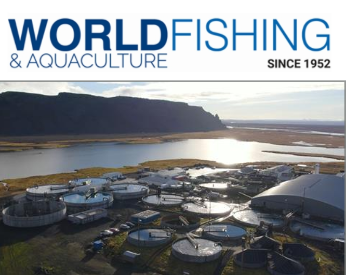
Cflow has announced the establishment of a new local branch in Iceland, marking a significant step in the company’s international expansion strategy and reinforcing its presence in a fast-growing aquaculture market.
The move reflects the company’s assessment of Iceland as a strategically important location, driven by its advanced aquaculture sector and strong demand for high-quality technical solutions.
Cflow’s entry into the Icelandic market builds on existing project experience, most notably its involvement in the Salmon Garden development for Samherji Fiskeldi.
King salmon farmer expects 2,000-tonne increase in harvest by using specialist vessel
New Zealand salmon farming’s first wellboat, the Ronja King, has arrived at Picton in the Marlborough Sounds area of South Island after a journey from Norway that took approximately 70 days.
The 18-year-old Sølvtrans vessel, formerly known as the Ronja Nordic, has been chartered by the country’s biggest salmon farmer, New Zealand King Salmon (NZKS), which produces king, or chinook, salmon (Oncorhynchus tshawytscha).
Author: Gareth Moore / fishfarmingexpert | Read the full article here
SalMar ASA and aquaculture technology company Tidal have announced a strategic collaboration to scale automation and AI-driven operations across SalMar’s farming sites.
Tidal, a spin-out of X, Google’s Moonshot Factory, will deploy its all-in-one camera systems and environmental sensors at multiple SalMar locations. Data will stream into Tidal’s platform for real-time monitoring of fish welfare, early lice detection, risk forecasting, and treatment effectiveness.
Tidal’s autonomous feeding systems will roll out across several SalMar sites, targeting feed conversion ratio improvement, growth consistency, and reduced feed waste.
Source: SalmonBusiness | Read the full article here
The IFFO – The Marine Ingredients Organisation has officially concluded its 2026 Members’ Meeting, which took place in Madrid from April 27–29. The event saw a record-breaking 277 delegates arriving from 35 countries to address the future of the global marine ingredients value chain.
IFFO President Adriana Giudice opened the summit by calling for greater transparency regarding the sector's role in global nutrition and food security. A primary focus of the meeting was the necessity of science-based decision-making and the implementation of common metrics to track industry progress.
Key insights included:
Fisheries Stability:Professor Ray Hilborn from the University of Washington reported that small pelagic fisheries remain stable and generally above maximum sustainable yield, despite the challenges posed by climate change.
Market Growth: Experts highlighted rising demand in fed aquaculture, nutraceuticals, and pet food.
Certification: The industry’s shift toward accountability is being spearheaded by initiatives like MarinTrust, ensuring the sector meets high sustainability and traceability standards.
His Highness Sheikh Hamdan bin Zayed Al Nahyan, Ruler’s Representative in Al Dhafra Region, met with the board of the Abu Dhabi Fishermen’s Cooperative Society (ADFCS) at Al Nakheel Palace to review a transformative strategy for the maritime sector.
Abu Dhabi –Led by Chairman Saif Saif Ghanem Saif Al Suwaidi, the ADFCS presented a roadmap designed to align with the UAE’s national food security goals. The strategy prioritizes the empowerment of local fishermen and the enhancement of supply chain efficiency to boost the competitiveness of Emirati produce.
Strategic Highlights:
Regional Expansion: Scaling operations across Al Dhafra, specifically in Al Mirfa, Delma Island, and Al Sila.
Infrastructure: Developing advanced post-harvest services and cold storage to reduce waste.
Sustainability: Implementing marine preservation protocols and stock monitoring.
Talent Development: Launching specialized programs to attract and train Emirati talent in the profession.
A landmark partnership has been solidified between Cameroon and Morocco to revolutionize their maritime and aquaculture sectors.
Signed during the 18th International Agriculture Show in Morocco (SIAM), the new framework agreement aims to bolster food security and combat illegal fishing across the region.
The deal was finalized by Morocco’s Secretary of State for Maritime Fisheries, Zakia Driouich, and Cameroon’s Minister of Livestock, Fisheries and Animal Industries, Dr. Taïga, alongside Agriculture Minister Ahmed El Bouari.
Key Pillars of the Agreement:
Scientific Research: Sharing data on stock monitoring and preservation.
Aquaculture Expansion: Reducing reliance on wild catches through technical support for fish farming.
Security: Strengthening surveillance to eliminate illegal, unreported, and unregulated (IUU) fishing.
Economic Growth: Enhancing seafood processing, marketing, and cold storage logistics.
“This agreement provides the legal framework to deepen our technical cooperation,” stated Dr. Taïga, noting that Cameroon will specifically leverage Moroccan expertise in maritime surveillance. A joint commission will be established to monitor the implementation of these projects, ensuring the "blue economy" remains a sustainable driver for regional jobs.



 UNITED STATES
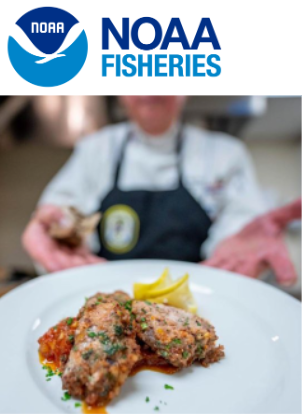 Did you know that when squid is caught and processed—often for dishes like calamari—a lot of it goes to waste? In fact, out of the 65 million pounds of squid that are landed every year, about half are tossed out.
  CHINA
CHINA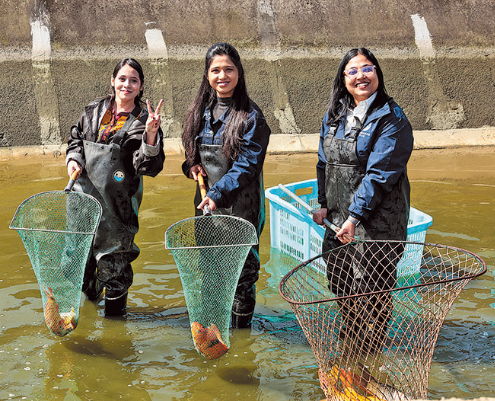
 INDIA
INDIA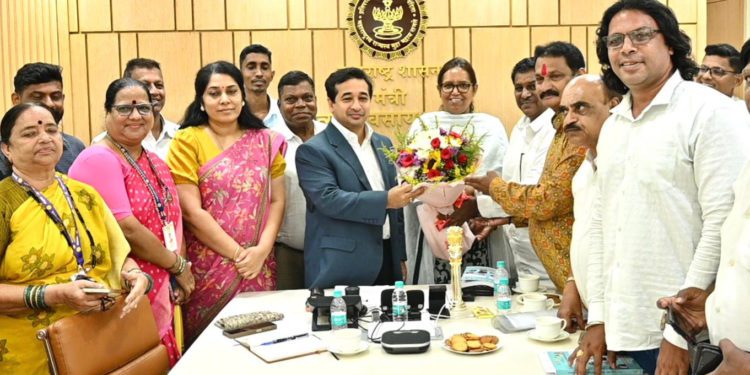
 CHILE
CHILE Between November 10 and 11, 2026, Puerto Varas, Chile, will be the meeting point for researchers, producers, authorities, and representatives of civil society at the International Conference on Salmon Rickettsial Syndrome (SRS2026) – Integrating Science, Industry and Policy for Sustainable Salmon Aquaculture, organized by the Interdisciplinary Center for Aquaculture Research – Applied Research (INCAR²). The event, the first worldwide focused exclusively on this disease, will seek to integrate science, industry, and public policy to advance towards a more sustainable salmon farming industry
 SPAIN
SPAIN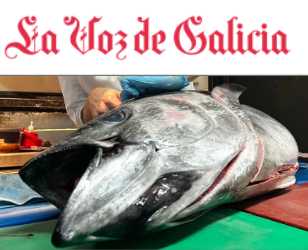 Climate change is being blamed for the now common presence of schools of bluefin tuna in northwestern Spain, which are now reaching the United Kingdom. When feeding on small pelagic fish such as sardines, horse mackerel, or anchovies, these tuna can become entangled in the gear of purse seiners, trawlers, or smaller Galician fishing vessels. Although it would be a source of additional income, they are currently required to return this fish to the sea. On April 28, the Council of Ministers approved a proposal from the Ministry of Agriculture, Fisheries and Food that will allow them to sell bluefin tuna when they are caught accidentally.
 ICELAND
 Cflow
Cflow  NEW ZEALAND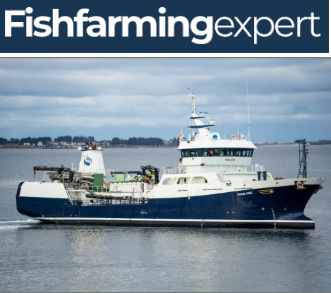
 NORWAY
.png)

 UNITED ARAB EMIRATES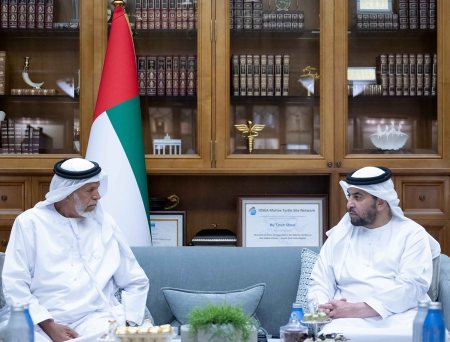
 MOROCCO