IN BRIEF - Vegan Finest Foods Launches New Plant-Based Sushi Rolls
NETHERLANDS
Saturday, October 05, 2024
Dutch plant-based seafood brand, Vegan Zeastar, has introduced an exciting new addition to its lineup: Plant-Based Sushi Rolls.
Unveiled at the prestigious CuliPerslunch event in De Kookfabriek, Amsterdam, the launch allowed food service professionals to sample the innovative offerings firsthand.
The sushi rolls come in three flavorful varieties: Oshi No Salmon, Spicy No Tuna, and No Salmon Asparagus. Created by Vegan Finest Foods, the company behind Vegan Zeastar, these pre-cut, frozen rolls are designed for ultimate convenience—simply defrost, top as desired, and serve. They cater to both restaurants and consumers seeking quick, easy-to-prepare, plant-based meals at home.
COPENHAGEN — Fisheries Minister Jacob Jensen (V) is moving to accelerate a long-awaited scrapping scheme for fishermen affected by fishing closures in the Baltic Sea and Kattegat, potentially allowing applications years earlier than previously planned as reported by fiskeritidende.
Until now, fishermen were told they would not be able to apply for scrapping compensation in the Baltic Sea and Kattegat before 2028. However, Jensen now says he is working to make the scheme available as early as 2026, and possibly already this year for parts of inland Danish waters.
In a letter to Læsø fisherman Klaus Rosenfeldt, the minister confirmed that efforts are underway to bring the timeline forward. The Danish Fisheries Association has been pressing for faster action amid mounting financial pressure on vessel owners.
“I agree that the support for scrapping must be implemented as soon as possible, and work is therefore being done to advance the schedule with a view to establishing a scrapping scheme before the end of 2026,” Jensen wrote in response to Rosenfeldt, who contacted the minister in December outlining the financial and health consequences of the current situation.
Jensen acknowledged that restructuring will not be economically viable for all fishermen. He stressed that implementation in 2026 depends on approval from the EU Commission.
Nichirei Foods Corporation (President and CEO: Masahiko Takenaga) established Nichirei BizNext Corporation, a sales and logistics management subsidiary, with the aim of consolidating and enhancing the functions that support the Nichirei Foods Group's business operations across the board. The subsidiary is scheduled to begin operations on Wednesday, April 1, 2026.
Background and purpose of establishment
In recent years, management issues facing companies have become increasingly complex and sophisticated, including legal compliance and governance, changes in the food logistics environment, a declining workforce and securing human resources, and promoting women's participation in the workplace. By consolidating management functions that were previously dispersed across each base and department into the new company and increasing expertise and productivity, the company will convert problem-solving itself into value and build a system that will contribute to the sustainable growth of the group.
BRIDGEWATER, N.S. – Kelly Cove Salmon Ltd. welcomed a decision by the Nova Scotia Aquaculture Review Board (ARB) approving a lease boundary amendment and expansion of salmon farm AQ#1205, located offshore from Coffin Island in Liverpool Bay.
Operating since 2011 under the province’s Environmental Monitoring Program, the site will now be permitted to add 6 new cages for Atlantic salmon, increasing the total from 14 to 20 cages.
The approval follows a week-long public hearing in October, where multiple stakeholders and intervenors presented submissions and raised questions about environmental oversight and farming practices.
“We appreciate that the Board allowed the time necessary for everyone to present and better understand our aquaculture operations,” said Joel Richardson, Vice President of Public Relations at Cooke Aquaculture Inc., the parent company of Kelly Cove.
Company representatives also presented a video outlining operations in Liverpool Bay during the hearing.
The agriculture and environment sector is advancing new opportunities to sustain growth and achieve its target of $73–74 billion in exports of agricultural, forestry, and fishery products by 2026, amid a slow global economic recovery and increasingly stringent market regulations.
According to leaders from the Ministry of Agriculture and Environment, in January 2026 alone, total sector exports reached $6.51 billion, marking an increase of nearly 30% year-on-year.
Key measures include market diversification, expanding into the Middle East, Africa, and South Asia, while maximizing the benefits of free trade agreements. The sector is also prioritizing deep processing, the application of science and technology, supply chain digitalization, and stronger traceability systems—all considered crucial to enhancing added value, boosting competitiveness, and ensuring sustainable development.
The Government is taking another step towards requiring Braille labeling on consumer products, a move that worried the fishing industry due to the "extreme difficulty" the regulation posed for its operations. Despite the withdrawal of the legislation last December, the Ministry of Social Rights, Consumer Affairs and Agenda 2030 has decided to relaunch the royal decree. According to information obtained by FARO and confirmed by Anfaco-Cytma (one of the organizations that filed objections at the time), the department headed by Pablo Bustinduy plans to transfer the obligation to provide Braille labels to retailers to inform customers upon request.
Author: Adrián Amoedo / Faro de Vigo | Read the full article here
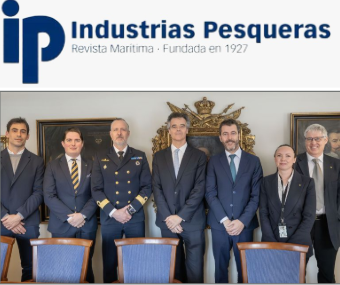
The Freire Shipyard has signed a contract with the Swedish Defence Materiel Administration (FMV) to build four new vessels for naval support missions. They will be 47 meters long, have a top speed of 12 knots, and an endurance of up to 10 days, with a crew capacity of 16.
Each vessel will be equipped with two main cranes on the main deck and an auxiliary crane for supplies, allowing for autonomous loading and unloading operations. It will also have a folding ramp for vehicle access from the stern.
Source: Industrias Pesqueras | Read the full article here
As part of their ongoing lawsuit to block Spain’s allowance of bottom trawling in marine protected areas, conservation NGOs Oceana and ClientEarth presented their evidence about the practice before Spain’s National High Court 19 February.
The two groups sued the Spanish government in 2024, alleging that the nation was systematically allowing commercial fishers to conduct bottom trawling in marine protected areas (MPA), which they argue is prohibited under European Union law.
Spain is legally obliged to safeguard its marine protected areas, which is incompatible with allowing destructive fishing gear within their boundaries
Author: Nathan Strout / SeafoodSource | Read the full article here
Norwegian salmon farmer Grieg Seafood, which sold its farms in Canada and in Finnmark, Norway, to Cermaq for £738 million in December, made an operating profit of NOK 152.8m from its remaining farming operation in Rogaland in Q4 2025.
The result was a 34% increase compared to the NOK 114.2m made in Q4 2024, Grieg wrote in its Q4 2025 report.
Operational EBIT per kilo increased by 47% to NOK 20.7 (Q4 2024: NOK 14.1) for the farming operation, and by 135% to NOK 19.4 (NOK 8.3) for the Grieg Seafood Group. Average harvest weight increased to 4.8 kilos
Source: fishfarmingexpert | Read the full article here
The peak fishing season for chub mackerel (over 250 grams per fish) in the waters off Kyushu by the West Japan Purse Seiner fleet (large and medium-sized) is drawing to an end. This month's (1st to 18th) catches were as good as the same period last year, but the fat content has dropped slightly. Sources in the fishing area say, "We're finally nearing the end of the fishing season. From March, we expect to shift to focusing on yellowtail."
This month's combined catch of the fish in Nagasaki City, Matsuura City in Nagasaki Prefecture, Karatsu City in Saga Prefecture, and Fukuoka City was approximately 44,000 boxes (each box weighing approximately 16 kg), a good catch on par with the same period last year. Source: Minato-Yamaguchi
Coast Guard Was Able to Return All the Catch from the Illegal Gear to the Sea
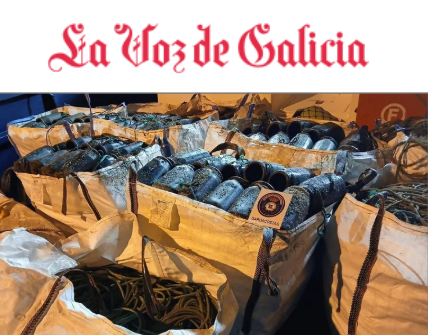
The Galician Coast Guard Service carried out its largest operation of the year against the use of traps, a prohibited fishing method in Galicia used for octopus fishing, last Saturday in waters near A Guarda. According to the Galician Ministry of the Sea, the operation resulted in the removal of 523 devices and the recovery of 67 kilos of octopus, which were returned to the sea. The operation also coincided with the weekly rest day.
The operation took place between three and four miles off the coast of A Guarda and led to the discovery of two sets of these traps deployed on the seabed.
Source: La Voz de Galicia | Read the full article here
Russian Fish Catch Surpasses 750,000 Tons in Early 2026 Russia Fed.
Far Eastern Basin Drives Growth as Pollock and Herring Harvests Accelerate
According to the latest figures from the industry monitoring system of the Federal Agency for Fisheries (Rosrybolovstvo...
Argentine Shrimp: Rawson Season Surpasses 72,000 Tons Argentina
At 100 days since the start of the season in Chubut, catches of Pleoticus muelleri show a positive balance, according to PescaChubut
Yesterday, Sunday, February 22, 2026, marked 100 d...





 NETHERLANDS
 DENMARK
.png) Until now, fishermen were told they would not be able to apply for scrapping compensation in the Baltic Sea and Kattegat before 2028. However, Jensen now says he is working to make the scheme available as early as 2026, and possibly already this year for parts of inland Danish waters.
Until now, fishermen were told they would not be able to apply for scrapping compensation in the Baltic Sea and Kattegat before 2028. However, Jensen now says he is working to make the scheme available as early as 2026, and possibly already this year for parts of inland Danish waters. JAPAN
JAPAN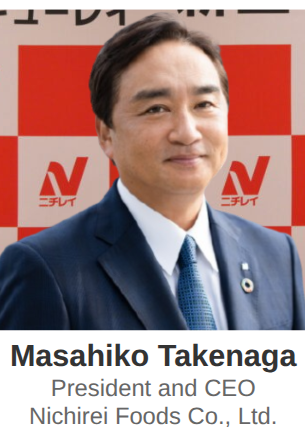 Nichirei Foods Corporation
 CANADA
 VIET NAM
 SPAIN
SPAIN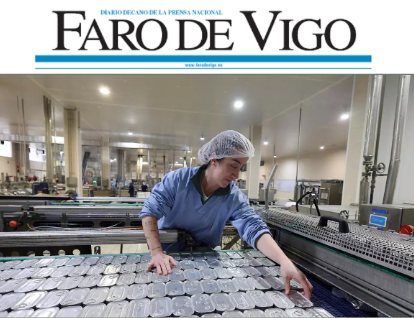 The Government is taking another step towards requiring Braille labeling on consumer products, a move that worried the fishing industry due to the "extreme difficulty" the regulation posed for its operations. Despite the withdrawal of the legislation last December, the Ministry of Social Rights, Consumer Affairs and Agenda 2030 has decided to relaunch the royal decree. According to information obtained by FARO and confirmed by
  The
The 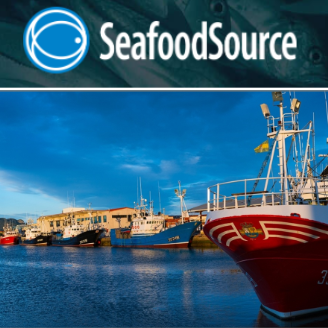 As part of their ongoing lawsuit to block Spain’s allowance of bottom trawling in marine protected areas, conservation NGOs Oceana and ClientEarth presented their evidence about the practice before Spain’s National High Court 19 February.
 NORWAY
 Norwegian salmon farmer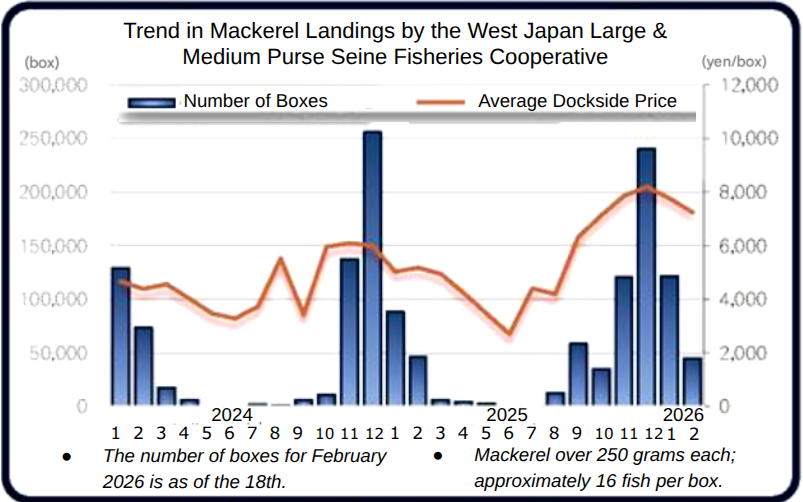
 The Galician Coast Guard Service carried out its largest operation of the year against the use of traps, a prohibited fishing method in Galicia used for octopus fishing, last Saturday in waters near A Guarda. According to the Galician Ministry of the Sea, the operation resulted in the removal of 523 devices and the recovery of 67 kilos of octopus, which were returned to the sea. The operation also coincided with the weekly rest day.