IN BRIEF - Frozen Sardine Imports Drop 99% by June 2024
SOUTH KOREA
Monday, July 15, 2024
As of June 2024, the import volume of frozen sardines into South Korea has plummeted by 99% compared to the same period last year. No frozen sardines were imported in June 2024, a stark contrast to the 1,519 tons imported in June 2023.
The cumulative import volume for the first half of 2024 stands at 68 tons, representing a 98% decrease from the 11,299 tons imported during the same period in 2023.
This accounts for a mere 0.02% of the total seafood imports, which amounted to 445,418 tons.
Analyzing the import sources, all 68 tons of frozen sardines imported by June 2024 came exclusively from Russia.
In contrast, during the same period last year, South Korea imported 11,285 tons from Russia and 14 tons from Mexico.
This significant decrease is attributed to a combination of factors, including changes in the international seafood market, stricter import regulations, and supply chain issues.
There is now heightened interest in whether the import volume of frozen sardines will recover and how the seafood market will evolve in the coming months.
On July 1, a support program funded by the Marine Renewable Energy (MRE) tax was launched in France.
The announcement came from France's National Committee for Maritime Fisheries and Aquaculture (CNPMEM), which succeeded in establishing this "unprecedented" mechanism following years of collaboration with the national government.
Funded by €12 million in revenue from offshore wind farms, the program enables fishing companies in mainland France and its overseas territories to finance investments in four complementary areas: energy efficiency, production improvements, health and safety on board, and environmental efficiency.
Source: Industrias Pesqueras | Read the full article here
Seaweed farming in the UK has the potential to create new job and products, while contributing to a low-carbon economy but has yet to fully gain public trust, according to a new report by the Scottish Association for Marine Science (SAMS) in Oban.
Seaweed farming with and for our coastal communities’ sets out six recommendations for policy makers and those planning to farm seaweed around the UK.
Among the recommendations is the need to prioritise local knowledge, work with communities and increase public awareness of seaweed farming.
Source: The Fish Site | Read the full article here
China has overtaken the United States to become Norway’s second-largest market for salmon, as exports to China continued to surge while shipments of higher-value fillets to the US declined amid tariff uncertainty.
According to the Norwegian Seafood Council, Norwegian salmon exports to China rose 51% by volume and 42% by value in the first half of 2026, following growth of 99% by volume and 59% by value in 2025.
By contrast, exports to the United States continued to weaken. The council said the value share of processed salmon products in Norway’s exports fell from 30% to 25% in the first half
Source: SalmonBusiness | Read the full article here
The Food and Drink Federation’s latest Trade Snapshot has revealed that Scottish salmon exports have been among the hardest hit by US tariffs introduced under President Donald Trump’s trade policy, say the Shetland Times in a recent article.
According to the report covering the first quarter of 2026, the value of UK salmon exports fell by 40 per cent compared with the same period last year, dropping to £177.8 million. The United States, traditionally one of the largest overseas markets for Scottish salmon, saw imports decline by 45 per cent to £68 million.
The International Council for the Exploration of the Sea recommends maintaining total closures or strict limitations in several areas of the Northeast Atlantic, noting that numerous stocks remain below safe biological limits.
The International Council for the Exploration of the Sea (ICES) has once again issued a stern warning regarding the state of cod stocks in the Northeast Atlantic. In its latest round of scientific recommendations for 2027 fishing opportunities, the body proposes maintaining significant catch reductions—and even continuing the zero-catch policy—in several areas where stocks continue to show a highly concerning conservation status.
One of the most critical cases involves Irish Sea cod (Division 7.a); ICES recommends that no catches be authorized for 2027 and 2028.
The European Commission has published its annual report on cooperation and information exchange among Member States regarding official controls in the agri-food chain, including aquatic products. The report analyzes the Alert and Cooperation Network (ACN), through which the Commission and Member States collaborate to safeguard food safety by sharing alerts and notifications of non-compliance, as well as by rapidly investigating cases.
The 2025 report reveals an 11% increase in the total number of notifications (10,490) compared to the previous year. Notifications regarding food safety risks—handled via the Commission’s Rapid Alert System for Food and Feed (RASFF)—rose by 2% last year, reaching 5,344.
Source: iPac.acuicultura | Read the full article here
There are no signs of a heatwave in the spot price market for salmon. It is behaving like the summer weather in Western Norway. The volume, on the other hand, is in autumn form.
According to Akvafakta, the spot price of salmon fell by NOK 2.82/kg, down to NOK 63.43/kg in week 26.
That is a price 76 øre below the same week last year. It is also the lowest spot price so far this year.
Author: Pål Mugaas Jensen / fishfarmingexpert | Read the full article here
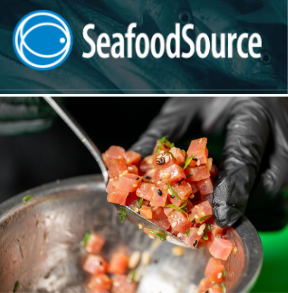
A new law requiring retailers to label the country of origin of raw processed ahi tuna products went into effect in the state of Hawai?i 1 July.
“Consumers deserve clear and accurate information about the food they buy,” Chairperson for the Department of Agriculture Sharon Hurd said in a release. “This law provides shoppers with country-of-origin information at the point of sale while recognizing the value of Hawai?i’s commercial fishing industry.”
The law was enacted in response to the proliferation of foreign tuna being sold at Hawai?i poke retailers. While tuna is the highest valued food commodity produced in Hawai?i, imported tuna dominates the state’s retail landscape, according to the state legislature.
Author: Nathan Strout / SeafoodSource | Read the full article here
One of the biggest issues in aquafeed is the availability – and therefore the price – of marine ingredients. This is a cyclical issue, and the bad news for anyone farming salmon, shrimp or any carnivorous species is that this year is likely to see a downturn in supply.
The reason is that this is an “El Niño” year – and some climate experts are predicting that it will be a “super El Niño”.
El Niño refers to a climate pattern characterised by the unusual warming of surface waters in the central and eastern Pacific Ocean, particularly along the equator.
Author: Robert Outram / Fish Farmer | Read the full article here
Spain extends fleet compensation until September 30 and increases funding to €35 million
Spanish fishing vessel owners have already received—or are about to receive—the first round of aid to offset the fuel price hikes caused by the war in the Middle East. On June 18, the Ministry of Agriculture, Fisheries and Food published the list of 4,308 vessel owners and 4,650 vessels set to receive an initial payout of €6.8 million. This is part of the €25 million package authorized by the European Commission to help Spain mitigate the additional costs resulting from the conflict. As of today, June 30, the subsidy covers 20 cents per liter—calculated as a flat rate based on average rather than actual consumption—subject to a cap of €200,000 per vessel and €400,000 per owning company.
Source: La Voz de Galicia | Read the full article here
Russia exceeds 2.3 million tons of fish catches so far this year Russia Fed.
Official monitoring by Rosrybolovstvo confirms a sustained increase in the Far Eastern basin and a solid performance of the fleet in international waters at the close of June 2026.
The extractive act...
Frozen bluefin tuna market operates on a steady path Japan
In stark contrast to the upward pressure seen in the fresh segment, frozen bluefin tuna values at Toyosu showed no major structural adjustments.
Products caught by the Japanese longline fleet in Iris...
Copyright 1995 - 2026 Seafood Media Group Ltd.| All Rights Reserved. DISCLAIMER





 SOUTH KOREA
(1).jpg) The cumulative import volume for the first half of 2024 stands at 68 tons, representing a 98% decrease from the 11,299 tons imported during the same period in 2023.
The cumulative import volume for the first half of 2024 stands at 68 tons, representing a 98% decrease from the 11,299 tons imported during the same period in 2023.(2).png)
 FRANCE
 On July 1, a support program funded by the Marine Renewable Energy (MRE) tax was launched in France.
 UNITED KINGDOM
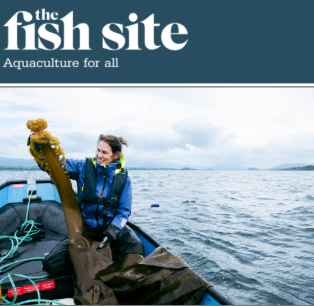 Seaweed farming in the UK has the potential to create new job and products, while contributing to a low-carbon economy but has yet to fully gain public trust, according to a new report by the Scottish Association for Marine Science (SAMS) in Oban.
  CHINA
CHINA
 The Food and Drink Federation’s latest Trade Snapshot has revealed that Scottish salmon exports have been among the hardest hit by US tariffs introduced under President Donald Trump’s trade policy, say the Shetland Times in a recent article.
 DENMARK
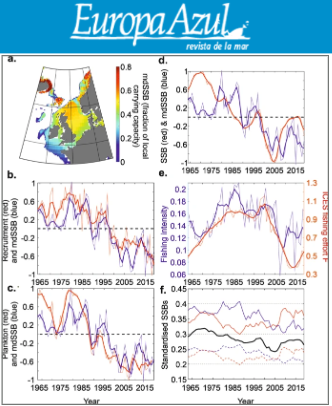 The International Council for the Exploration of the Sea recommends maintaining total closures or strict limitations in several areas of the Northeast Atlantic, noting that numerous stocks remain below safe biological limits.
 EUROPEAN UNION
 The European Commission has published its annual report on cooperation and information exchange among Member States regarding official controls in the agri-food chain, including aquatic products. The report analyzes the Alert and Cooperation Network (ACN), through which the Commission and Member States collaborate to safeguard food safety by sharing alerts and notifications of non-compliance, as well as by rapidly investigating cases.
 NORWAY
 There are no signs of a heatwave in the spot price market for salmon. It is behaving like the summer weather in Western Norway. The volume, on the other hand, is in autumn form.
 UNITED STATES
 A new law requiring retailers to label the country of origin of raw processed ahi tuna products went into effect in the state of Hawai?i 1 July.
 WORLDWIDE
 One of the biggest issues in aquafeed is the availability – and therefore the price – of marine ingredients. This is a cyclical issue, and the bad news for anyone farming salmon, shrimp or any carnivorous species is that this year is likely to see a downturn in supply.
 SPAIN
SPAIN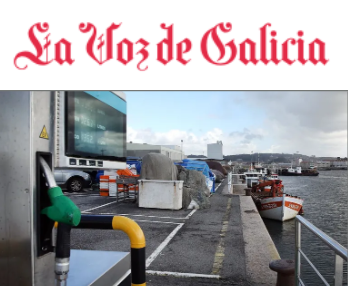 Spanish fishing vessel owners have already received—or are about to receive—the first round of aid to offset the fuel price hikes caused by the war in the Middle East. On June 18, the Ministry of Agriculture, Fisheries and Food published the list of 4,308 vessel owners and 4,650 vessels set to receive an initial payout of €6.8 million. This is part of the €25 million package authorized by the European Commission to help Spain mitigate the additional costs resulting from the conflict. As of today, June 30, the subsidy covers 20 cents per liter—calculated as a flat rate based on average rather than actual consumption—subject to a cap of €200,000 per vessel and €400,000 per owning company.