IN BRIEF - The Undersecretary of Fisheries chose not to punish illegal fishing of toothfish
ARGENTINA
Tuesday, March 12, 2024
Fishing a quota species without being a quota holder is prohibited by the Federal Fisheries Law and is considered a very serious offense.
The Tai An vessel does not have a quota for toothfish; Therefore, it can only incidentally capture up to 5 tons per trip, as established by Resolution 9/2023 of the Federal Fisheries Council.
However, this ship was operating in the toothfish distribution area, where wells with depths greater than a thousand meters are located, on March 2 and 6. It is suspected that such a large volume could not be loaded in just two days, so the cargo could be made up of 142 tons with a significant proportion of juvenile specimens, which would further aggravate the ship's situation.
The toothfish is a species that is protected internationally due to its limited availability and very high vulnerability. Therefore, illegal fishing anywhere in the world can be punished by certifying organizations and even by the market.
The fact is of unusual gravity: the Tai An ship has not only stolen 142 tons of toothfish from the Argentine Sea, worth three and a half million dollars, but has also endangered the sustainability of the resource. Given this situation, the only thing the Undersecretary of Fisheries did was tell the boat to leave the distribution area of this species, allowing it to continue fishing in other areas.
“It's what I can do,”Juan Antonio López Cazorla told the businessmen who complained about his inaction.[...]
Source: Revista Puerto (Translated from original in Spanish)
Operations return to the Yellow Sea after four years.
China and South Korea resumed joint fisheries patrols on October 8, ending a suspension since 2022.
Running until October 17, the operations involve officers boarding each other's vessels to combat illegal fishing, improve enforcement coordination and reduce maritime disputes.
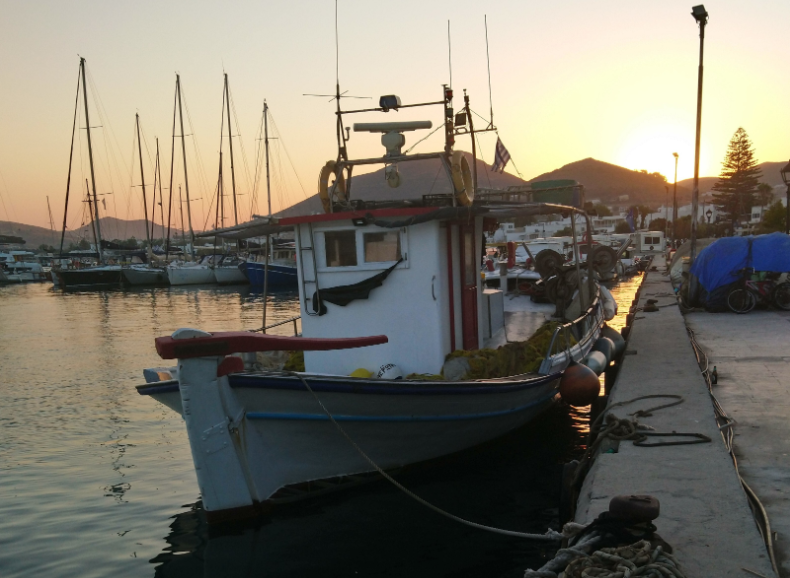
EM4SSF uses GPS tracking to support sustainable fishing across five European countries.
Led by Italy's CNR, the €538,516 project collects vessel data in Italy, Spain, Portugal, Greece and Denmark. Small-scale fisheries represent 85% of the EU fleet.
Active GPS monitoring aims to improve fisheries management and marine conservation.
The jellyfish bloom which hit the Icelandic salmon farmer Kaldvik recently looks to have been worse than earlier reported – but the incident seems to be subsiding at last.
The east Iceland farmer said 10 days ago that the attack had negatively affected its biological production and financial position.
Now, in a new update, Kaldvik is reporting that, following continued monitoring and assessment, the company estimates the event has resulted in approximately 11.5 percentage points of additional mortality in the affected 2025 generation since early September.
This compares with approximately 6.5 percentage points reported in the middle of last month.
Author: Vince McDonagh / Fish farmer | Read the full article here
Investment to boost fisheries technology, automation and international expansion.
VEX II will acquire a 34% stake in Héðinn, a century-old engineering firm serving fisheries, aquaculture and energy. The deal will support patented energy-saving technology, Magni Solutions and global growth, subject to regulatory approval.
The purchase strengthens fishing capacity and operational flexibility.
Iceland's Samherji acquired the Bjarni Ólafsson AK 70 from Síldarvinnslan. The 67-metre vessel carries nearly 2,000 tonnes, uses purse seines and pelagic trawls, and has begun herring fishing.
It will be renamed in Akureyri and prepared for the capelin season.
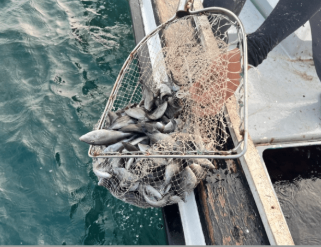
The Korea Fisheries Resources Agency released 330,000 filefish juveniles off Jeju between September 30 and October 8, following 506,000 earlier this year.
Genetic analysis found 29% of sampled catches originated from releases, supporting stock recovery and fishermen's incomes.
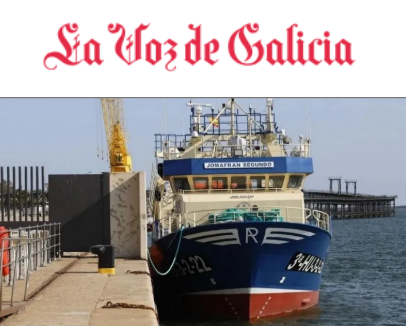
Brussels sources say that even extending the agreement—which expires in a month—would not prevent a stoppage that could last until February.
Barring an unexpected turn of events, the European fleet fishing in Mauritania will have to return to port on November 14. *La Voz* has learned that negotiations are at a standstill; at this stage, not even an extension of the current agreement would avert a stoppage that, at the earliest, might not end until February 2027.
Author: Jose G. Santalla / La Voz de Galicia | Read the full article here
Norway's average fresh salmon export price fell 1.7% in week 41 to NOK 72.55 (€6.80) per kilogram, according to figures published by Statistics Norway on Wednesday.
The price was down from NOK 73.80 (€6.92) the previous week and 3.8% below the NOK 75.38 recorded in the corresponding week of 2025.
Fresh salmon export volumes fell 7.6% week on week to 27,982 tonnes, compared with 30,277 tonnes in week 40.
Source: SalmonBusiness | Read the full article here
Simeulue Consolidates a Direct Fresh Seafood Route to Japan Indonesia
The Indonesian island completes its second commercial shipment in two months, mobilizing octopus and fresh fish under strict sanitary standards and reinforcing its public cold chain as a key driver of...
Copyright 1995 - 2026 Seafood Media Group Ltd.| All Rights Reserved. DISCLAIMER





 ARGENTINA
.png)
 CHINA
CHINA.png)
 EUROPEAN UNION
 EM4SSF uses GPS tracking to support sustainable fishing across five European countries.
 FIJI
FIJI.png)
 ICELAND
 The east Iceland farmer said 10 days ago that the attack had negatively affected its biological production and financial position.
 Investment to boost fisheries technology, automation and international expansion.
.png)
 SOUTH KOREA
 Restocking program shows promising results
 MAURITANIA
 Brussels sources say that even extending the agreement—which expires in a month—would not prevent a stoppage that could last until February.
 NORWAY
 Norway's average fresh salmon export price fell 1.7% in week 41 to NOK 72.55 (€6.80) per kilogram, according to figures published by Statistics Norway on Wednesday.