IN BRIEF - Inside North Korea's Forced-Labor Program
NORTH KOREA
Monday, February 26, 2024
Workers sent from the country to Chinese factories describe enduring beatings and sexual abuse, having their wages taken by the state, and being told that if they try to escape they will be “killed without a trace.”
IN FEBRUARY OF LAST YEAR, Donggang Jinhui Foodstuff, a seafood-processing company in Dandong, China, threw a party. It had been a successful year: a new plant had opened, and the company had doubled the amount of squid that it exported to the United States. The party, according to videos posted on Douyin, the Chinese version of TikTok, featured singers, instrumentalists, dancers, fireworks, and strobe lights. One aspect of the company’s success seems to have been its use of North Korean workers, who are sent by their government to work in Chinese factories, in conditions of captivity, to earn money for the state.
A seafood trader who does business with Jinhui recently estimated that it employed between fifty and seventy North Koreans. Videos posted by a company representative show machines labelled in Korean, and workers with North Korean accents explaining how to clean squid.
At the party, the company played songs that are popular in Pyongyang, including “People Bring Glory to Our Party” (written by North Korea’s 1989 poet laureate) and “We Will Go to Mt. Paektu” (a reference to the widely mythologized birthplace of Kim Jong Il).[...]
The Ministry of Fisheries and Aquaculture highlights the speed of document issuance, processing most requests in less than 24 hours.
The Ministry of Fisheries and Aquaculture (MPA) has reached the milestone of 1,000 Certificates of Admissibility (COA) issued for shipments of fish and fishery products bound for the United States. This achievement reinforces the government agency's role in controlling and tracing Brazilian fisheries production, ensuring compliance with the certification required to access the US market.
The Certificate of Admissibility (COA) became mandatory in the United States on January 1, 2026, for certain imported fishery products. The documentation certifies that the cargo is not subject to import restrictions set by US legislation for marine mammal protection, guaranteeing verification of regulatory compliance and the legal origin of Brazilian fish and fishery products.
The vast majority of certificates were analyzed, issued, and sent to exporting companies in less than 24 hours. This operational agility demonstrates the MPA's capacity to maintain necessary technical rigor in data verification without causing delays in meeting productive sector demands.
The Argentine Government, through the Secretariat of Agriculture, Livestock and Fisheries under the Ministry of Economy, has fined the Spanish-flagged fishing vessel “Farruco” after detecting it operating illegally inside the Argentine Exclusive Economic Zone (EEZ).
The administrative measure was formalized under Disposition 20/2026 issued by the Undersecretariat of Aquatic Resources and Fisheries. The owning company was hit with a financial penalty of ARS $1,844,000,000 (approximately US$ 1,222,000 at the official exchange rate of 1,508.90 ARS/USD), which equals 1,000,000 Fishing Units (UP).
The “Farruco” becomes the fifth vessel sanctioned so far in 2026. Surveillance and enforcement actions were carried out jointly by the Argentine Navy, the Argentine Naval Prefecture, and the Undersecretariat of Aquatic Resources and Fisheries, utilizing high-precision electronic detection systems.
The vessel is registered to Pescaeste S.A., a company listed among the entities linked to Freiremar in the Canary Islands.
Ursula von der Leyen and Danish PM Mette Frederiksen visit Nuuk as Greenland strengthens political, economic and security ties with European partners.
EU Commission President Ursula von der Leyen and Mette Frederiksen arrived in Nuuk on September 6 for the signing of a joint statement strengthening EU-Greenland cooperation. The agenda continues with the Commonwealth annual meeting on September 7 and talks on foreign, security, defense and economic policy on September 8, involving Greenlandic, Faroese and Danish leaders.
Minister for Foreign Affairs, Industry and Mineral Resources Múte B. Egede and Minister for Finance Aqqaluaq B. Egede, the heads of the Svalbard and Danish governments and several ministers will participate.
Strict quarantine controls support Indonesia's access to demanding seafood markets
Maluku prepared 2.9 tonnes of fresh yellowfin tuna for export, including 1.9 tonnes to Japan and 1 tonne to the United States by air. Karantina Maluku inspected temperature, hygiene, packaging and documentation to ensure compliance with health, quality and biosecurity requirements.
Central Sulawesi recorded 159 tuna export shipments through August 2026, already 85% of the 186 shipments made in 2025. Exports totaled 47.2 tonnes worth US$272,636, mainly yellowfin tuna (Thunnus albacares) shipped to the United States and Singapore, under KKP quality certification.
Two 20-kg and 30-kg specimens mark progress in bluefin tuna domestication
Fortuna Mare, a subsidiary of Grupo Ricardo Fuentes e Hijos, marketed two Atlantic bluefin tuna (Thunnus thynnus) born and raised entirely in captivity in Cartagena, Spain. Developed with IEO, UPCT and the Murcia Region, the fish were destined for the Netherlands and Norway.
Fishing sector calls for more infrastructure to process catches locally and retain greater added value
Nearly 85% of tuna caught in the Canary Islands leaves the archipelago unprocessed due to limited industrial capacity. In 2024, four tuna species reached 3,662 tonnes and €10.8 million in first sales. The sector says local processing could increase their value by 10%–40%, while supporting local jobs and industry.
Puerto Montt – Chilean salmon and mussels were featured in the promotional agenda carried out by ProChile at the "Encuentro Gastronómico Austral" (Southern Gastronomic Gathering) in Mexico City, an event showcasing some of the country's key aquaculture exports.
The initiative brought together exporting companies from the Los Lagos Region with importers, distributors, and representatives from hotel and restaurant chains, as well as other stakeholders in the food industry. The Chilean offering was represented by AquaChile (salmon), Pure Nature (jumbo flying squid), Pacific Blu (hake), and Kenoz Caviar (caviar), alongside a delegation of seven companies under the "Chile Mussel from Patagonia" sector brand: Landes, St. Andrews, Sudmaris, Camanchaca, Manuelita, Pacific Gold, and Cataluña.
Mexico represents a major opportunity for Chilean salmon. Currently, per capita consumption is below 130g, leaving significant room to bring this protein closer to consumers and increasingly incorporate it into Mexican cuisine.
Satellites are helping scientists track changes in the health of the ocean – and a new study shows their precision is growing. Scientists at Plymouth Marine Laboratory (PML) have conducted the largest ever global assessment of the accuracy of satellite data designed to monitor ocean health on climate-relevant timescales.
The new PML-led paper, published in Frontiers, focuses on merged satellite ‘ocean colour’ products which combine measurements from multiple satellites to create long-term records of Ocean health.
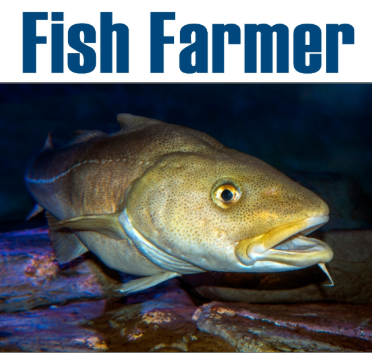
Norway’s trout farmers did not enjoy the August export uplift experienced by the salmon sector, but the farmed cod trade saw a big increase.
Output decreased in both volume and value during the month. The trout sector exported 6,337 metric tons worth NOK 551 million (£43.8m).The volume fell by 28% while the value was down by NOK 81 million (£6.5m).
Exports to Poland, with its huge salmon and trout processing sector, had the largest volume growth with an increase in value of 210% or NOK 75 million (£6m) and the volume at 1,423 tons, up by 159%.
Author: Vince McDonagh / Fish Farmer | Read the full article here





 NORTH KOREA
 BRAZIL
.png) The Ministry of Fisheries and Aquaculture (MPA) has reached the milestone of 1,000 Certificates of Admissibility (COA) issued for shipments of fish and fishery products bound for the United States. This achievement reinforces the government agency's role in controlling and tracing Brazilian fisheries production, ensuring compliance with the certification required to access the US market.
The Ministry of Fisheries and Aquaculture (MPA) has reached the milestone of 1,000 Certificates of Admissibility (COA) issued for shipments of fish and fishery products bound for the United States. This achievement reinforces the government agency's role in controlling and tracing Brazilian fisheries production, ensuring compliance with the certification required to access the US market. ARGENTINA
.png)
 GREENLAND
 Ursula von der Leyen and Danish PM Mette Frederiksen visit Nuuk as Greenland strengthens political, economic and security ties with European partners.
 INDONESIA
.png) Strict quarantine controls support Indonesia's access to demanding seafood markets
Strict quarantine controls support Indonesia's access to demanding seafood markets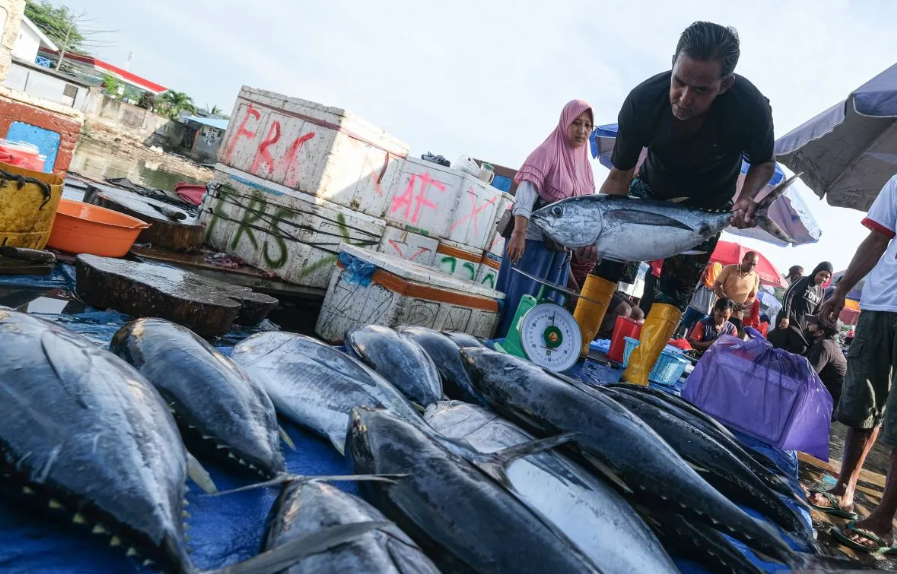
 SPAIN
SPAIN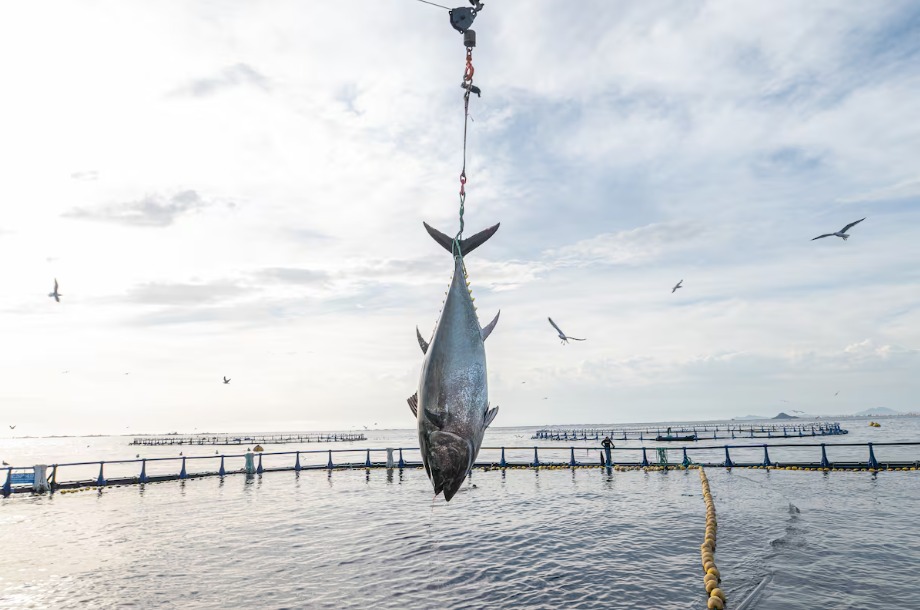 Two 20-kg and 30-kg specimens mark progress in bluefin tuna domestication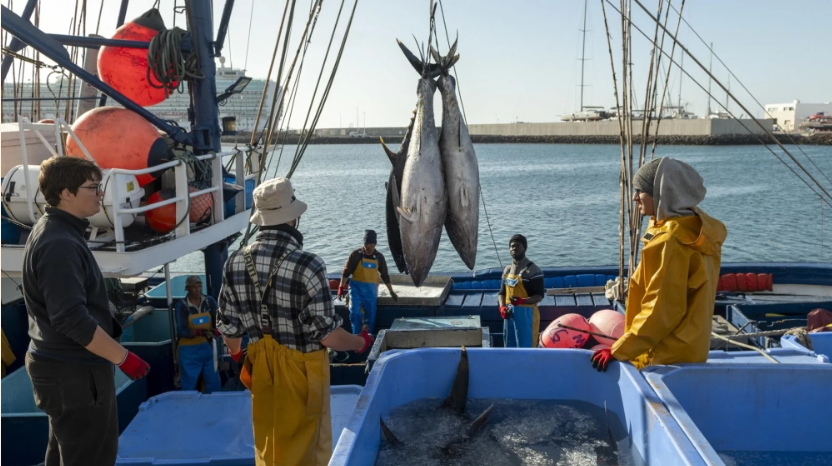
 MEXICO
.jpg)
 UNITED KINGDOM
.png) Satellites are helping scientists track changes in the health of the ocean – and a new study shows their precision is growing. Scientists at Plymouth Marine Laboratory (PML) have conducted the largest ever global assessment of the accuracy of satellite data designed to monitor ocean health on climate-relevant timescales.
Satellites are helping scientists track changes in the health of the ocean – and a new study shows their precision is growing. Scientists at Plymouth Marine Laboratory (PML) have conducted the largest ever global assessment of the accuracy of satellite data designed to monitor ocean health on climate-relevant timescales. NORWAY
 Norway’s trout farmers did not enjoy the August export uplift experienced by the salmon sector, but the farmed cod trade saw a big increase.