IN BRIEF - Fishing and aquaculture among the seven economic activities that lead growth in Nicaragua
NICARAGUA
Sunday, February 25, 2024
The Monthly Index of Economic Activity (IMAE) closed last year with an expansion of 4.8 percent, which gives an idea of where the economic growth rate that the Central Bank of Nicaragua is about to make official will be, whose projection has kept it between 4 and 4.5 percent.
The report on how each of the 16 main activities ended up performing shows that only fishing and aquaculture ended up negative, with a minus 16.7 percent. This despite the fact that in December the activity managed to expand 1.4 percent, "due to the greater production of farmed shrimp and capture of lobster and other fishing products, particularly sea cucumber and crab."
In fact, farmed shrimp exports closed the year with a sharp drop in income. According to data from the Ministry of Development, Industry and Commerce, these shipments decreased last year -25.9 percent in volume and 33.7 percent in value.
Another product closely related to the IMAE of aquaculture and fishing figures is lobster, which together with exports of whole fish managed to grow. Lobster expanded 34.2 percent in volume and 3.8 percent in value. Fish grew 2.8 percent in volume and 3.6 percent in value.
And although these last two seafood products ended up growing, the truth is that income from shipments of farmed shrimp weighs more on the activity with 110.7 million.
The "Dux" is listed as having an unknown flag in official records, but belongs to a Lithuanian shipowner controlled from Galicia.
Before being named Dux, the Dux was called Elly, Albri II, High Sierra, and Anuva. Built in 1963 by the Dutch shipyard Sleephelling Scheveningen, it has been in the Bouzas repair dock in Vigo since March of last year. It appears in the joint database of the International Maritime Organization (IMO) and the International Labour Organization (ILO) on the abandonment of seafarers as an unresolved case, classified as "controversial." At least one African sailor remains on board; the chief engineer, a Moroccan national, was repatriated at the shipowner's expense.
Author: Lara Graña / Faro de Vigo | Read the full article here
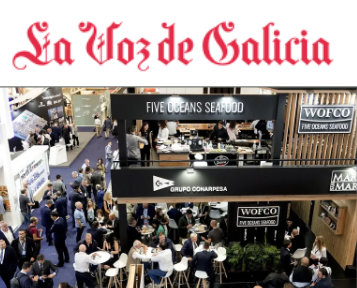
The Conarpesa Group—42% owned by Wofco, the fishing company based in O Morrazo—has announced an $8 million investment (approximately €6.8 million) in the province of Chubut, Argentina. The planned investment aims to improve the operational efficiency and logistics of the fishing sector, achieve greater energy efficiency, and contribute to infrastructure development and job creation.
The program of actions was announced by the company's president, Spaniard Fernando Álvarez Castellano, after a meeting with the Secretary of Fisheries of Chubut, Diego Brandán, in the city of Rawson, the provincial capital.
Author: Cecilia Valdez / La Voz de Galicia | Read the full article here
AKVA group reported record first-quarter EBITDA and higher revenue as activity remained strong across its sea-based, land-based and digital divisions.
The aquaculture technology supplier posted Q1 2026 revenue of NOK 1.14 billion (€104.9 million), up 13% from NOK 1.01 billion in the same period last year.
Quarterly EBITDA reached a record NOK 153 million (€14.1 million), up from NOK 113 million a year earlier. EBITDA margin improved to 13.4% from 11.2%.
Source: SalmonBusiness | Read the full article here
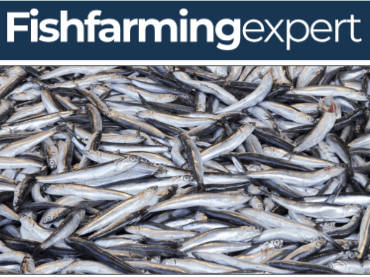
Fishmeal production by members of marine ingredients organisation IFFO fell 38% year on year in March, and cumulative first-quarter production was down 28% versus 2025.
Fish oil output was also lower, but the decline was less severe: cumulative first-quarter output was down 12%.
Both fishmeal and fish oil remain important ingredients in aquafeed.
The production data is based on statistics shared by IFFO members in Chile, Denmark, Faroe Islands, Iceland, Ivory Coast, Mauritius, Norway, the UK, the US, Peru, South Africa and Spain, accounting for 40% of global fishmeal production and 50% of fish oil output.
Source: fishfarmingexpert | Read the full article here
Despite intensifying competitive pressure, Vietnam’s exports of fish paste and surimi maintain a promising outlook for growth in 2026.
According to reports from Ms. Nguyen Ha of VASEP, export turnover for this processed food group reached US$63 million in the first three months of 2026, marking a 5% decrease compared to the same period last year. This slight decline is attributed to shifting demand in traditional strongholds and a more cautious approach to import costs globally.
Market Performance Shifts
Data from Vietnam Customs highlights a divergence in market performance:
South Korea: Remains the largest importer but saw a significant 21% drop in turnover compared to 2025.
Thailand & Japan:Experienced declines of 8% and 6% respectively, as purchasing power remains dampened by price competition.
China:Emerged as a bright spot, with exports increasing sharply during the first quarter.
While traditional markets face headwinds, the surge in China and growth in emerging destinations suggest a rebound for Vietnam's convenient seafood products in the coming quarters of 2026.
The Superior Court of Justice of Asturias (TSJA) has issued a key ruling regarding public health protection in the region.
The high court granted the appeal filed by the Villaviciosa City Council, nullifying the resolution from the Ministry of Rural Affairs and Agricultural Policy that had authorized a clam fattening plant in the estuary.
Key Points of the Ruling:
Affected Company: Asga Acuicultura, which had been granted a license in December 2024.
The Project: A pre-fattening farm for carpet shell clams and Japanese clams covering an area of 2,420 square meters for a 10-year term.
The Conflict: Regional authorities permitted the activity by arguing that the estuary's precautionary closure only applied to direct consumption. However, the TSJA supported the judicial expert’s view that public health risks persist even if the shellfish are relocated to other areas.
"If there is a risk derived from shellfish harvesting, there is also a risk in clam production, even if they are not marketed directly," states the ruling dated April 28.
The City Council reminded the court that the estuary has been closed to shellfish harvesting since 2011 due to very high levels of organic pollution, making any commercial exploitation in its waters unfeasible.
“The main obstacle is no longer technical, but regulatory. The challenge now is to move from demonstration projects to commercial realities that generate employment and wealth in the archipelago.”
The AquaWind project, coordinated by the Canary Islands Agency for Research, Innovation and the Information Society (ACIISI) and developed over the last four years, has demonstrated that, under real-world conditions, renewable energy production and aquaculture can not only coexist but also complement each other to optimize the use of the sea.
This was presented at the results presentation of this project, which addresses one of the main current challenges in Europe: how to optimize the use of maritime space in a context where different activities such as fishing, transport, and tourism converge. AquaWind's proposal, in this case, suggests a change of model
Source: iPac.acuicultura | Read the full article here
Kinarca celebrates its 40th anniversary this year, firmly established as a leading partner in refrigeration for the marine sector, with a solid track record in the design, installation, and maintenance of systems on vessels worldwide.
Founded in Vigo by Ramón Kinantana, Narciso Argones, and José R. Castro, the company was established with a strong technical foundation, the result of its partners' prior experience in the industrial refrigeration sector. Since its inception, Kinarca has evolved into a "specialized partner capable of meeting the demands of the marine sector."
Over these four decades, it has achieved a high level of specialization in onboard refrigeration, participating in both the construction of new vessels and the modernization of existing ones. Kinarca has extensive experience with tuna vessels and trawlers, as well as vessels requiring ultra-low temperature (ULT) systems, where reliability and precise temperature control are critical for operations.
Source: Industrias Pesqueras | Read the full article here
A new study has found that cultivating seaweed alongside marine finfish in integrated multi-trophic aquaculture (IMTA) systems can significantly reduce, and even eliminate, key waste products from fish farming.
The research by the University of Miami Rosenstiel School of Marine, Atmospheric and Earth Science highlights how macroalgae species can utilise nutrient-rich effluent from fish production, offering aquaculture producers a practical pathway to improve environmental performance while generating an additional crop.
Polar Systems, a global leader in food processing technology, is proud to announce the official launch of The Tailer Grader, a ground-breaking automated langoustine processing system. Following successful sea trials in the North Sea, this industry-first technology is now available to the commercial fishing fleet, marking a new era of efficiency, welfare, and precision for the Nephrops sector.
As the primary lead on the project’s engineering and development, Polar Systems has successfully transitioned conceptual AI technology into a rugged, sea-ready solution.
Tuna Overtakes Cod as UK’s Sustainable Seafood King United Kingdom
Major retailers hit 100% certification targets as consumer demand for eco-labeled staples reaches record heights.
In a landmark shift for the British pantry, a new report reveals that one in two cans...
Global Appetite for Alaska Seafood Gets $10.7 Million Federal Boost United States
Record Funding to Fuel International Demand and Support Coastal Communities
JUNEAU, Alaska — The Alaska Seafood Marketing Institute (ASMI) has successfully secured a massive financial injection...




 NICARAGUA
.png)
 SPAIN
SPAIN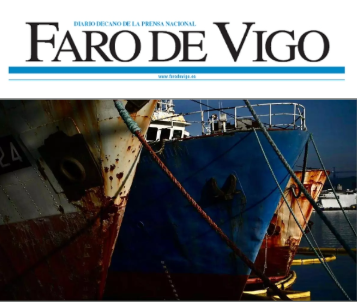 The "Dux" is listed as having an unknown flag in official records, but belongs to a Lithuanian shipowner controlled from Galicia.
 ARGENTINA
 The
The  NORWAY
 AKVA group
 WORLDWIDE
 Fish oil output was also lower, but the decline was less severe: cumulative first-quarter output was down 12%.
 VIET NAM
 According to reports from Ms. Nguyen Ha of VASEP, export turnover for this processed food group reached US$63 million in the first three months of 2026, marking a 5% decrease compared to the same period last year. This slight decline is attributed to shifting demand in traditional strongholds and a more cautious approach to import costs globally.
.png) The high court granted the appeal filed by the Villaviciosa City Council, nullifying the resolution from the Ministry of Rural Affairs and Agricultural Policy that had authorized a clam fattening plant in the estuary.
The high court granted the appeal filed by the Villaviciosa City Council, nullifying the resolution from the Ministry of Rural Affairs and Agricultural Policy that had authorized a clam fattening plant in the estuary.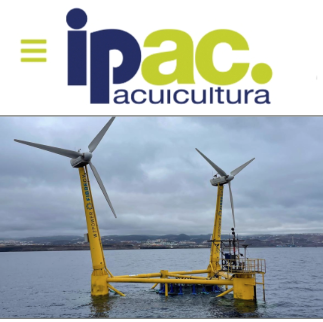 The AquaWind project, coordinated by the Canary Islands Agency for Research, Innovation and the Information Society (ACIISI) and developed over the last four years, has demonstrated that, under real-world conditions, renewable energy production and aquaculture can not only coexist but also complement each other to optimize the use of the sea.
.png) Founded in Vigo by Ramón Kinantana, Narciso Argones, and José R. Castro, the company was established with a strong technical foundation, the result of its partners' prior experience in the industrial refrigeration sector. Since its inception, Kinarca has evolved into a "specialized partner capable of meeting the demands of the marine sector."
Founded in Vigo by Ramón Kinantana, Narciso Argones, and José R. Castro, the company was established with a strong technical foundation, the result of its partners' prior experience in the industrial refrigeration sector. Since its inception, Kinarca has evolved into a "specialized partner capable of meeting the demands of the marine sector." UNITED STATES
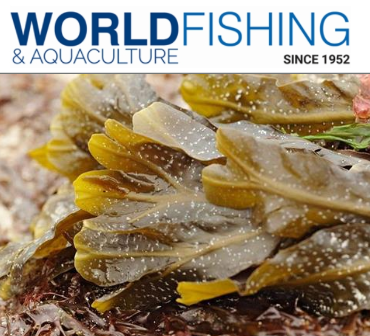 A new study has found that cultivating seaweed alongside marine finfish in integrated multi-trophic aquaculture (IMTA) systems can significantly reduce, and even eliminate, key waste products from fish farming.
 UNITED KINGDOM
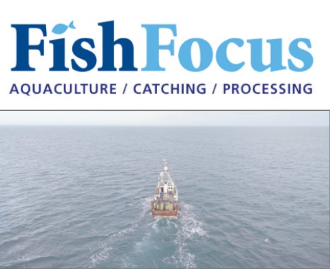 Polar Systems