IN BRIEF - Mitsubishi Shipbuilding and WinGD to develop new fuel delivery system
JAPAN
Tuesday, June 06, 2023
Mitsubishi Shipbuilding, a member of the Mitsubishi Heavy Industries Group, has partnered with Winter Tool Gas & Diesel (WinGD), a Swiss licensor of large marine engines, to supply an ammonia fuel supply system for a large low-speed two-stroke marine engine. low speed development by WinGD Begin to study the technology to be developed.
Image: From left to right: Dominik Schneiter, WinGD Vice President of R&D, Klaus Heim, WinGD CEO, Toru Kitamura, Mitsubishi Shipbuilding Co. President and CEO, Manabu Kawakado, CEO, Head of Engineering Center Mitsubishi Shipbuilding Co. Marine
The two companies signed a memorandum of understanding (MOU) at WinGD headquarters on the 2nd, and MHI announced it on the 5th. WinGD is currently developing a large low-speed ammonia-fired 2-stroke marine engine "X-D
The maritime sector is reinforcing its role as one of the major drivers of employment in the global and European economy, combining the enduring relevance of traditional maritime trades with the emergence of new professions linked to digitalization, the energy transition, and technological innovation. Seafarers, shipbuilding and repair personnel, port technicians, logistics specialists, experts in new fuels, and blue biotechnology professionals are already among the most in-demand profiles in an industry undergoing profound transformation.
The maritime-port system requires highly qualified professionals to guarantee navigational safety, the efficiency of logistics chains, and the operation of strategic infrastructure for international trade.
A new global study suggests the fishing industry could dramatically increase the amount of seafood reaching consumers simply by reducing waste after fish are landed.
Researchers found that only about 54% of the world’s harvested fish is ultimately eaten by people, with the rest lost to spoilage, inefficient processing, poor storage or diverted to non-food uses such as fishmeal. By improving handling, storage and processing, that figure could potentially rise to 74% without catching a single extra fish.The research, conducted by scientists at the UCL Energy Institute and collaborators, suggests that better post-harvest practices could generate what the authors call a ‘hidden harvest’.
Award winning Scottish salmon farm, Loch Duart is set to return to the Seafood Expo in Boston on the back of a successful US focussed marketing campaign. Loch Duart can be found as part of the Seafood from Scotland section of the event (Stand – 2745), which is North America’s largest seafood trade exposition.
Loch Duart’s heritage breed salmon is growing in popularity in North America and has grown significantly following their recent culinary competition in partnership with Chef’s Roll.
The record-breaking fish carrier has arrived in Scotland and is in service already
Delivered from Sefine Shipyard in December 2025, the 93-metre live fish carrier Inter Alba has entered service in Scotland and has already successfully completed its first work period, performing combined freshwater and FLS treatment. With a well capacity of approximately 6,500 m³, Inter Alba is currently the largest wellboat operating in Scotland.
Designed by Salt Ship Design AS, the vessel is built around fish welfare, careful handling and high biosecurity. A substantial battery package, combined with heat recovery and other efficiency measures, helps reduce fuel consumption and carbon emissions.
An aerial drone photo taken on March 9, 2026 shows the Dazhou base of the Fisheries Research Institute of Wanzhou District in Chongqing, southwest China.
The Dazhou base serves as a wild acclimation and conservation center for rare fish species from the upper reaches of the Yangtze River. The facility is equipped with 32 net cages covering about 800 square meters, supporting the protection and breeding of more than 20 rare and commercial fish species.
Each year, the base produces over 20 million high-quality fish fry, playing a key role in regional aquatic conservation and sustainable fisheries development.
In recent years, the institute has strengthened short-term wild acclimation training for fish fry before releasing them into natural waters. The program helps young fish adapt to river conditions, significantly improving survival rates and contributing to the recovery of rare Yangtze River fish populations.
The initiative reflects ongoing efforts in Chongqing to protect biodiversity and restore ecosystems in the upper Yangtze River basin. (Source: Xinhua, photo by Wang Quanchao)
KABUL (Xinhua) — Afghanistan plans to establish 7,700 additional fish farms nationwide, according to the office of the deputy prime minister for economic affairs.
The initiative supports the country’s broader strategy to diversify its economy beyond traditional agriculture while promoting sustainable development.
The office reported that 4,670 fish farms are currently operating in major provinces, with the aquaculture sector providing employment for about 12,000 people.
These farms have an annual production capacity of roughly 13,000 metric tons and are supported by investments totaling around 12 billion afghanis (more than 190 million U.S. dollars), the office said.
Fish farming in Minas Gerais is expected to grow by 6.46% in 2025, reaching a production volume of 77,500 tons of farmed fish. The expansion is largely driven by tilapia, which represents nearly 95% of the state’s total production, according to the Brazilian Fish Farming Yearbook PeixeBR 2026.
The sector’s growth has been supported by the entry of large companies that also operate in other animal protein industries, strengthening investment and production capacity across the state.
In 2025, tilapia output alone reached 73,500 tons, marking a 6.98% increase compared with 2024. The species continues to dominate aquaculture in Minas Gerais, consolidating the state as one of the country’s key producers.
The report also highlights that producers who invested in animal health and sanitation practices achieved better productivity and financial performance, encouraging renewed investments in modernizing production infrastructure.
Despite the positive outlook, the sector still faces challenges. Experts point to the need for product standardization and improved regulation of fish processing units. These measures are considered essential to strengthen sector organization, improve market transparency, and prevent fraud in commercialization.
The 32nd edition of Seafood Expo Global/Seafood Processing Global, taking place in Barcelona from April 21 to 23, has already sold more than 52,448 net square meters of exhibition space and has confirmed exhibitors from over 80 countries and a growing list of 62 national and regional pavilions. A major new feature for the 2026 edition is a pavilion dedicated exclusively to innovation in aquaculture, which will “connect leading companies in technology, software, and equipment for aquaculture with the global sector,” explains the organizers. The pavilion will bring together suppliers, startups, and researchers developing disruptive solutions in key areas such as management and monitoring, animal health and welfare, and sustainable food.
Source: iPac.acuicultura | Read the full article here
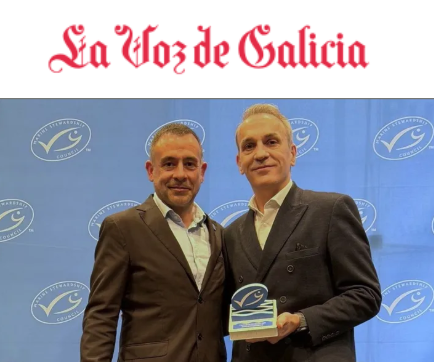
Iberconsa, a company based in Vigo, has been recognized as Supplier of the Year at the fourth edition of the Mares para Siempre (Seas for Forever) awards, promoted by the international non-profit organization Marine Stewardship Council (MSC), which promotes the blue label that distinguishes sustainably managed fisheries. The company highlights in a statement that this is the first time it has received this award, "a recognition that reinforces its commitment to sustainable fishing and excellence throughout the entire value chain."
Source: La Voz de Galicia | Read the full article here
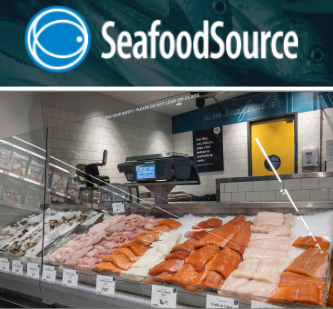
The USDA’s Economic Research Service (ERS)’s February 2026 Forecast is predicting overall food prices will increase 3.1 percent this year. That average is split between food-at-home prices, which are projected to increase 2.5 percent, and food-away-from-home prices, which are projected to increase up to 3.7 percent.
Notably, prices in seven of the 15 food-at-home categories – including fish and seafood – will rise faster than their 20-year historical average
Author: Christine Blank / SeafoodSource | Read the full article here
Opinion Article: They advocate fishing squid with trawl nets Argentina
If the Undersecretariat of Aquatic Resources (Fisheries) authorizes the “target catch” of squid (Illex argentinus) north of the 41°S parallel with trawler vessels in the Argentine Excl...





 JAPAN
JAPAN.png)
 WORLDWIDE
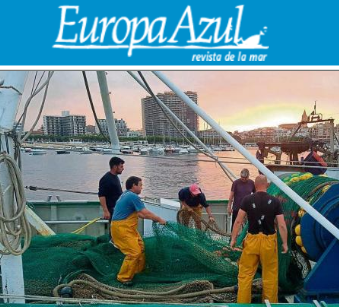 The maritime sector is reinforcing its role as one of the major drivers of employment in the global and European economy, combining the enduring relevance of traditional maritime trades with the emergence of new professions linked to digitalization, the energy transition, and technological innovation. Seafarers, shipbuilding and repair personnel, port technicians, logistics specialists, experts in new fuels, and blue biotechnology professionals are already among the most in-demand profiles in an industry undergoing profound transformation.
 UNITED KINGDOM
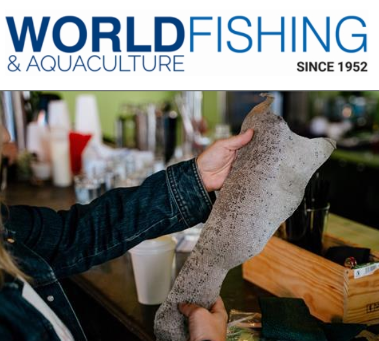 A new global study suggests the fishing industry could dramatically increase the amount of seafood reaching consumers simply by reducing waste after fish are landed.
 UNITED STATES
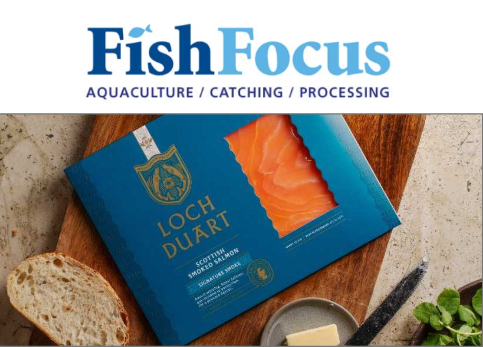 Award winning Scottish salmon farm,
 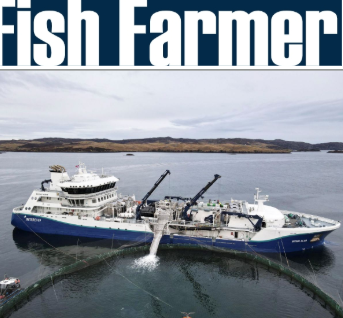 The record-breaking fish carrier has arrived in Scotland and is in service already
 CHINA
CHINA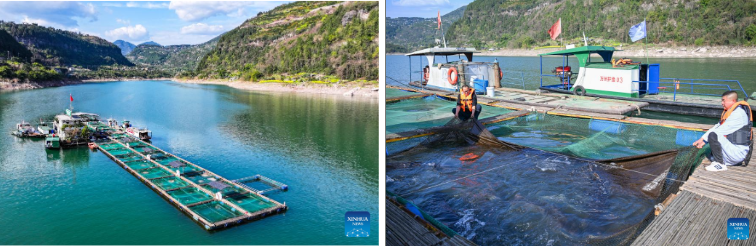
 AFGHANISTAN
 BRAZIL
.png) The sector’s growth has been supported by the entry of large companies that also operate in other animal protein industries, strengthening investment and production capacity across the state.
The sector’s growth has been supported by the entry of large companies that also operate in other animal protein industries, strengthening investment and production capacity across the state. SPAIN
SPAIN The 32nd edition of
 Iberconsa
 The
The