New Irish €26.8 million investment under Brexit Processing Capital Support Scheme.
Ireland’ Minister for Agriculture, Food and the Marine, Charlie McConalogue, has announced details of a €26.8 million investment in 44 seafood processing projects which are helping drive transformational change in the sector.
The Seafood Capital Processing Scheme is funded by the European Union under the Brexit Adjustment Reserve (BAR). Bord Iascaigh Mhara (BIM), Ireland’s seafood development agency, administers the scheme on behalf of the Department of Agriculture, Food and the Marine, which provides for up to €45 million in funding to the seafood processing sector.
Announcing details of the investment on European Maritime Day, Minister McConalogue said:
“The Processing Capital Support Scheme is providing significant investment in seafood processing enterprises, which employ some 4,000 people in rural coastal communities.
“This scheme is supporting seafood processing industry to develop their enterprises, navigate the challenging trading environment and support jobs in this important sector.
“I am pleased to highlight Brexit Adjustment Reserve funding opportunities available to the Irish seafood processing sector as Europe’s marine community come together on European Maritime Day.”
The Japanese Oyster Technology Program has distributed over 5 million seeds to producers across eight regions, strengthening the diversification of small-scale aquaculture through technology transfer and technical support.
Two and a half years after its launch, the Japanese Oyster Technology Program (PTEC)—spearheaded by the Universidad Católica del Norte (UCN) and funded by Corfo—has distributed more than 5 million seeds of this species, establishing a network of over 60 beneficiaries, including associations and small-scale producers from various parts of the country.
The Chilean salmon farmer has been accused of failing to provide facilities for nursing mothers, sacking employees who have taken maternity leave, and sending warning letters for non-existent absences
A union representing processing workers employed by Chilean salmon farmer Ventisqueros has claimed that some of their members have had to use staff toilets to express breast milk “as there is no suitable, private, clean, and specially equipped space for exercising this right”.
The Ventisqueros Seafood Workers Union also claims there have be cases of female workers who, “after reporting their pregnancy, have faced actions to remove their maternity leave protections, long after their contracts had been converted to permanent positions.
Author: Jonathan Garcés / fishfarmingexpert | Read the full article here
Catchwise has grown rapidly in the Norwegian fishing industry, with 30% of Norwegian skippers moving to the platform.
In some segments, including larger vessels, longliners, trawlers and pot vessels, the share is significantly higher.
Catchwise is aware that this has not happened by accident. Growth has come from staying close to skippers, listening to what creates problems at sea, and building the product around those needs.
Researchers at the University of Aveiro have shown that marine amphipods can transform low-value agricultural by-products into premium aquafeed ingredients rich in essential omega-3 fatty acids.
The findings, developed under the PUFApods project, offer a sustainable, circular pathway to reduce the dependence of the aquaculture industry on finite wild fish stocks for essential fatty acids.
As the global aquaculture sector expands, securing sustainable sources of essential nutrients – particularly omega-3 long-chain polyunsaturated fatty acids (LC-PUFAs) such as EPA and DHA – remains a critical bottleneck.
Source: The Fish Site | Read the full article here
The governing board of Anfaco-Cytma—the business association representing the canning and processing industry—met this Friday in Vigo to review the scientific, technological, and knowledge-transfer achievements made by its national knowledge center during the first half of the year. During this period, Anfaco-Cytma has had 62 R&D&i projects underway; of these, 15 are international in scope, 60 involve collaboration, and 61% are based on direct contracts with companies. In total, "these projects mobilize a combined budget of €109,676,355," the organization stated in a press release.
Source: La Voz de Galicia | Read the full article here
The 49th session of the Codex Alimentarius Commission (CAC49), held last week in Geneva (Switzerland), concluded with the selection of Spain as the new host country for the Codex Committee on Fish and Fishery Products (CCFFP)—one of the subsidiary bodies of the Codex Alimentarius Commission (CAC) dedicated to international food standardization.
Spain's selection marks a significant milestone for the country's international standing in the fields of food safety and international standardization. According to AESAN, this designation not only recognizes the technical and scientific capabilities of Spanish government bodies and institutions linked to the fisheries, aquaculture, and food sectors, but also strengthens Spain's role in the multilateral forums where international reference standards for global food trade are developed.
Source: ipac.acuicultura | Read the full article here
The bluefin tuna (BFT) fishing season opens next week in parts of the UK, giving authorised commercial and permitted recreational fishers the opportunity to fish for BFT.From Monday 13 July:
authorised UK commercial vessels can target BFT in English, Welsh and Scottish waters.
permitted recreational catch and release vessels, administered by Marine Management Organisation (MMO), can fish for BFT within English waters.
The opportunities for commercial fishermen to land BFT for sale, and for recreational anglers to catch and release the fish, have increased significantly this year following successful negotiations to boost the UK’s quota for the species.
Norway's seafood industry has renewed calls for a free-trade agreement with Japan, warning exporters remain at a disadvantage to competitors in the EU and UK, which already benefit from preferential market access.
The appeal came during a meeting between industry representatives and Fisheries and Oceans Minister Marianne Sivertsen Næss, where Sjømat Norge urged the government to maintain efforts to improve access to one of Norway's most important seafood markets.
Geopolitical uncertainty makes it even more important to secure access to stable markets
Source: SalmonBusiness | Read the full article here
The European Parliament rejects a move to halt the reform of the REACH regulation and endorses the phased implementation of new limits on the use and marketing of certain lead-containing equipment.
The European Parliament has cleared one of the final political hurdles for the entry into force of new restrictions on the use of lead in certain types of fishing tackle. The plenary session in Strasbourg rejected an objection lodged against the European Commission regulation amending Annex XVII of the REACH regulation, thereby allowing the adoption process to continue for rules that will affect manufacturers and distributors as well as professional and recreational anglers.The vote concluded with broad support for the European Commission's position.
Time for the fisheries sector Peru
Every five years, the national fishing sector once again expects the State to do justice to one of the country's greatest strengths. Peru possesses privileged conditions. Our sea, our rivers and lakes...



 REPUBLIC OF IRELAND
 11_03_42.png)
 CHILE
CHILE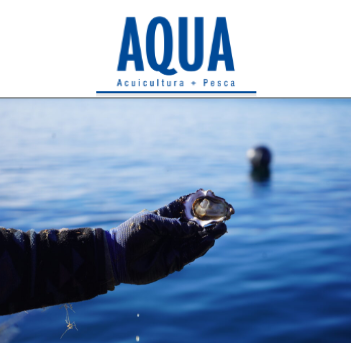 The Japanese Oyster Technology Program has distributed over 5 million seeds to producers across eight regions, strengthening the diversification of small-scale aquaculture through technology transfer and technical support.
.png) A union representing processing workers employed by Chilean salmon farmer
A union representing processing workers employed by Chilean salmon farmer  NORWAY
 Catchwise has grown rapidly in the Norwegian fishing industry, with 30% of Norwegian skippers moving to the platform.
 PORTUGAL
.png) The findings, developed under the PUFApods project, offer a sustainable, circular pathway to reduce the dependence of the aquaculture industry on finite wild fish stocks for essential fatty acids.
The findings, developed under the PUFApods project, offer a sustainable, circular pathway to reduce the dependence of the aquaculture industry on finite wild fish stocks for essential fatty acids. SPAIN
SPAIN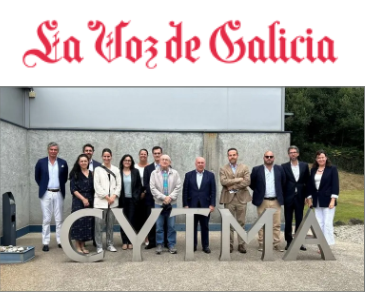 The governing board of
 SWITZERLAND
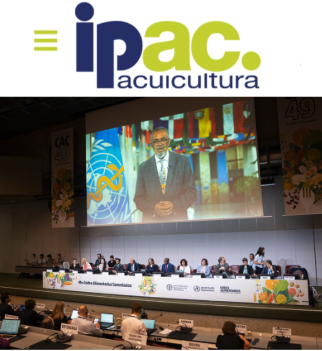 The 49th session of the Codex Alimentarius Commission (CAC49), held last week in Geneva (Switzerland), concluded with the selection of Spain as the new host country for the Codex Committee on Fish and Fishery Products (CCFFP)—one of the subsidiary bodies of the Codex Alimentarius Commission (CAC) dedicated to international food standardization.
 UNITED KINGDOM
.png) The bluefin tuna (BFT) fishing season opens next week in parts of the UK, giving authorised commercial and permitted recreational fishers the opportunity to fish for BFT.From Monday 13 July:
The bluefin tuna (BFT) fishing season opens next week in parts of the UK, giving authorised commercial and permitted recreational fishers the opportunity to fish for BFT.From Monday 13 July: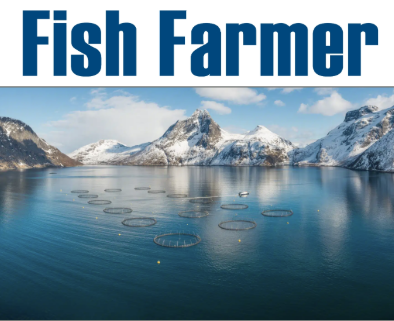
.png) Norway's seafood industry has renewed calls for a free-trade agreement with Japan, warning exporters remain at a disadvantage to competitors in the EU and UK, which already benefit from preferential market access.
Norway's seafood industry has renewed calls for a free-trade agreement with Japan, warning exporters remain at a disadvantage to competitors in the EU and UK, which already benefit from preferential market access. EUROPEAN UNION
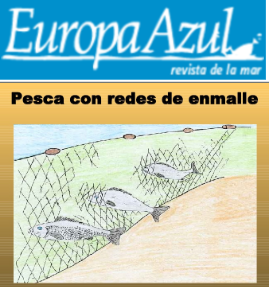 The European Parliament rejects a move to halt the reform of the REACH regulation and endorses the phased implementation of new limits on the use and marketing of certain lead-containing equipment.