IN BRIEF - Coromandel Scallop Fishery To Remain Closed
NEW ZEALAND
Friday, March 17, 2023
The Coromandel scallop fishery has been fully closed to commercial and recreational fishing to allow it to recover.
Most of the Coromandel scallop fishery and all of the Northland scallop fishery were closed in 2021 due to sustainability concerns, says Fisheries New Zealand’s Director of Fisheries Management, Emma Taylor.
“In December 2022, new information led to a temporary emergency closure of the two remaining open areas, one around Little Barrier Island and the other in Colville channel. This new 2023 sustainability closure will see those areas remain closed.
“The use of emergency measures to close a fishery is rare, and they are not used lightly.”
Minister for Oceans and Fisheries, Stuart Nash, made the decision based on new survey information which showed the two open areas in the fishery could no longer sustain harvesting.
“The initial closures followed extensive surveys in 2021, which revealed sustainability concerns. Results from surveys in the areas around Little Barrier Island and the Colville Channel in 2022 revealed further serious declines in scallop numbers.
“In light of this evidence, feedback received during public consultation supported a full and ongoing closure of the fishery as well as reductions to the total allowable catch to give the fishery the best chance of recovery.”
The Minister has decided to set the commercial and recreational allowances at zero, reflecting that no fishing will take place while the closure is in effect. The closure will not affect the relatively small amount of customary allowance. We note iwi in the region strongly support the recovery of the fishery and issuing of customary fishing permits has been limited if not completely ceased.
The International Maritime Organization (IMO) has announced that it will launch an evacuation plan for the 11,000 seafarers currently stranded in the waters of the Strait of Hormuz. This initiative will be carried out in coordination with the governments of the United States, Iran, and Oman, as well as other coastal nations in the region and maritime industry companies, within the framework of the memorandum of understanding recently signed by US and Iranian authorities.
The United Nations body stated that it has all the necessary security guarantees to begin the operation and has verified that conditions for safe navigation are assured.
Source: La Voz de Galicia | Read the full article here
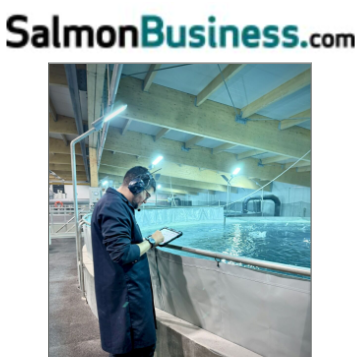
AKVA group said a contract to design and deliver a smolt facility for Icelandic land-based salmon farmer Laxey has come into effect following the completion of financing for the project.
The contract was originally announced on 21 April but was conditional on Laxey securing the funding required for the development.
That condition was lifted on Tuesday after Laxey announced it had completed a €47 million equity raise and secured syndicated financing to support the next phase of its expansion in Vestmannaeyjar, Iceland.
The project relates to the design and delivery of a new smolt facility that forms part of Laxey’s wider land-based salmon farming development in the Westman Islands.
Source: SalmonBusiness | Read the full article here
Philippines-based regenerative seaweed supply chain platform Coast 4C recently secured a EUR 2.1 million (USD 2.5 million) seed round investment to scale its digital platform for smallholder seaweed farmers, enabling them to increase productivity and give global processors access to consistent supply.
The investment came from U.K.-based global aquaculture investment firm Hatch Blue’s Blue Revolution Fund (BRF), which is a EUR 92 million (USD 104.6 million) fund intended for investments in sustainable aquaculture.
Author: Haley Jones / SeafoodSource | Read the full article here
The company begins a new business phase after one of the most significant insolvency proceedings in the Spanish tuna industry.
The company emerging from the restructuring of the tuna group Atunlo will keep its headquarters in Vigo, ensuring the continuity of business operations that, in recent years, have weathered one of the most complex insolvency processes seen in Spain's seafood processing industry.
This news represents a major boost for the economic ecosystem linked to the Galician tuna sector, as it guarantees the continued presence in Vigo of an operator historically tied to the international marketing of tuna.
The Global Squid Supply Chain Roundtable (SR) has issued a public statement expressing concern regarding the bill that would allow industrial trawling in Chile.
Twenty-seven of the world's leading squid-buying companies, gathered in the Buyers' Sectoral Roundtable, issued an alert regarding Bill No. 18.173-21. This bill, currently under discussion in the Chilean Congress, proposes reintroducing industrial trawling in specific areas of the country, thereby reversing the provisions of the "Jibia Law" (Jumbo Squid Law).
Companies endorsing the statement include Wofco, Santa Monica Seafood, Quirch Foods, Grupo Profand, Panapesca USA, and Congalsa, among others.
Kenya, Seychelles, Gabon, Tanzania and South Africa advance country-led actions to strengthen fisheries transparency with tuna leading broader momentum toward full electronic monitoring.
At the Our Ocean Conference hosted in Kenya, the governments of Kenya, Seychelles, Gabon, Tanzania and South Africa unveiled a set of country-led commitments to advance electronic monitoring—the use of onboard video cameras, GPS and sensors to monitor and verify fishing activities—to strengthen transparency across their fisheries. These announcements reflect growing African leadership in modernizing fisheries management and improving accountability at sea.
The move of Aquaculture UK from Aviemore to Glasgow attracted a record attendance, organiser Diversified UK has announced.
The biennial trade show, which ran from June 16-17 at the Scottish Event Campus (SEC) on the Clyde, saw a 22% increase in visitors since the last Aquaculture UK in Aviemore, with the number of international attendees surging by 33%.
Also making his debut was Scotland’s new agriculture, marine, and the islands minister Jim Fairlie, who cut the ribbon at the SEC and reaffirmed the Scottish government’s commitment to working with the sector.
Source: fishfarmingexpert | Read the full article here
Nekkar has exercised an option to acquire the 40.43 percent stake in FiiZK held by Bevest, increasing its ownership in the aquaculture technology company to approximately 86 percent.
The transaction also gives Nekkar control of around 90 percent of FiiZK’s outstanding voting shares.
The exercise price for the stake was NOK 55.1 million (€5 million), based on NOK 0.10 per FiiZK share. Settlement took place on 22 June through the transfer of 3,649,079 treasury shares in Nekkar, valued at the company’s 30-day volume-weighted average share price of NOK 15.09.
Source: SalmonBusiness | Read the full article here
The construction process of Pesantar 1, the latest generation trawler that Nodosa Shipyard builds for the Argentine shipowner Pesantar, in which Newsan and Profand participate, has marked a milestone this week. This week, the Marín shipyard facilities hosted the launching ceremony of the ship, designed and developed entirely in Nodosa. After successfully touching the water, the hull of the fishing vessel, 85 meters long and 14 meters wide, was transferred to a slipway with greater capacity with the aim of starting its next construction phase. The goal is for the work to be completed in spring 2027, when delivery is scheduled. With the Pesantar 1, Nodosa, which this year celebrates 50 years of experience, reaffirms its “ability to develop highly complex fishing vessel projects for international shipowners
Source: Industrias Pesqueras | Read the full article here




 NEW ZEALAND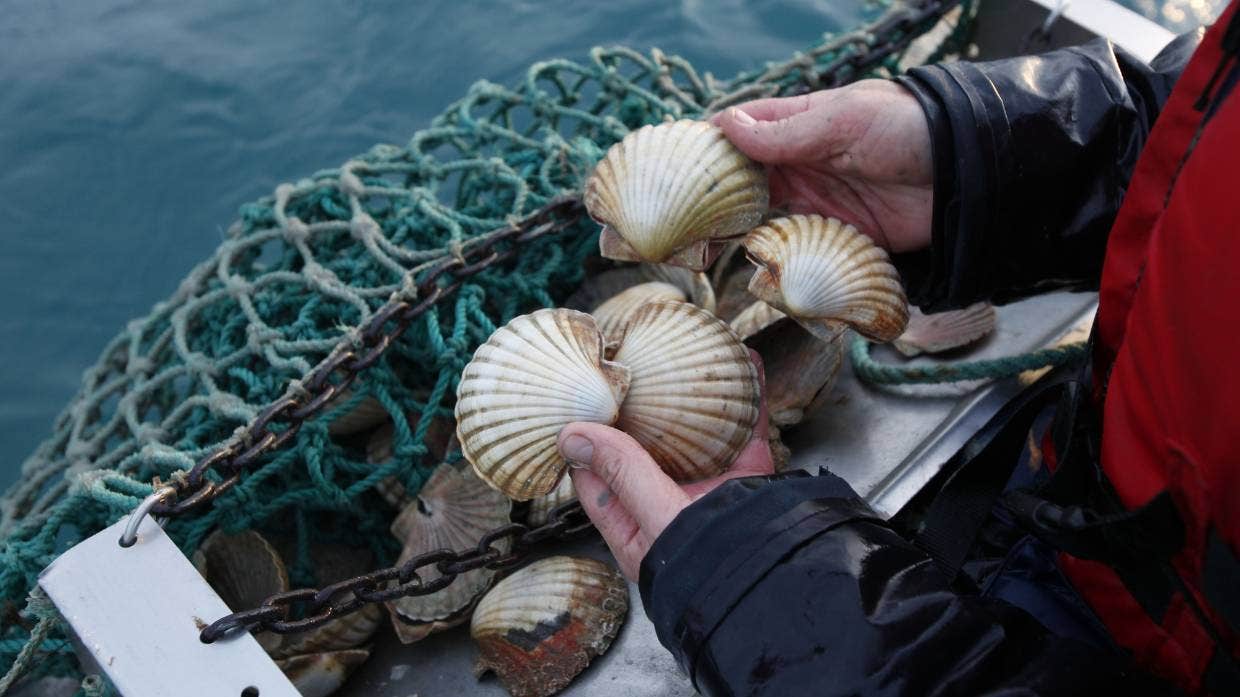
 WORLDWIDE
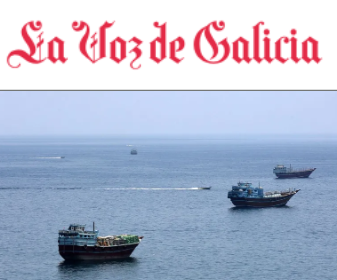 The International Maritime Organization (IMO) has announced that it will launch an evacuation plan for the 11,000 seafarers currently stranded in the waters of the Strait of Hormuz. This initiative will be carried out in coordination with the governments of the United States, Iran, and Oman, as well as other coastal nations in the region and maritime industry companies, within the framework of the memorandum of understanding recently signed by US and Iranian authorities.
 NORWAY
 AKVA group
 PHILIPPINES
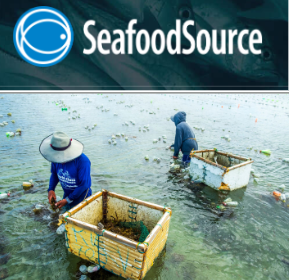 Philippines-based regenerative seaweed supply chain platform Coast 4C recently secured a EUR 2.1 million (USD 2.5 million) seed round investment to scale its digital platform for smallholder seaweed farmers, enabling them to increase productivity and give global processors access to consistent supply.
 ICELAND
.png) Announcing its 2025 results, the company saw its EBITDA rise by €12.5m (£10.7m) to €73.9m (£63m).
Announcing its 2025 results, the company saw its EBITDA rise by €12.5m (£10.7m) to €73.9m (£63m). SPAIN
SPAIN.png) The company begins a new business phase after one of the most significant insolvency proceedings in the Spanish tuna industry.
The company begins a new business phase after one of the most significant insolvency proceedings in the Spanish tuna industry. CHILE
CHILE.png) Twenty-seven of the world's leading squid-buying companies, gathered in the Buyers' Sectoral Roundtable, issued an alert regarding Bill No. 18.173-21. This bill, currently under discussion in the Chilean Congress, proposes reintroducing industrial trawling in specific areas of the country, thereby reversing the provisions of the "Jibia Law" (Jumbo Squid Law).
Twenty-seven of the world's leading squid-buying companies, gathered in the Buyers' Sectoral Roundtable, issued an alert regarding Bill No. 18.173-21. This bill, currently under discussion in the Chilean Congress, proposes reintroducing industrial trawling in specific areas of the country, thereby reversing the provisions of the "Jibia Law" (Jumbo Squid Law). KENYA
KENYA.png) At the Our Ocean Conference hosted in Kenya, the governments of Kenya, Seychelles, Gabon, Tanzania and South Africa unveiled a set of country-led commitments to advance electronic monitoring—the use of onboard video cameras, GPS and sensors to monitor and verify fishing activities—to strengthen transparency across their fisheries. These announcements reflect growing African leadership in modernizing fisheries management and improving accountability at sea.
At the Our Ocean Conference hosted in Kenya, the governments of Kenya, Seychelles, Gabon, Tanzania and South Africa unveiled a set of country-led commitments to advance electronic monitoring—the use of onboard video cameras, GPS and sensors to monitor and verify fishing activities—to strengthen transparency across their fisheries. These announcements reflect growing African leadership in modernizing fisheries management and improving accountability at sea. UNITED KINGDOM
 The move of
  Nekkar
.png) The construction process of Pesantar 1, the latest generation trawler that
The construction process of Pesantar 1, the latest generation trawler that