IN BRIEF - Fishery Commission conducts IUU compliance simulation
GHANA
Monday, February 06, 2023
The Fishery Commission, an implementing agency of the Ministry of Fisheries and Aquaculture Development, has conducted a simulation exercise on Illegal Unreported and Unregulated (IUU) fishing activities in the country’s territorial waters.
The exercise, performed in a commercial vessel, was to highlight the impact of illegal activities in the fishing sector and collectively find solutions.
As part of the IUU compliance simulation exercise conducted over the weekend, a Fishery team in collaboration with the Ghana Navy checked the Fishing License, Captain’s Certificate, Chief Engineer’s Certificate, Crew List, Life Jackets, Fishing Nets, and other requisite documents.
It was identified that the vessel was fishing within the Inshore Exclusive Zone, engaging in pair-trawling, and using an unprescribed net, among others.
Richard Klutse, Fishery Manager at the Ministry of Fisheries, said the exercise was to inject sanity into the maritime space as well as ensure that all industry players adhered to the laws governing the sector.(continues...)
Source: ghanaweb | Read the full article by clicking the link here
Mauritania’s Ministry of Fisheries, Maritime and Port Infrastructure has officially announced a total moratorium on cephalopod fishing, including octopus and squid, within its sovereign waters.
The suspension is set to take effect on May 1 and will apply to all sectors, including conventional, coastal, and deep-sea fishing operations.
This strategic pause follows critical scientific recommendations issued by the Mauritanian Institute of Marine and Fisheries on April 10. Data suggests that a biological rest period is essential to allow for the regeneration of fish stocks and to ensure the long-term sustainability of marine resources.
By enforcing this temporary ban, the Ministry aims to strengthen industry governance and promote sustainable management practices. The move is seen as a vital step in safeguarding Mauritania’s biological diversity against the pressures of overfishing, ensuring that the nation's maritime economy remains viable for future generations.
Vietnam’s tilapia industry reached a significant milestone in March 2026, as export values climbed to $15 million, representing a staggering 109% increase compared to March 2025.
The first quarter of 2026 has proven to be a period of rapid expansion. Cumulative export values for the first three months have surged by 174% year-on-year. This upward trajectory highlights the industry's successful scaling and its strengthening foothold in the global seafood trade.
Key Market Performance
While demand is growing globally, the trade remains heavily concentrated in two primary regions:
Brazil: Remains the #1 destination for Vietnamese tilapia, maintaining its position as the top importer.
United States: Holds the second-largest market share at 28%, marking a 16% increase over the previous year.
Together, Brazil and the US now command over 70% of the total market share. While this dominance underscores the popularity of the product in the Americas, it also highlights a strategic dependence on these key markets as Vietnam continues to navigate the global landscape.
“The clouds are gathering, but the storm has not yet broken on rising food and drink inflation. The war in Iran has delivered a cost shock that is already too large for manufacturers to absorb in full. The impact on prices will take time to work its way through the system, but it’s only a matter of time before it does. For manufacturers, long-term contracts with suppliers and retailers mean it can take up to a year for higher costs to be fully passed through. But where products are less processed, or supply chains are shorter, prices will move more quickly.
A new report from Royal Bank of Canada has been highlighted by Canada’s salmon farming industry as evidence that federal policy is discouraging investment in aquaculture, particularly in British Columbia.
RBC said more than C$1 trillion in investment left Canada between 2015 and 2024, with C$2 leaving the country for every C$1 of foreign direct investment entering, according to SeaWestNews,The bank said Canada’s challenge was not a shortage of capital, but an investment climate weakened by regulatory drag, shifting policy signals and uncertainty that pushes money elsewhere.
Source: SalmonBusiness | Read the full article here
The Norwegian salmon industry has become embroiled in a big row, with some companies being accused of trading with Russia.
The situation is complex, with few companies actually involved with direct trading, but some admitting they have been using feed with Russian-sourced ingredients.
The Norwegian government, like most western countries, has banned most direct trade with Russia following that country’s invasion of Ukraine in 2022. However, the issue is a complicated one, with companies pointing out there are no official sanctions against purchasing feed for farmed salmon from Russia.
Author: Vince McDonagh / Fish Farmer | Read the full article here
Vietnam’s tuna export industry is navigating a turbulent start to the year. According to data from Vietnam Customs, export turnover in March 2026 reached nearly $80 million.
While this marks a sharp recovery from the $53 million recorded in February, it still represents an 11% decline compared to the same period in 2025.
For the first quarter of 2026, cumulative export value totaled $208 million, a 4% decrease year-over-year. Ms. Nguyen Ha, a Tuna Market Expert at VASEP, notes a significant divergence in global demand. Traditional powerhouses like the US and the EU continue to face economic headwinds, weighing down overall figures.
In contrast, several emerging markets have emerged as "bright spots," showing resilient growth despite the broader downward trend. These include:
Russia
The Middle East
Egypt
The Philippines
Mexico
Industry experts remain cautious as the sector balances these new growth opportunities against the ongoing pressures in major Western markets.
Bidding for scallops from Mutsu Bay was put on hold after the first auction of "semi-mature scallops," primarily used for processing, failed to find any buyers due to price disagreements.
Though the starting bid of 300 yen (about US$1.96) per kilogram was 85 yen (about US$0.55) lower than last year's record high, it was still deemed too high by dealers, who are currently struggling to sell off existing, high-priced inventory from the previous season. The auction featured 130 tons of the scallops.
This stalemate occurs amidst projections that scallop catches in Mutsu Bay are expected to plummet to around 10,000 tons this year, nearly half of last year's total. Despite this dramatic drop in supply, which usually leads to higher prices, the market resistance and inventory issues are complicating the start of the season. Fishery officials remain somewhat optimistic, suggesting that prices might stabilize after a few more rounds of bidding.
AKVA group and Laxey have officially entered into an agreement for the design and delivery of a second RAS smolt station in Vestmannaeyjar, Iceland.
The deal, celebrated by Laxey CEO Knut Nesse and COO Dadi Pálsson at the Seafood Expo Global in Barcelona, marks a significant expansion of their land-based salmon farming operations.
A Proven Collaboration
Building on a partnership that began in June 2022, the new facility (Smolt Station II) follows the success of the first station, which is now fully operational and has delivered five batches of high-quality smolt to date.
Scaling for the Future
The expansion will be executed in phases to ensure stable production and minimized risk:
Phase 1: Designed for an annual capacity of 5 million smolts (at 100g).
Phases 2 & 3: Future scaling targets of 10 million and ultimately 15 million smolts per year.
Construction is slated to begin in the summer of 2026, with operations expected to commence by Q4 2027. This milestone reinforces Laxey's commitment to responsible, large-scale land-based salmon production.
The domestic fishery sector has reported a resilient start to the year.
According to the latest data from Food World (Beijing), total aquatic product output across 20 provinces, autonomous regions, and municipalities reached 15.4711 million tons in the first quarter of 2026, marking a 4.30% year-on-year increase.
The growth was driven largely by the aquaculture sector. Marine aquaculture output rose to 4.491 million tons (up 5.63%), while freshwater aquaculture contributed a significant 8.5476 million tons (up 4.35%). Capture fisheries also saw modest gains, with marine fishing yielding 2.2565 million tons (1.77% increase) and freshwater fishing totaling 175,900 tons (1.29% increase).
Data was compiled from key regions including Beijing, Tianjin, Hebei, Liaoning, Jilin, Heilongjiang, Shanghai, Jiangsu, Zhejiang, Anhui, Fujian, Jiangxi, Shandong, Hubei, Hunan, Guangdong, Guangxi, Hainan, Chongqing, and Sichuan. These figures underscore a stable trajectory for the nation’s food security and maritime economy.
Viciunai Group, from Lithuania, and Frais Embal, from France, have won top prizes at the 2016 Seafood Excellence Global Awards at Seafood Expo Global, which is being held this week in Barcelona. The winners were selected from 35 finalists from 16 countries and were announced this Tuesday at a special Seafood Excellence Global Awards reception. The competition recognizes the best products exhibited at Seafood Expo Global.
The top prize for Best Retail Product was awarded to Viciunai Group for its Smoked Herring Flakes - Natural Flavor, a ready-to-eat herring product with a smoky, natural flavor and eye-catching packaging.
Source: iPac.aquacultura | Read the full article here
Opinion Article: Fishing in an Age of Barbarity Argentina
An Informe Técnico (Technical Report) is already circulating that violates the fishing law but seeks to justify the transfer of CITC (Individual Transferable Catch Quotas) from fresh-fish vesse...





 GHANA
GHANA The exercise, performed in a commercial vessel, was to highlight the impact of illegal activities in the fishing sector and collectively find solutions.
 MAURITANIA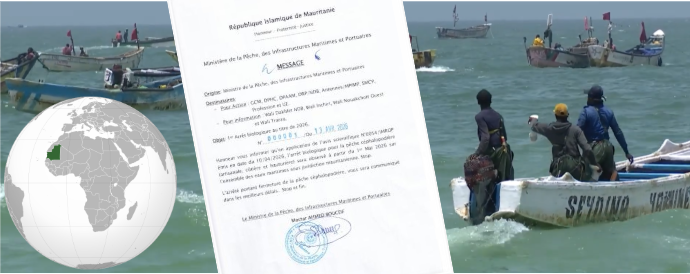
 VIET NAM
.png) The first quarter of 2026 has proven to be a period of rapid expansion. Cumulative export values for the first three months have surged by 174% year-on-year. This upward trajectory highlights the industry's successful scaling and its strengthening foothold in the global seafood trade.
The first quarter of 2026 has proven to be a period of rapid expansion. Cumulative export values for the first three months have surged by 174% year-on-year. This upward trajectory highlights the industry's successful scaling and its strengthening foothold in the global seafood trade. UNITED KINGDOM
 Dr Liliana Danila, Chief Economist,
  CANADA
 A new report from Royal Bank of Canada has been highlighted by Canada’s salmon farming industry as evidence that federal policy is discouraging investment in aquaculture, particularly in British Columbia.
 RUSSIAN FEDERATION
 The Norwegian salmon industry has become embroiled in a big row, with some companies being accused of trading with Russia.
.png) While this marks a sharp recovery from the $53 million recorded in February, it still represents an 11% decline compared to the same period in 2025.
While this marks a sharp recovery from the $53 million recorded in February, it still represents an 11% decline compared to the same period in 2025. JAPAN
JAPAN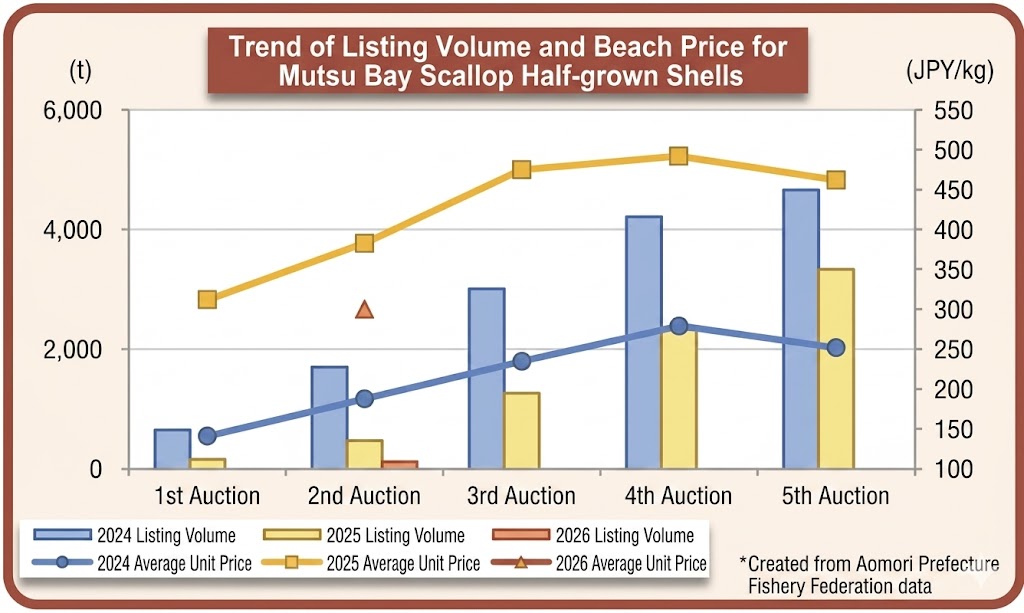
 SPAIN
SPAIN
 CHINA
CHINA_svg.png) According to the latest data from Food World (Beijing), total aquatic product output across 20 provinces, autonomous regions, and municipalities reached 15.4711 million tons in the first quarter of 2026, marking a 4.30% year-on-year increase.
According to the latest data from Food World (Beijing), total aquatic product output across 20 provinces, autonomous regions, and municipalities reached 15.4711 million tons in the first quarter of 2026, marking a 4.30% year-on-year increase.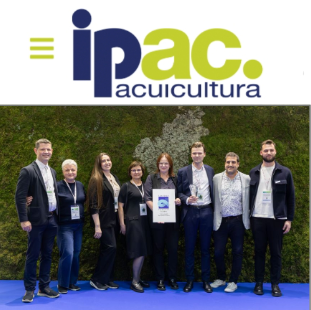 Viciunai Group