Other Media | SeafoodSource: High prices boost Lerøy’s year-start earnings, counter increased input costs
NORWAY
Saturday, May 14, 2022
Very strong market prices for seafood boosted Lerøy Seafood Group ASA (LSG) first-quarter 2022 revenues by 12 percent year-on-year to more than NOK 5.5 billion (USD 558.9 million, EUR 538 million), while its operating profit (before fair-value adjustments) climbed NOK 397 million (USD 40.3 million, EUR 38.8 million) to NOK 852 million (USD 86.6 million, EUR 83.3 million).
The Bergen, Norway-based seafood corporation’s Q1 2022 report stated that strong demand for seafood, including a substantial improvement in prices realized for the group's main products
Author: Jason Holland / SeafoodSource | read the full articlehere
The shipment arrived at the port of Corinto and was transported to Managua. The company plans future operations and a quarterly supply schedule.
AquaChile has made its first shipment of salmon to Nicaragua. The operation marks the company's entry into a new Central American market.
The start of exports was made possible following sanitary authorization allowing the product to be shipped from Chile to the Nicaraguan market. The cargo was processed at AquaChile’s Calbuco plant and subsequently arrived at the port of Corinto, Nicaragua.
From there, the shipment was transported to a distribution center in Managua. This facility will enable nationwide product distribution.
The *Sector Report on the Spanish Seafood Processing and Marketing Industry (2026)*—prepared by Ardán, the research unit of the Vigo Free Trade Zone Consortium—brings good news for companies belonging to the Spanish Association of Wholesalers, Importers, Exporters, and Processors of Fishery and Aquaculture Products (Conxemar). The 266 companies analyzed in the report (a figure that has since risen to 269) achieved a combined turnover of €12.6042 billion and generated 22,686 direct jobs in 2024; this accounts for 66.49% of the total revenue and 62.26% of the jobs within the entire sector in Spain.
Author: Borja Melchor / Faro de Vigo | Read the full article here
Uganda has activated its new Fisheries and Aquaculture Act, paving the way for the landlocked nation to implement measures that will help increase its annual fish output to 1.7 million metric tons (MT).
Uganda State Minister for Fisheries Robert Ndugwa said the new law outlines several measures the government plans to take in tackling impediments to sector growth, such as declining fish stocks attributable to illegal fishing practices and the lack of a streamlined process for issuing fishing permits.
Under the new law, Uganda has established a Monitoring, Control, and Surveillance Unit to strengthen fisheries enforcement.
Author: Shem Oirere / SeafoodSource | Read the full article here
Europêche is calling on the EU to reject another tuna-loin tariff quota rollover amid expanding preferential trade access
Europêche has called on the European Council to reject the rollover of the bloc’s 35,000-tonne autonomous tariff quota (ATQ) for tuna loins and eliminate the system from 2027.
The fishing industry association argues that successive trade agreements have significantly expanded preferential access to the EU market, making an additional global zero-duty quota increasingly disconnected from market conditions. Countries including Indonesia, Mexico, India and Vietnam already benefit or will benefit from preferential access, while negotiations continue with Thailand, the Philippines and Malaysia.
A new push is being made to encourage salmon farmers and other aquaculture companies to join efforts to reduce the sector’s carbon footprint.
The Aquaculture Action Alliance was formed in 2021 and intially concentrated on developing an environmental footprint tool to ensure consistent results and simplify the process of data collection and results calculations.
Now the Alliance is putting a stronger emphasis on coordinated action, broader participation, and measurable actions after the Aquaculture Stewardship Council (ASC) and Sustainable Fisheries Partnership (SFP) jointly took on the role of interim secretariat and re-launched the initiative.
Source: fishfarmingexpert | Read the full article here
Clean Hardangerfjord has removed 80 tonnes of plastic since 2022
Norway’s seafood sector joins Clean Hardangerfjord on September 17, mobilising thousands of volunteers along 180 km of fjord. The campaign has removed 80 tonnes of plastic in four years, while nationwide cleanups cleared 164,253 kg of marine litter in 2025.
Two Argentine lawyers, José Lucas Magioncalda and Juan Martín Fazio, have filed a criminal complaint with the Economic Penal Court against seven Galician fishing companies that operate in the archipelago's waters under Falklands licenses. This smuggling complaint is driven by the renewed sovereignty push of Argentine President Javier Milei, who announced tougher penalties for companies exploiting natural resources from the British-held islands.
The Argentine government is working on reforming Law 26.659 to introduce sanctions for fishing in the Falklands—territory under UK administration—with the bill set to be presented to the Chamber of Deputies in the coming days.
Author: C. Valdez / La Voz de Galicia | Read the full article here
The European aquaculture sector is calling for greater clarity regarding the country of production, while Brussels faces pressure to extend mandatory labeling requirements to processed goods, canned products, and the foodservice sector.
Caviar from non-EU countries has become a key example cited by the European aquaculture industry in its call for Brussels to ensure greater transparency regarding product origins. The Federation of European Aquaculture Producers (FEAP) warns that processing or repackaging within the European Union can make it difficult for consumers to immediately identify where the food was actually produced—an issue that extends beyond caviar to the entire market for processed fishery and aquaculture products.
The highly anticipated delivery of premium mackerel from Norway coincides with Norway Seafood Festival in Tokyo. This year, Norwegian herring also made an appearance for the first time.
September 2026, marked the arrival in Japan of the ‘Saba Nouveau’ mackerel, flown in fresh from Norway to celebrate the first catch of the season.
Now in its sixth year, the arrival has become a highly anticipated autumn tradition and tells a lesser-known story of how a seasonal fish from Norway’s cold waters has travelled to the other side of the world and earned a distinctive place within Japanese food culture.
Australia's first offshore Atlantic salmon trial could be expanded to 55,000 fish in a single pen after its initial crop grew faster than expected in the exposed waters of Bass Strait.
The Blue Economy Cooperative Research Centre has applied for federal approval for a second salmon stocking at its research site 12.5 kilometres off Burnie, Tasmania, increasing numbers from the 15,000 fish used during the first year to a near-commercial stocking density of 55,000.
The proposed new stocking would begin in November and run until 2028
Source: SalmonBusiness | Read the full article here
Norway Pelagic Fisheries Report, Week 37 Norway
Slower Mackerel Fishing in the Norwegian Sea, Fine North Sea Herring Caught in EEZ, and Large NVG Herring on the Trøndelag Coast
Weekly Report on Norwegian Pelagic Catch Volumes, Economic Zone...





 NORWAY
 13_00_30.png) Very strong market prices for seafood boosted
Very strong market prices for seafood boosted  NICARAGUA
.png) The shipment arrived at the port of Corinto and was transported to Managua. The company plans future operations and a quarterly supply schedule.
The shipment arrived at the port of Corinto and was transported to Managua. The company plans future operations and a quarterly supply schedule. SPAIN
SPAIN.png) The *Sector Report on the Spanish Seafood Processing and Marketing Industry (2026)*—prepared by Ardán, the research unit of the Vigo Free Trade Zone Consortium—brings good news for companies belonging to the Spanish Association of Wholesalers, Importers, Exporters, and Processors of Fishery and Aquaculture Products (
The *Sector Report on the Spanish Seafood Processing and Marketing Industry (2026)*—prepared by Ardán, the research unit of the Vigo Free Trade Zone Consortium—brings good news for companies belonging to the Spanish Association of Wholesalers, Importers, Exporters, and Processors of Fishery and Aquaculture Products ( UGANDA
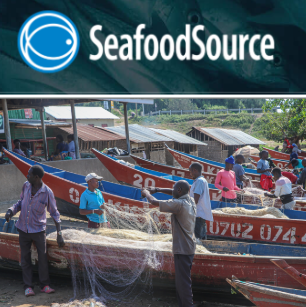 Uganda has activated its new Fisheries and Aquaculture Act, paving the way for the landlocked nation to implement measures that will help increase its annual fish output to 1.7 million metric tons (MT).
 BELGIUM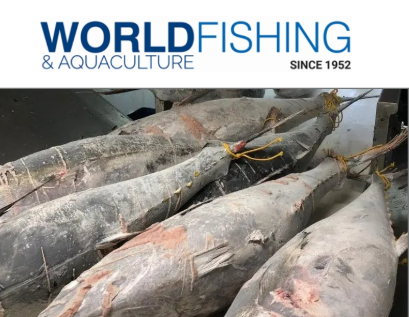
 WORLDWIDE
.png) The Aquaculture Action Alliance was formed in 2021 and intially concentrated on developing an environmental footprint tool to ensure consistent results and simplify the process of data collection and results calculations.
The Aquaculture Action Alliance was formed in 2021 and intially concentrated on developing an environmental footprint tool to ensure consistent results and simplify the process of data collection and results calculations.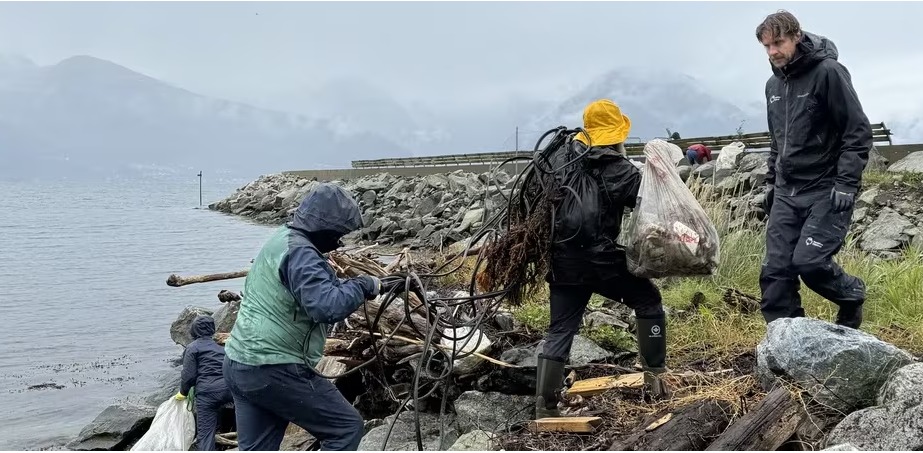
 FALKLAND ISLANDS
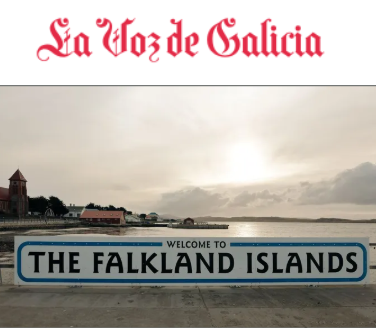 Two Argentine lawyers, José Lucas Magioncalda and Juan Martín Fazio, have filed a criminal complaint with the Economic Penal Court against seven Galician fishing companies that operate in the archipelago's waters under Falklands licenses. This smuggling complaint is driven by the renewed sovereignty push of Argentine President Javier Milei, who announced tougher penalties for companies exploiting natural resources from the British-held islands.
 EUROPEAN UNION
.png) The European aquaculture sector is calling for greater clarity regarding the country of production, while Brussels faces pressure to extend mandatory labeling requirements to processed goods, canned products, and the foodservice sector.
The European aquaculture sector is calling for greater clarity regarding the country of production, while Brussels faces pressure to extend mandatory labeling requirements to processed goods, canned products, and the foodservice sector. JAPAN
JAPAN September 2026, marked the arrival in Japan of the ‘Saba Nouveau’ mackerel, flown in fresh from Norway to celebrate the first catch of the season.
 AUSTRALIA
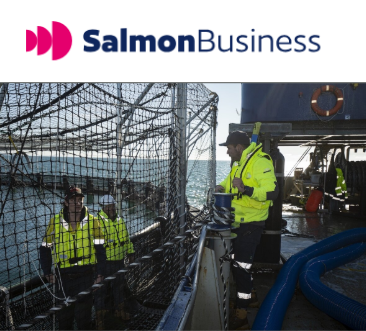 Australia's first offshore Atlantic salmon trial could be expanded to 55,000 fish in a single pen after its initial crop grew faster than expected in the exposed waters of Bass Strait.