The competition recognises individuals and companies finding new solutions to the key challenges facing aquaculture.
University of Stirling postdoctoral researcher Simão Zacarias was the recipient of last year’s Innovation Award for his work on the shrimp-hatchery practice of unilateral eyestalk ablation (removal).
Source: Fishfarmingepert | read the full articlehere
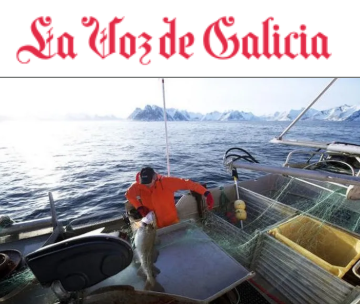
In early June, European Commission President Ursula von der Leyen announced that the 21st package of measures against Russia over the invasion of Ukraine would include "fisheries for the first time." However, the EU has reversed course and removed measures targeting the fishing sector from this new sanctions package. There is no official explanation for the exclusion of these penalties.
Von der Leyen had previously stated that the EU-27 had decided to include "one of the last major unsanctioned sectors—fisheries—" in the punitive measures against Russia.
Source: La Voz de Galicia | Read the full article here
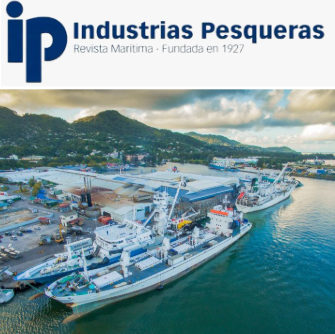
Fisheries agreements have moved beyond the "pay-to-fish" model, evolving into instruments of cooperation that foster investment and development in partner countries. As the European Commission prepares a new generation of agreements, the sector champions their strategic value and shared benefits—provided they are negotiated and implemented with appropriate safeguards.
This autumn, the European Commission will present a major package of policy guidelines for the fisheries and aquaculture sectors: "Vision 2040," which will define the long-term outlook for both sectors; a roadmap for the energy transition; and an external dimension strategy that will outline, among other key elements, the framework for a new generation of Sustainable Fisheries Partnership Agreements (SFPAs).
Source: Industrias Pesqueras | Read the full article here
The first significant shipment of Scottish salmon has arrived in India after a free trade deal led to a 33% tariff on fish being scrapped.
Freshly harvested from Scotland’s west coast by Bakkafrost Scotland, the salmon arrived at Sashimi Foods in Bengaluru (also called Bangalore) in Karnataka in southwest India's earlier today.
Sent by air via Heathrow Airport, the delivery arrived less than two weeks after the UK Government’s trade deal with India came into force – and as Glasgow prepares to hand the Commonwealth Games baton to Amdavad (Ahmedabad) in Gujarat.
Source: fishfarmingexpert | Read the full article here
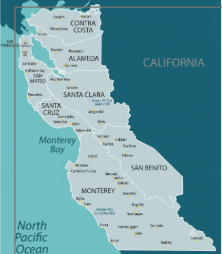
CDFW authorized catches for human consumption after domoic acid fell below the federal limit.
Effective July 31, the measure covers waters from Pigeon Point to Point Lobos and includes part of the coastline of Santa Cruz. Restrictions imposed on June 26 affected northern anchovy (Engraulis mordax) and Pacific sardine (Sardinops sagax).
The restriction had been established on June 26 after samples from both species presented elevated concentrations of domoic acid.
During its validity, commercial capture destined for human consumption was prohibited, although the use of sardines and anchovies as bait remained authorized, subject to specific labeling obligations.
Conapesca will implement two fishing suspension periods during 2026 and 2027.
The measure entails two 64-day closures: from August 6 to October 8, 2026, and from November 9, 2026, to January 11, 2027. It applies to Mexican purse-seine and longline tuna vessels operating in the Eastern Pacific.
The temporary fishing ban applies to Mexican-flagged tuna vessels with a carrying capacity of 182 metric tons or more that use purse-seine nets, and to longline vessels exceeding 24 meters in total length, operating in the aforementioned waters under federal jurisdiction.
Cantabria records good catches, though generational turnover remains a concern
The season’s total quota for Spain is 28 million kilograms, with 9 million already landed. Sergio Valle Brigido highlighted the daily activity and explained that the albacore seeks waters between 19°C and 22°C, moving further north.Sea temperature in the Cantabrian Sea is crucial for optimal fishing conditions: “Albacore prefer temperate waters. What they don't like is temperatures above 22 degrees.”
Cargill is investing NOK90 million (€8.2 million) to expand its feed factory at Halsa in northern Norway.
The project includes a 1,100-square-metre finished-goods warehouse, alongside new offices, changing rooms and communal facilities at the site in Meløy municipality.
Norwegian contractor Halsa Bygg was selected for the project following a tender process. The warehouse is scheduled for completion in summer 2027, with the new staff facilities expected to be ready during the winter of 2027-28.
Source: SalmonBusiness | Read the full article here
Thai Union Group PCL marks 10 years of leadership in responsible tuna sourcing with the publication of new 2025 Sustainability Report. Thai Union Group PCL is marking 10 years of leadership in responsible tuna sourcing with the publication of its latest Sustainability Report, which outlines the company’s progress across one of the world’s most complex seafood supply chains.
Over the decade since Thai Union set its Global Tuna Sustainability Goals in 2015, the company now sources more than 99.9% of its tuna responsibly, has 95% on the water monitoring coverage and can trace 100% of its tuna back to the vessel of origin.
Compassion in World Farming has welcomed a landmark victory after Nueva Pescanova abandoned plans to build the world’s first commercial octopus farm in Gran Canaria, Spain.
The farm, proposed by Spanish seafood company Nueva Pescanova for the Port of Las Palmas, would have confined around one million octopuses a year in barren tanks and caused serious damage to our oceans.
The plans sparked global outcry from animal welfare organisations, scientists, campaigners and members of the public. Today’s news follows a recent push by Compassion in World Farming to get the Las Palmas Port Authority to officially close the planning application for the farm.
Abanca and Conxemar—the Spanish Association of Wholesalers, Importers, Exporters, and Processors of Fishery and Aquaculture Products—have once again joined forces to boost the 27th edition of Conxemar, the International Seafood Trade Fair. The event will take place from October 6 to 8, positioning Vigo as a global benchmark in the sector.
The agreement was signed by Víctor Casal, Executive Director of Corporate, Business, and SME Banking at Abanca, and Eloy García, President of Conxemar, accompanied by Javier Fraga, Director of Abanca Mar. This long-standing collaboration allows Abanca to remain a sponsor while also supporting the fair through key institutional events and business generation efforts, facilitated by a dedicated Abanca Mar stand.
Source: Industrias Pesqueras | Read the full article here
Alaskan Rationalized Crab Fishery Value Rises 37.5% United States
Added value in Bering Sea and Aleutian Islands fishery, combined with reduced administrative costs, lowers federal cost recovery fee from 1.2% to 0.67% for the 2026/2027 season.
Washington. The comme...





 UNITED STATES
 8_27_42.png) The Global Aquaculture Alliance (GAA)
The Global Aquaculture Alliance (GAA) RUSSIAN FEDERATION
 In early June, European Commission President Ursula von der Leyen announced that the 21st package of measures against Russia over the invasion of Ukraine would include "fisheries for the first time." However, the EU has reversed course and removed measures targeting the fishing sector from this new sanctions package. There is no official explanation for the exclusion of these penalties.
 EUROPEAN UNION
 Fisheries agreements have moved beyond the "pay-to-fish" model, evolving into instruments of cooperation that foster investment and development in partner countries. As the European Commission prepares a new generation of agreements, the sector champions their strategic value and shared benefits—provided they are negotiated and implemented with appropriate safeguards.
 INDIA
INDIA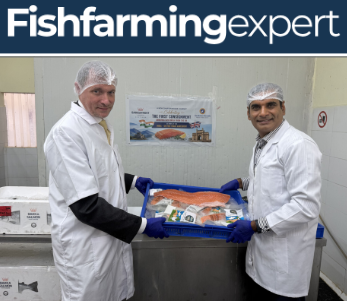 The first significant shipment of Scottish salmon has arrived in India after a free trade deal led to a 33% tariff on fish being scrapped.
 CDFW
CDFW MEXICO
.png) The measure entails two 64-day closures: from August 6 to October 8, 2026, and from November 9, 2026, to January 11, 2027. It applies to Mexican purse-seine and longline tuna vessels operating in the Eastern Pacific.
The measure entails two 64-day closures: from August 6 to October 8, 2026, and from November 9, 2026, to January 11, 2027. It applies to Mexican purse-seine and longline tuna vessels operating in the Eastern Pacific. SPAIN
SPAIN.png) The season’s total quota for Spain is 28 million kilograms, with 9 million already landed. Sergio Valle Brigido highlighted the daily activity and explained that the albacore seeks waters between 19°C and 22°C, moving further north.Sea temperature in the Cantabrian Sea is crucial for optimal fishing conditions: “Albacore prefer temperate waters. What they don't like is temperatures above 22 degrees.”
The season’s total quota for Spain is 28 million kilograms, with 9 million already landed. Sergio Valle Brigido highlighted the daily activity and explained that the albacore seeks waters between 19°C and 22°C, moving further north.Sea temperature in the Cantabrian Sea is crucial for optimal fishing conditions: “Albacore prefer temperate waters. What they don't like is temperatures above 22 degrees.” NORWAY
.png) Cargill
Cargill  THAILAND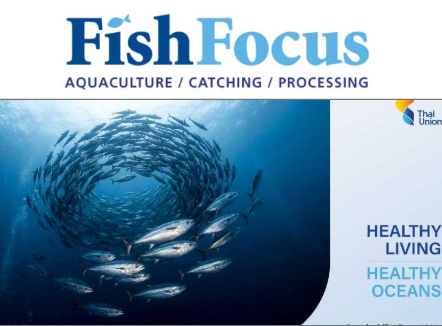
.png) Compassion in World Farming has welcomed a landmark victory after
Compassion in World Farming has welcomed a landmark victory after .png) Abanca
Abanca