Other Media | Aqua: Snowdrifts reduced more than 87 tons in the use of plastics
CHILE
Friday, June 11, 2021
The recently released ESG 2020 report highlights progress around salmon farming company Ventisqueroscommitment to caring for people, protecting the environment and producing sustainable and responsibly sourced proteins.
These achievements have also generated savings in the acquisition of supplies from Ventisqueros, which reaffirms the idea that being environmentally sustainable is a possible practice without implying an increase in costs.
The strategy to reduce the use of plastics in the company was developed through the methodology of elimination, combination, replacement or simplification.
Health authorities in France have issued an alert regarding the voluntary recall of fresh albacore tuna loins under the Bigfish brand after detecting histamine, a toxin that causes severe food poisoning and allergic reactions.
The fish, sold vacuum-packed with skin in 2 and 6-kilo formats, was distributed between August 4 and August 7, 2026, through Super U in Plouarzel. The action targets batch 26072026, featuring traceability code MDV/LHP/ALAM6/23G26/YFT and an expiration date of August 9, 2026.
The official body RappelConso, which released the notification on August 17, 2026, urges consumers not to eat the product and to return it to the point of purchase for a full refund. Consuming this toxin can rapidly trigger symptoms such as flushing, facial swelling, headaches, nausea, vomiting, or gastrointestinal distress.
The latest penalty brings fines imposed on foreign vessels for illegal fishing in Argentine waters during 2026 to more than ARS 4.533 billion.
Argentine authorities sanctioned the Hai Xing 2, a Chinese-origin vessel sailing under the Tanzanian flag, after detecting fishing activity inside the country’s Exclusive Economic Zone (EEZ) near Golfo San Jorge.
The vessel received a fine of nearly ARS 1.9 billion, becoming the fourth foreign fishing vessel sanctioned by Argentina in 2026 for illegal operations in waters under national jurisdiction.
FFA-coordinated surveillance operation strengthens regional efforts to detect and deter illegal fishing across Pacific waters.
The Pacific Islands Forum Fisheries Agency (FFA) flagged 16 vessels for further investigation during a regional surveillance operation targeting illegal, unreported and unregulated (IUU) fishing. The coordinated crackdown reinforces cooperation among Pacific nations to identify suspicious fishing activity, improve compliance and protect the region’s valuable tuna and marine resources.
The 3D-COAST system is designed to automate oyster handling, cut labor needs and produce up to 125,000 oysters per raft annually.
An oyster farm in Maine, US, is testing 3D-COAST, a floating vertical conveyor powered by two solar panels. The technology moves oyster baskets between water and air, automating tumbling and helping control biofouling.
Nissui targets 10,000 tonnes by 2030 as domestic production gains momentum.
Japan’s salmon farming sector is expanding, especially in Tohoku, driven by strong Asian demand and rising costs. Nissui plans to increase annual production from 4,200 tonnes to 10,000 tonnes by 2030.
The measure runs until October 15, 2026, covering fishing, trade, storage and export along all Omani coasts.
Oman has imposed its seasonal kingfish ban to support stock recovery and sustainable fisheries. In 2025, production reached 19,743 tonnes, worth RO 44.4 million. Violations may result in fines of up to RO 300 and imprisonment.
Time-temperature, colour-changing labels help airlines, cruise lines, and rail operators protect perishable food quality from preparation to onboard service
Vitsab®, a global leader with over 20 years of temperature monitoring expertise, is proud to highlight Freshtag® Onboard Catering, a colour-changing, full-history smart indicator designed to monitor passenger meals and other perishable products in refrigerated or passive storage environments for time/temperature abuse from the preparation kitchen until service onboard. By giving operators an easy-to-read visual indicator powered by Freshtag’s stoplight technology, which provides a simple colour-based cue, Freshtag Onboard Catering helps teams quickly validate whether onboard food has remained within safe handling conditions throughout transport, storage, and service.
Chile’s Constitutional Court has struck down a measure that would have made it easier for salmon farmers to move existing aquaculture concessions, dealing a setback to efforts to loosen regulatory constraints on the sector.
The court said in a communiqué dated August 13 that it had declared unconstitutional provisions creating so-called “micro-relocations” and exempting them from Chile’s Environmental Impact Assessment System.
The measure would have covered movements of up to 350 metres from the original concession area.
Source: SalmonBusiness | Read the full article here
It was the fifth consecutive week of price increases last week, and the second-highest export tonnage ever
The spot price for market-influencing Norwegian farmed salmon rose by NOK 0.64/kg last week (week 32) to NOK 70.99/kg. That price that is NOK 15.94/kg higher than the same week in 2025.
The average spot price so far this year is NOK 77.41 NOK/kg, compared to NOK 78.34 for the same period last year.
Author: Pål Mugaas Jensen / fishfarmingexpert | Read the full article here
New rules widen access across Spanish fleets but impose a limit of one tuna per vessel per trip or day.
Spain’s Ministry of Agriculture, Fisheries and Food has authorised 233 tonnes of bluefin tuna by-catch. Quotas include 67 tonnes for the Bay of Biscay, 64 tonnes for Cádiz ports, 55 tonnes for Mediterranean fleets and 47 tonnes for the Gulf of Cádiz.





 CHILE
CHILE 11_27_04.png) The recently released ESG 2020 report highlights progress around salmon farming company
The recently released ESG 2020 report highlights progress around salmon farming company  FRANCE
.png)
 ARGENTINA
.png) Argentine authorities sanctioned the Hai Xing 2, a Chinese-origin vessel sailing under the Tanzanian flag, after detecting fishing activity inside the country’s Exclusive Economic Zone (EEZ) near Golfo San Jorge.
Argentine authorities sanctioned the Hai Xing 2, a Chinese-origin vessel sailing under the Tanzanian flag, after detecting fishing activity inside the country’s Exclusive Economic Zone (EEZ) near Golfo San Jorge. AMERICAN SAMOA
 The Pacific Islands Forum Fisheries Agency (FFA) flagged 16 vessels for further investigation during a regional surveillance operation targeting illegal, unreported and unregulated (IUU) fishing. The coordinated crackdown reinforces cooperation among Pacific nations to identify suspicious fishing activity, improve compliance and protect the region’s valuable tuna and marine resources.
 UNITED STATES
.png) The 3D-COAST system is designed to automate oyster handling, cut labor needs and produce up to 125,000 oysters per raft annually.
The 3D-COAST system is designed to automate oyster handling, cut labor needs and produce up to 125,000 oysters per raft annually. JAPAN
JAPAN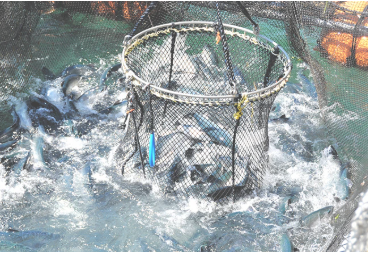
 OMAN
OMAN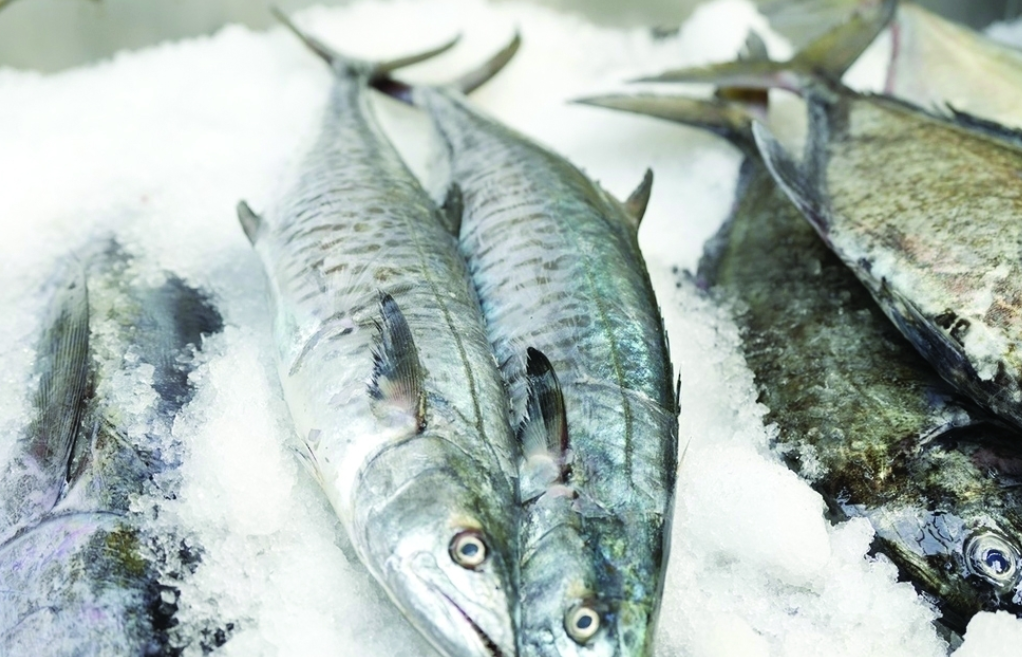 The measure runs until October 15, 2026, covering fishing, trade, storage and export along all Omani coasts.
 WORLDWIDE
.png) Time-temperature, colour-changing labels help airlines, cruise lines, and rail operators protect perishable food quality from preparation to onboard service
Time-temperature, colour-changing labels help airlines, cruise lines, and rail operators protect perishable food quality from preparation to onboard service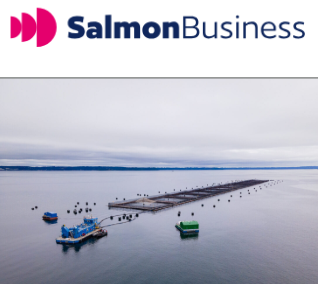 Chile’s Constitutional Court has struck down a measure that would have made it easier for salmon farmers to move existing aquaculture concessions, dealing a setback to efforts to loosen regulatory constraints on the sector.
 NORWAY
.png) The spot price for market-influencing Norwegian farmed salmon rose by NOK 0.64/kg last week (week 32) to NOK 70.99/kg. That price that is NOK 15.94/kg higher than the same week in 2025.
The spot price for market-influencing Norwegian farmed salmon rose by NOK 0.64/kg last week (week 32) to NOK 70.99/kg. That price that is NOK 15.94/kg higher than the same week in 2025. SPAIN
SPAIN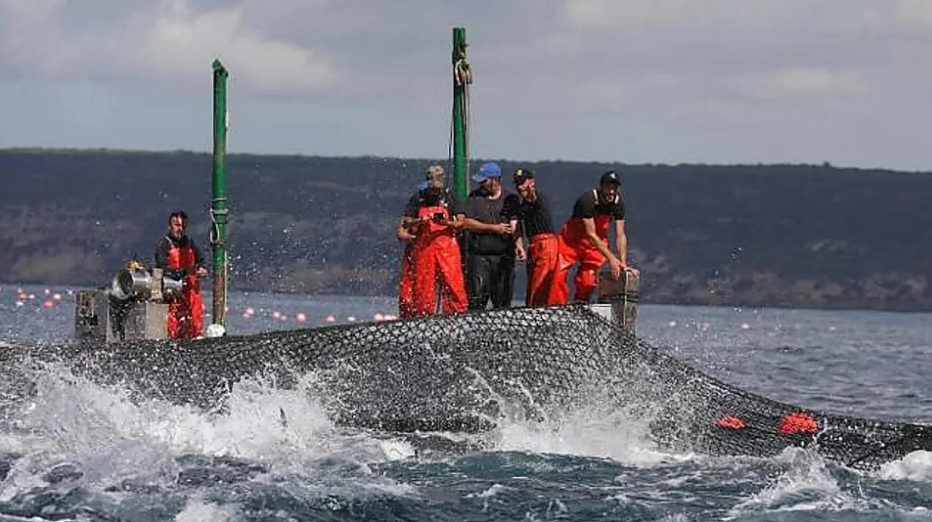 New rules widen access across Spanish fleets but impose a limit of one tuna per vessel per trip or day.