Other Media | SeafoodSource: No COVID-19 cases found on American Seafoods trawler in Alaska
UNITED STATES
Friday, June 19, 2020
Health officials in Alaska found no cases of COVID-19 aboard an American Seafoods trawler that recently arrived in Dutch Harbor to fish for Bering Sea pollock. The ship, the Ocean Rover, docked in the Unalaska port on Sunday, 14 June, where, according to a press release from the city, local health officials worked together with American Seafoods to screen and test crewmembers.
“In a coordinated effort between the IFHS Clinic, City of Unalaska, State of Alaska Health and Social Services, and American Seafoods, all 121 members on board responded to health questionnaires and were tested for COVID-19 as warranted. Sixteen crew members were found to have possible symptoms of COVID-19 and were quarantined pending test results. All tests returned negative. The Ocean Rover is offloading frozen product and will return to sea,” the press release read.
Author: Brian Hagenbuch / SeafoodSource | Read the full articlehere
Russian authorities consider authorizing large-scale vessels in the Sea of Japan amid oceanographic changes and Tsushima stock surge
Prospects for developing the Iwashi sardine (Sardinops melanostictus) fishery using large-capacity fleets in the Sea of Japan were reviewed during a meeting of the Far Eastern Scientific and Industrial Council (FESIC).
Over the past two years, shifting oceanographic conditions have redirected Iwashi sardine migration routes from traditional grounds near the Southern Kuril Islands toward the open Pacific Ocean. Concurrently, population growth in the Tsushima sardine stock is unlocking new commercial opportunities for the Russian fleet off the coast of Primorye.
Experts from VNIRO, the research institute subordinate to the Federal Agency for Fisheries, project that Tsushima sardine landings could eventually reach 200,000 metric tons, contingent upon favorable environmental parameters and the deployment of targeted fishing operations.
Following the resumption of harvesting in 2026, industry scientists continue tracking commercial aggregations. Meanwhile, formal proposals have been submitted to the Russian Ministry of Agriculture to amend fishing regulations and authorize large-capacity vessels within the Primorye subzone.
The price revisions will affect frozen foods, surimi products, canned goods and freeze-dried products, effective February 2027.
TOKYO - Japanese seafood company Umios announced on November 27, 2026, that it will increase its wholesale prices for processed food products sold in the domestic market by up to 29%. The revised prices will apply to deliveries starting February 1, 2027.
According to the company, frozen food prices will rise by approximately 7% to 20%, surimi-based products, including chikuwa, by 10% to 15%, canned products and gift assortments by 5% to 29%, and freeze-dried products by 7% to 8%.
Umios attributed the increases to rising costs of raw materials, packaging, energy and logistics, which it said can no longer be fully absorbed through internal cost-saving measures. Some products will also undergo specification changes. The announced increases apply to the company's selling prices and do not necessarily reflect equivalent increases in final consumer prices.
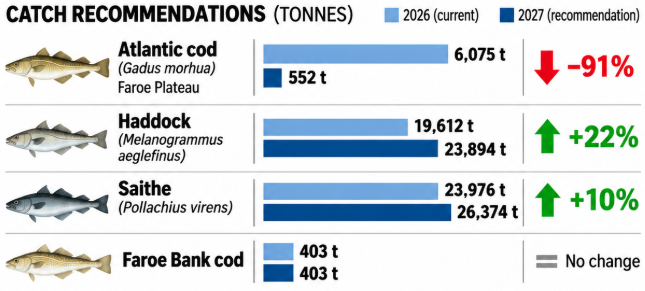
The International Council for the Exploration of the Sea (ICES) recommended on November 27 limiting catches of Atlantic cod (Gadus morhua) on the Faroe Plateau to 552 tonnes in 2027, compared with the 6,075 tonnes advised for 2026.
According to the marine research institute Havstovan, spawning stock biomass is approaching the critical biological limit and could fall below it in 2027. High fishing pressure and weaker recruitment are the main causes of the decline.
In contrast, ICES recommends a 22% increase in haddock (Melanogrammus aeglefinus) catches, to 23,894 tonnes, and a 10% increase in saithe (Pollachius virens) catches, to 26,374 tonnes. The recommendation for Faroe Bank cod remains unchanged at 403 tonnes.
The scientific advice, which does not yet constitute a legally binding quota, could have significant implications for the Faroese demersal fishing fleet.
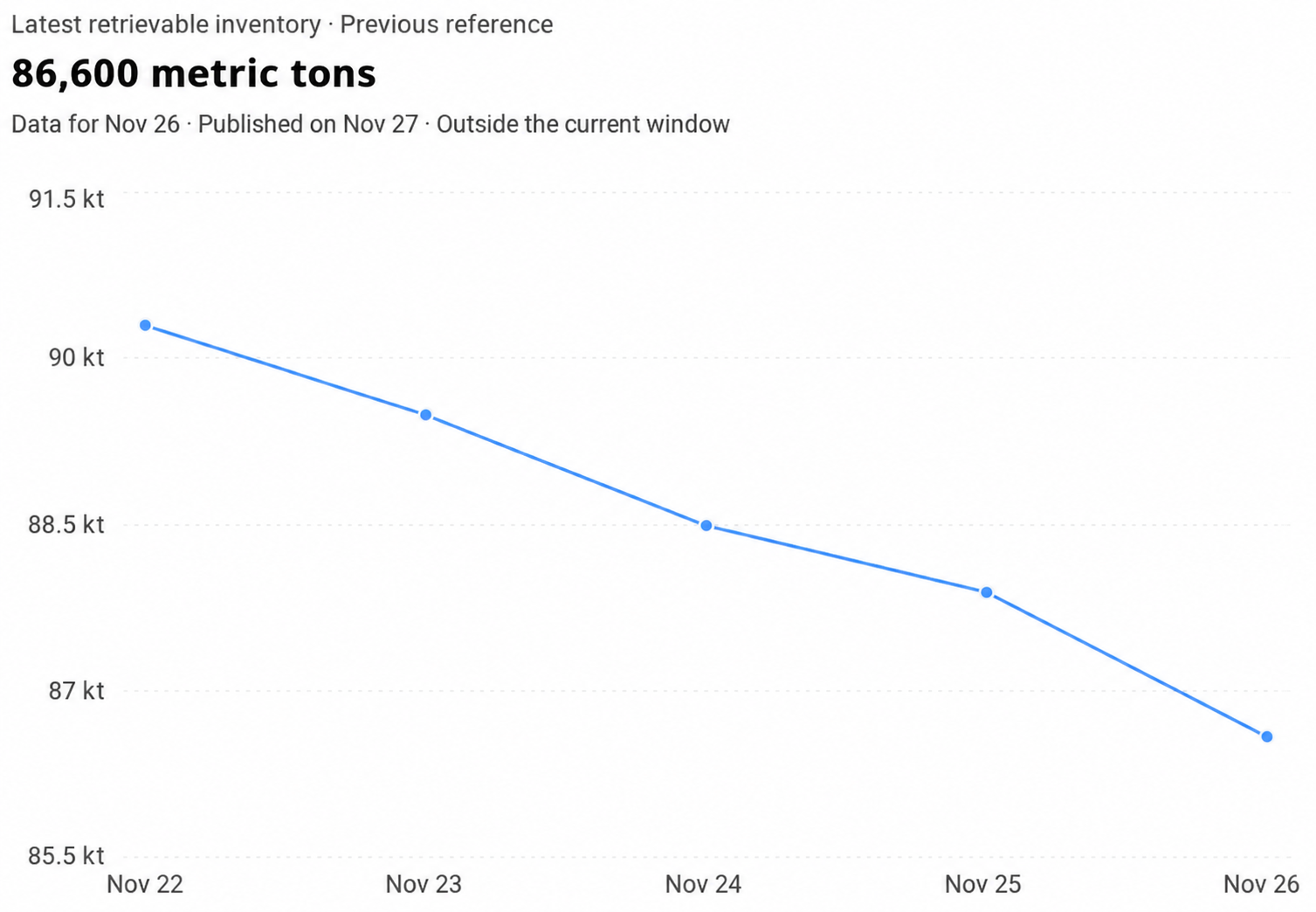
The latest available figures put port inventories at 86,600 metric tons, while the industry awaits updated information on imports and supply.
CHINA — Stocks of imported fishmeal at major Chinese ports stood at 86,600 metric tons as of November 26, 2026, according to data published by Mysteel on November 27, reflecting a 6.38% week-on-week decline.
The reduction in inventories comes amid elevated prices and seasonally subdued demand from aquaculture feed manufacturers.
However, monitoring conducted on November 29 did not identify a new verifiable inventory reading. The latest available figure therefore remains the one recorded on November 26.
Market participants continue to monitor incoming shipments, international supply conditions, and purchasing requirements across the aquaculture feed industry.
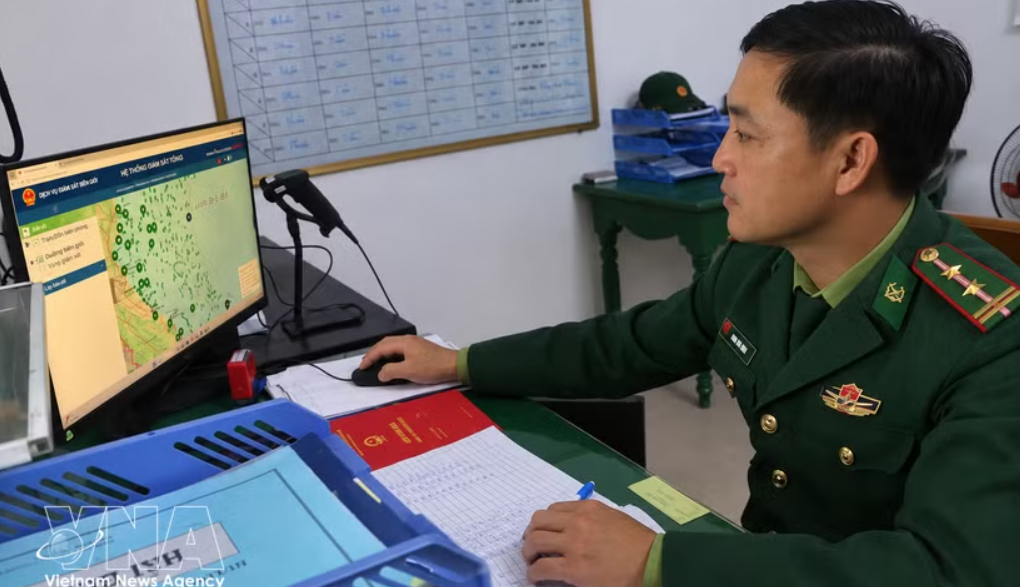
Digital monitoring strengthens fisheries management and regulatory compliance.
Authorities in Hue have barred 176 fishing vessels from operating as Vietnam intensifies its efforts to combat illegal, unreported and unregulated (IUU) fishing through digital data management and stricter fleet controls.
The initiative aims to modernise infrastructure and improve environmental sustainability.
The French Development Agency (AFD) is assessing eight fishing harbours across India, including Paradip in Odisha, to select three for funding. The project prioritises productivity, hygiene, cold-chain efficiency, waste management and fishing community development.
Bilateral cooperation aims to boost domestic production and reduce fish imports.
At the Polish–Nigerian Economic Forum in Lagos, Minister Adegboyega Oyetola urged Polish companies to invest in fish farming, processing, cold-chain infrastructure, feed manufacturing, technology and export development.
The initiative could benefit Nigerian fish farmers, aquaculture startups, seafood processors and equipment suppliers.
Scottish aquatech company targets international expansion.
Aqura Systems has appointed Charles Høstlund, former CEO of Norway Royal Salmon, as chairman and secured £2.1 million to advance MIAbot, its AI-powered robotic platform for detecting harmful algal blooms and protecting fish health.
Possible Listeria contamination raises food safety concerns in Australia.
Pure Foods Tasmania recalled its Woodbridge Smokehouse smoked salmon spread (150g), batch 26300, with a use-by date of December 28, 2026. Consumers are advised not to eat the product and return it for a full refund.
The South Korean food company expands its international distribution network.
Following kombucha exports to Hong Kong, Taiwan and Malaysia, ZAKSIMLAB is negotiating with a Japanese distributor to introduce its protein-rich salmon chips, launched in September 2026 and made with pollock surimi and salmon.




 UNITED STATES
 Health officials in Alaska found no cases of COVID-19 aboard an American Seafoods trawler that recently arrived in Dutch Harbor to fish for Bering Sea pollock. The ship, the Ocean Rover, docked in the Unalaska port on Sunday, 14 June, where, according to a press release from the city, local health officials worked together with American Seafoods to screen and test crewmembers.
 RUSSIAN FEDERATION
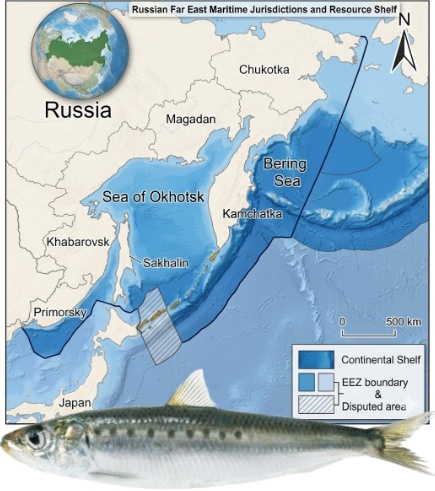 Prospects for developing the Iwashi sardine (Sardinops melanostictus) fishery using large-capacity fleets in the Sea of Japan were reviewed during a meeting of the Far Eastern Scientific and Industrial Council (FESIC).
 JAPAN
.png)
 FAROE ISLANDS
 CHINA
 VIET NAM
 INDIA
.png) The initiative aims to modernise infrastructure and improve environmental sustainability.
 NIGERIA
 Bilateral cooperation aims to boost domestic production and reduce fish imports.
 UNITED KINGDOM
 Scottish aquatech company targets international expansion.
 AUSTRALIA
 Possible Listeria contamination raises food safety concerns in Australia.
 SOUTH KOREA
 The South Korean food company expands its international distribution network.