|
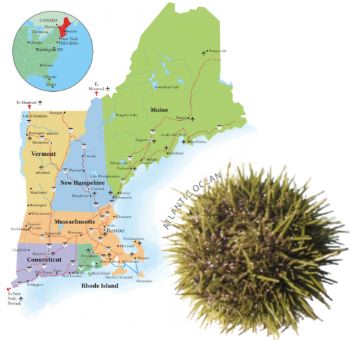
Green sea urchins (Strongylocentrotus droebachiensis) are the only commercially viable species of sea urchin in New England
URI Aquaculture Professor Aims to Strengthen Sea Urchin Farming Practices
 UNITED STATES
Thursday, January 30, 2025, 18:00 (GMT + 9)
Hugh Markey presents an insightful article on groundbreaking research and initiatives in sea urchin aquaculture, conducted collaboratively by the University of Rhode Island and the University of Maine.
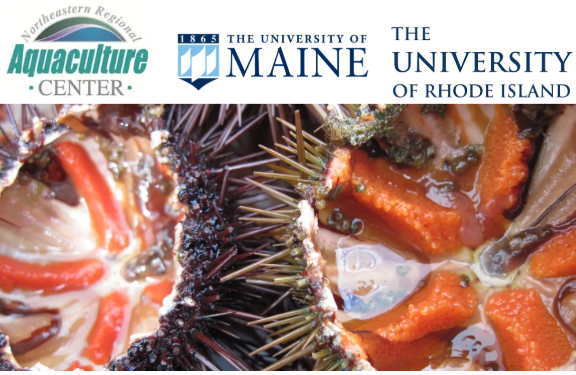
KINGSTON, R.I. – A collection of tiny golden eggs crowns a swirl of pasta. They sit on a small plate, the beautiful orange color looking very much like salmon roe. However, the source of these eggs may be surprising. Instead of coming from the sleek, silvery bodies of the salmon, these are the spawn of sea urchins, spindly ocean dwellers that spend their lives wandering the cold, dark bottom of the ocean.
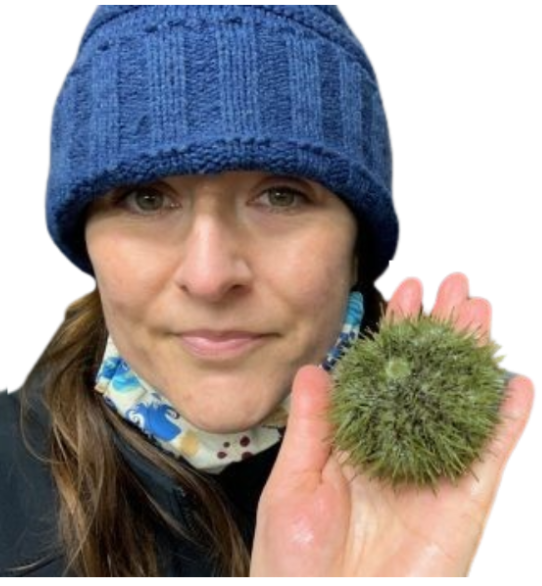 The eggs are commonly called uni, and Coleen Suckling, a marine eco-physiologist and associate professor of aquaculture and fisheries at the University of Rhode Island, is convinced that raising these animals and harvesting the uni is part of a viable industry. The eggs are commonly called uni, and Coleen Suckling, a marine eco-physiologist and associate professor of aquaculture and fisheries at the University of Rhode Island, is convinced that raising these animals and harvesting the uni is part of a viable industry.
Associate Professor of Aquaculture and Fisheries Coleen Suckling (URI photo)-->
“If you think about what a clean ocean smells like, and translate that to taste, you’ll have an idea of what they taste like,” Suckling said.
In a recent Coastal State Discussion on Sea Urchin Farming in New England, Suckling and Dana Morse of Maine Sea Grant/University of Maine discussed the latest research and initiatives to advance sea urchin aquaculture in New England–specifically purple and green sea urchin species. During the discussion, Suckling dared the audience to taste the uni, which is normally in season from October/November until March/April. Suckling said their use can extend beyond sushi to create sources for pasta dishes or new dining experiences such as serving it on a seaweed bed. “These are lovely, beautiful animals, and Grade A uni from them can fetch $40 to $50 per 3 to 4 ounce tray,” she said.
Green sea urchins (Strongylocentrotus droebachiensis) are the only commercially viable species of sea urchin in New England. Most often found grazing along the seabed preferring temperatures of around 53 to 59 F, the animals have a cluster of five teeth on the bottom side that scrape their food as they wander along. They are sometimes regarded as a nuisance species when their populations expand and the creatures begin grazing on valuable kelp ecosystems, a problem which has arisen on the West Coast.
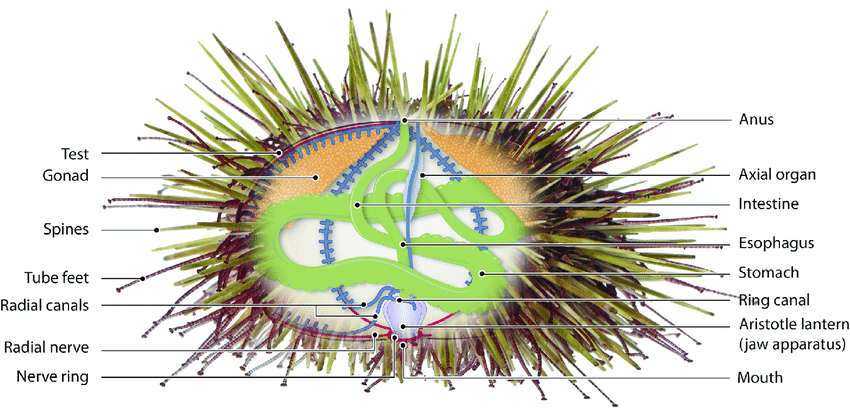
The Anatomy of the Sea Urchin. Photo source: 'A Guide to the Sea Urchin Reproductive Cycle and Staging Sea Urchin' by Philip James/Sten I. Siikavuopio
Suckling says there are many projects related to urchin farming taking place both on and off the URI campus, including optimizing hatchery production. Suckling partnered with the region’s only urchin hatchery in Maine, hosted by the University of Maine’s Center for Cooperative Aquaculture Research, where Steve Eddy is the director. Together they have been working to find the right conditions for producing juveniles, called seed, which can be provided to coastal farmers for growth for the market. The two institutions received funding from the Northeast Regional Aquaculture Center to enhance settlement success and post-settlement survival to optimize how they produce these seed.
“It’s a nice partnership because this is where universities are ready to offer tools such as space for the research,” said Suckling. “With these tools available, we can investigate many different avenues, and let industry know what worked best.”
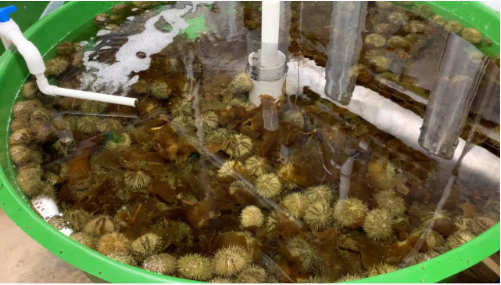
Green sea urchin brood stock at the University of Maine’s Center for Cooperative Aquaculture Research. (Photo courtesy of Coleen Suckling)
Most of the fisheries on the East Coast are in Maine, although the urchin population has been declining despite management efforts. Suckling says sea urchins have long been considered a pest that would interfere with lobster traps. Traps would need cleaning several times a season because they would be clogged with animals like sea squirts (a translucent animal resembling a blister; they cluster together and choke off the water circulation in the farming baskets). Because of this assumption, efforts were directed to simply harvest the animals first, with management coming later.
Experiments indicate that pests that often clog nets and baskets reduce the productivity of desirable fisheries like scallops. However, when sea urchins are introduced, they naturally clean out the biofouling, leaving space for more shellfish production and reducing the need for the equipment to undergo time consuming cleanings.
.png) Suckling has been devoting some of her time to creating awareness about this industry. Since the overharvesting years of the 1980s, a new generation has begun working in various aquaculture fields and may not be aware of the potential of urchin farming. Suckling has been devoting some of her time to creating awareness about this industry. Since the overharvesting years of the 1980s, a new generation has begun working in various aquaculture fields and may not be aware of the potential of urchin farming.
<-- Large green urchin seed being deployed at a farm. (photo: Coleen Suckling)
Aquaculture farmers have been given both free seed from urchins raised in a hatchery, as well as free consulting expertise, to encourage new interest in raising urchins. This type of help encourages growers to see whether adding urchin farming to their businesses is something they’d be interested in.
“What’s most exciting is the possibility of using urchins as a tool to help with biofouling issues that we see aquaculture faces,” Suckling said. “Biological fouling, which accumulates on all surfaces in the ocean and aquaculture gear, is routinely removed by farmers to maintain optimal water flow and ensure an adequate supply of planktonic food for their shellfish. Integrating sea urchins with shellfish farming introduces a natural solution, as the urchins can graze on this. This approach has the potential to reduce the labor and effort required by growers to maintain their oyster farms.”
“We have had some good success so far. I was just talking to the permitting agency in Maine, and they said they were seeing more and more people adding sea urchins into their applications just in case they decide to engage in sea urchin production. People are talking about it, people are interested, which is really motivating,” Suckling said.
Another research project includes one of Suckling’s graduate students who is researching “stress priming,” a relatively new process of exposing an urchin to some sort of controlled stress such as lower temperature or PH levels, in order to solicit a kind of memory for the animal to cope with more stressful events later in life.
“We’ve also had several decades of climate change,” Suckling said. “The Gulf of Maine is normally a subarctic system but it’s getting very, very warm. It’s one of the five fastest warming regions in the world.”
“My only goal is to see how I can help build resilience for the industry moving forward. I talk with industry representatives a lot to understand some of the needs, where the gaps are, and to understand what may be feasible.
“I hope to help the industry build their resilience, maintaining livelihoods, and produce seafoods that keep people healthy, and that people can get access to without a high environmental cost.”
[email protected]
www.seafood.media
|





 Print
Print