|
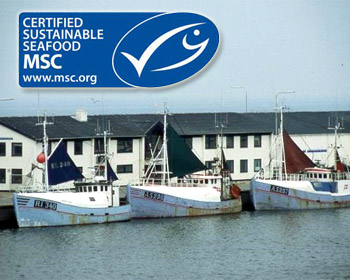
Consumers across Europe will, for the first time, be able to buy Baltic cod bearing the distinctive blue MSC ecolabel. (Photo: Terje Engoe)
Baltic cod fishery achieves MSC certification
 DENMARK
Thursday, April 07, 2011, 22:10 (GMT + 9)
This week, Danish vessels will start landing Marine Stewardship Council (MSC) certified Baltic cod in Danish ports. The Danish Fishermen’s Producer Organisation's (DFPO) Eastern Baltic cod fishery was certified as a sustainable and well-managed fishery against the MSC environmental standard.
The cod has been a commercially important species in the Baltic region since the 15th century and now, consumers across Europe will, for the first time, be able to buy Baltic cod bearing the distinctive blue MSC ecolabel.
This is a year-round fishery using demersal trawls and long lines to catch cod in the Baltic Sea east of Bornholm. Baltic cod is an iconic tablefish in both Sweden and Denmark but the eastern stock was considered close to a total collapse just a few years ago.
It has made a remarkable recovery and in August 2009 the DFPO entered this fishery into full assessment as part its plans to have all Danish fisheries MSC certified before the end of 2012.
One of Europe’s largest producers of frozen cod products is the Bornholm-based company A. Espersen A/S. The company has close ties with the Baltic fishing industry and has supported the fishery throughout the assessment process.
The CEO of A. Espersen A/S, Klaus B. Nielsen, appreciates the positive development of the Baltic cod.
"In the summer of 2009 when we announced that we were working on MSC certification of the cod many expressed a certain amount of skepticism. However, we were convinced that the initiatives launched by the authorities and the industry would make a MSC-certification of the cod obtainable," said Nielsen.
"I am therefore incredibly proud that it is today possible to sell Baltic cod with the MSC-brand. And this does not only benefit Espersen, but perhaps even more so the fishermen and thereby also the local communities," Nielsen concluded.
Minna Epps, Manager Baltic for the MSC says: “This is an amazing success and the fishermen should be applauded for their efforts. Consumers and suppliers in markets throughout northern Europe have been looking forward to the day when we can source certified sustainable Baltic cod. That day has now arrived.
The DFPO represents around 1100 commercial fishing vessels from ports all over Denmark. The primary goal of the DFPO is to secure the balance between supply and demand for seafood landed by its members, through assuring and improving the quality, availability and market conditions of the products.
The DFPO originally entered three different gear types for MSC assessment but the set net component of this fishery failed to meet the requirements of the MSC standard.
The Eastern Baltic is home to a small population of harbour porpoise, and while no by-catch of harbour porpoise has ever been reported from the Danish Eastern Baltic set net fishery, the level of independent verification of this was not considered sufficient to pass the fishery against the MSC principles regarding endangered and protected species.
The DFPO intends to remedy this lack of data in the coming years and will apply for certification again as soon as this issue is solved.
”The recent history of the Eastern Baltic Cod fishery is a roller-coaster ride worthy of a Hollywood film. 25 years ago, it was a booming fishery upholding the entire economy of the isolated island of Bornholm, which is situated in the middle of the fishing grounds," says DFPO president Kurt Madsen.
"Then the cod stock fell rapidly to levels where it could only barely sustain a fishery at all. Now, only seven years after the absolute low-point, the Danish Eastern Baltic cod fishery is the first cod fishery in the EU to be able to say that it is an MSC certified sustainable fishery - thanks to a once again thriving stock and sound management. A happy ending - and the continuation of a long-term relationship between cod and cod fishermen - and those who eat our cod, and care about it too.”
[email protected]
www.seafood.media
|



 Print
Print