|
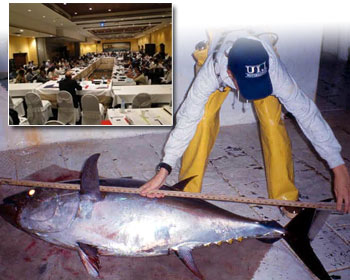
An observer measures a bigeye tuna. As WCPFC members discussed measures to protect this important resource. (Photo: (NOAA/WCPFC/FIS)
Bigeye tuna focus at this year's WCPFC conference
 UNITED STATES
Wednesday, December 08, 2010, 15:20 (GMT + 9)
This year’s annual meeting of the Western and Central Pacific Fisheries Commission (WCPFC) is listening to arguments for the need to cut bigeye tuna catches worldwide due to overfishing. Scientific reports have documented that the species is being overfished and that urgent additional measures must be employed to allow the stocks to recover.
The Forum Fisheries Agency (FFA) is contributing by introducing conservation measures applicable to the long line industry and the use of fish gathering devices.
However, spokesperson Anouk Ride believes there are some new areas that are cause for concern as well.
“One is about whales and dolphins. FFA members are advancing a proposal to say that we should set a ban on whales and dolphins and if these species are accidentally caught in nets, to take some measures to try release them alive,” she stated, reports Radio New Zealand International.
The Tuna Commission getting together in Honolulu, Hawaii, starting this week, which includes 24 nations and the European Union (EU), entails nations in the region as well as countries outside the area which have fishing interests and companies engaged in the sector.
A group of island nations meeting at the conference will push for US to strongly slash its use of purse seine nets in the central and western Pacific Ocean to help protect withering bigeye tuna stocks. The countries attending the meeting include the eight Pacific Island nations that are party to the Nauru Agreement (PNA), and they want US boats to cut the number of days they fish each year.
This type of reduction is not on the conference agenda, but the US and PNA members are nevertheless negotiating an extension of the 1987 Multilateral Treaty, which currently allows the US to have 40 vessels and unlimited fishing days. The treaty is set to expire in 2013, reports Honolulu Star.
Greenpeace last weekend hung a banner at Honolulu's Aloha tower that says, "WCPFC: Don't Let Time Run Out on Tuna."
“Greenpeace is demanding that the US and other fishing nations back a proposal by Pacific Island Countries to close large areas of international waters in the Pacific to purse seine fishing to reverse the disastrous impacts of overfishing and illegal pirate fishing on the region’s troubled bigeye and yellowfin tuna stocks and the people dependent on them,” said Phil Kline, oceans campaigner for Greenpeace USA.
Members of the environmental organisation intend to show up this week and ask conference attendees "to do the right thing, follow the science, end the overfishing and rebuild the tuna fish populations to healthy levels," he added. "Do not repeat the mistakes of the rest of the world where their tuna fisheries are totally depleted."
It is thought that about 54 per cent of the world’s tuna originates from the bigeye fishery in this area of the Pacific. The industry is worth billions of dollars and yields 1.3 million tonnes of tuna per year.
Related articles:
- PNA extends tuna fishing ban
- Pacific tuna still in decline
By Natalia Real
[email protected]
www.seafood.media
|





 Print
Print