|
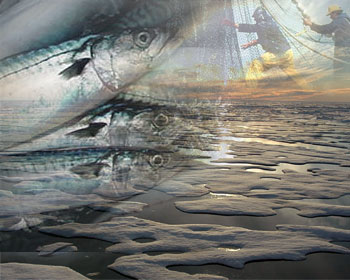
Climate change is thought to be increasing the amount of predatory fish such as flounder and mackerel. (Photo: NOAA/Stock File/FIS)
Alaska notes effects of climate change on its fisheries
 UNITED STATES
Thursday, December 02, 2010, 15:00 (GMT + 9)
The Alaska Department of Fish and Game (ADF&G) this week released its Climate Change Strategy describing the expected impacts from global warming on fish and wildlife resources and their uses across the state. The document notes that further research is necessary and identifies key strategies and preliminary actions the department plans to undertake to address the environmental changes it anticipates.
Climate change is affecting the Arctic through warming temperatures, shifting precipitation patterns, changing stream flows, melting ice caps, altered fishing availability, ocean acidification and other factors. There may be a shift toward fish species that can tolerate warmer waters and a northward shift in pollock and other stocks into the northern Bering Sea and southern Chukchi Sea.
There may be increases in predatory fish such as flounder and mackerels, which would affect the production of targeted fish like salmon and thus require changes to regulations and fishery management.
Invasive species may enjoy more favourable environmental conditions and thus establish themselves in Alaska; for example, green crabs could impact native crab species.
“The changing climate brings additional challenges to managing fish and wildlife and their uses. This strategy helps us define the challenges and identifies important steps we will be taking to prepare and adapt,” said Special Assistant with the department Doug Vincent-Lang.
 |
| Special Assistant with the ADF&G Doug Vincent-Lang. (Photo: Govt. Alaska) |
“We believe focusing on these issues positions the department as an integral partner in managing impacted resources and effects on our economy and culture,” he added.
ADF&G and other regulatory bodies such as the North Pacific Fishery Management Council will have to review and adjust regulatory structures as distribution or abundance of fishery resources shift. New commercial fishery opportunities may arise in the Arctic as a result of retreating ice, and assessment, planning and monitoring and public involvement will be necessary to develop new activities responsibly, the Department said.
The effort was implemented to provide Governor Parnell’s Climate Change Subcabinet with information on how global warming would affect Alaska, and what measures and policies can be taken to prepare communities in the state for these changes, as well as to offer guidance pertaining to the state’s participation in both regional and national efforts to address climate change. The subcabinet was created by Administrative Order three years ago to give the governor recommendations on the preparation and execution of an integrated Alaska climate change strategy.
Related article:
- North Pacific swarming with salmon
By Natalia Real
[email protected]
www.seafood.media
|





 Print
Print