|
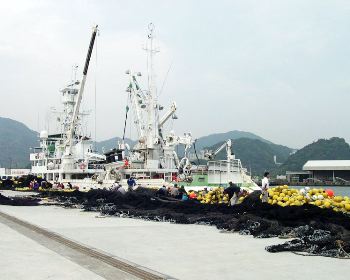
The extended ban on high seas fishing aims to provide the Pacific Islands with long-term economic benefits. (Photo: Tuna Seiners)
PNA extends tuna fishing ban
 MICRONESIA MICRONESIA
Wednesday, October 06, 2010, 01:20 (GMT + 9)
Eight Pacific Island nations known as the Parties to the Nauru Agreement (PNA) are widely extending their tuna ban on high-seas fishing starting on 1 January 2011. Burly fishing nations such as Japan, China, Taiwan and Korea will be compelled to pull out their tuna vessels from three Central Pacific Ocean areas.
The decision was revealed at a meeting of the 24-nation Western and Central Pacific Fisheries Commission (WCPFC) going on in the Federated States of Micronesia. The area lies primarily to the east in the Central Pacific and also includes the two high seas pockets to the south around Fiji and the Cooks.
The fishing ban is in an area stretching between 10 degrees north of the equator and twenty degrees south, and from 170 degrees east to 150 degrees west, Radio Australia reports.
It is necessary to protect the severely threatened bigeye and yellowfin tuna, said Maurice Brownjohn from the PNA secretariat.
“Those high seas are outside of the EEZs, but what the parties have resolved is that in order to assist with the conservation and management any vessel that chooses to fish those areas will be ineligible for a license within the Economic Zones of the eight parties,” he explained.
Even though purse seine vessels usually fish for skipjack tuna, they also catch quantities of juvenile bigeye and yellowfin in the process.
John Hampton, the Secretariat of the Pacific Community's chief tuna scientist, believes the new ban will help preclude further attacks on vulnerable fish populations.
“[…] Reducing the catch of yellowfin [and bluefin] at those smaller sizes would appear to be quite important, both in terms of sustainability of those stocks, but also in terms of maximising the economic value of the fisheries. Generally these fish are much more valuable per unit ton as larger fish than they are as smaller fish,” he elaborated.
The extended ban on high seas fishing will provide the Pacific Islands with long-term economic benefits because fishing will only be able to happen under licence within their EEZ’s, where there are measures in place by the parties, including a vessel monitoring system, 100 per cent observer monitoring of all fishing efforts by purse seiners and compulsory trans-shipment imports instead of trans-shipment at sea.
“In the past Pacific Island countries have been largely forced to accept access revenue for vessels to fish in their waters,” told Wes Norris, leader of the Pacific Islands Forum Fisheries Agency delegation. “The parties to the Nauru Agreement specifically are taking control of the situation now so to speak, and exercising the leverage that they have as the owners of the most significant resource.”
Related articles:
- Japan, Marshall Islands’ negotiations reach impasse
- Govt wants to lift purse seine fishing ban
- Pacific countries aim to extend high seas' tuna fishing ban
By Natalia Real
[email protected]
www.seafood.media
|





 Print
Print