|
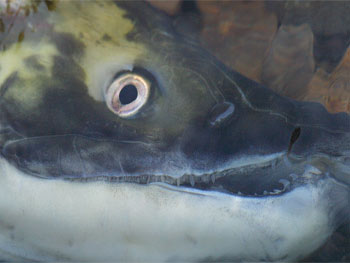
One of the 34 million fraser sockeye salmon which were found swimming up the Fraser River. (Photo: Alexandra Morton)
Cause of record Fraser sockeye salmon run a mystery
 CANADA
Monday, September 20, 2010, 09:20 (GMT + 9)
This year’s shockingly voluminous 34 million sockeye salmon run in the Fraser River may be an anomaly instead of a trend pointing to recovering stocks, scientists and fishers say.
Even though this year’s run is the biggest in nearly a century, sockeye are threatened by climate change, food shortages, viruses, poisons gushing into streams from storm runoff and other troubles, the Cohen Commission of Inquiry into the Decline of Sockeye Salmon in the Fraser River was told by more than 120 people at the Victoria forum.
"This year was miraculously positive, but one year does not make a trend," stressed biologist Alexandra Morton.
Scientists looking into the 20-year decline of the stock have no answers. Simon Fraser University Professor Randall Peterman is chairman of a panel of 11 experts from the US and Canada assembled by the Pacific Salmon Commission, who have just finished analysing data on the tapering of the Fraser sockeye, reports the Vancouver Sun.
"This year, productivity levels returned to about seven adults per spawner. That's a dramatic turnaround, but one point does not make a trend," Peterman said, agreeing with Morton.
Many speakers said that the salmon now swimming up the river are one run in one year and lay bare the Department of Fisheries and Oceans’s (DFO) ignorance about the way these stocks function and the department’s consequently weak predictions.
"For a population which has exploited the salmon for so many years, we really do not understand the ecological nature of these fish," said Daniel Lousier of the Social Ecology Institute of British Columbia (BC).
Erik Hobson, president of SOS Marine Conservation Forum, and numerous others noted that the 2010 run suggests a need for precaution, especially pertaining to the nefarious effects of open-net pen salmon farms.
Hobson said that a closed-containment aquaculture industry made in Canada in combination with a practical farm management plan and independent sea lice monitoring programmes are needed.
Environmentalist Vicky Husband pointed out that alarming fisheries collapses have become the norm and thus encouraged skepticism towards those requesting that more fishing be allowed to prevent alleged "over-spawning."
"That's absolute nonsense. That over-spawning theory has been debunked,” she said
Also, DFO must stop depending on mixed-stock fisheries, as they jeopardise the biological diversity of the Fraser sockeye salmon, Husband added.
The panel has recommended that the Pacific Salmon Commission commence a large-scale multidisciplinary study, which will probably be led by the DFO, to amass data on pollutants, pathogens, predation and other known threats to the sockeye stock at specific times and places to develop a comprehensive data net.
The studies findings will be announced at an inquiry later this year, where they can be questioned, and final reports will be due by 31 January, BC Local News reports.
Related articles:
- Pacific sockeye salmon return in record numbers
- Sockeye run estimates upped to 34 million
- DFO faces criticism after record salmon run
By Natalia Real
[email protected]
www.seafood.media
|





 Print
Print