|
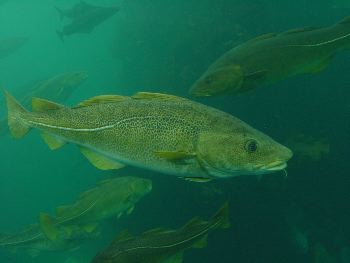
According to the WWF, cod stocks are recovering in the North Sea. Those of western Scotland however need additional conservation measures. (Photo:FIS)
Conservation group releases assessment on Scottish stocks
 UNITED KINGDOM
Tuesday, January 05, 2010, 15:30 (GMT + 9)
The lucrative future of Scotland’s fishing industry depends on the continuation of long-term conservation measures and the European Common Fisheries Policy (CFP) reform currently underway, World Wildlife Fund (WWF) Scotland said on Sunday. The conservation group has just published its end-of-year assessment on the state of Scotland’s main whitefish stocks – as Europe’s fishing industry prepares for a tumultuous year.
WWF Scotland made its 2008 assessment of four of Scotland’s most important whitefish species based on the latest scientific information, existing management plans and recent quota announcements available (values and landing numbers are for 2008):
Cod:
[Value: GBP 16 million (EUR 18 million); volume landed: 7,645 tonnes]
• Europe’s Cod Recovery Plan, Scotland’s Conservation Credit Scheme and the support of the fishing industry North Sea cod are showing success through stocks’ early signs of recovery due to the quotas set with scientific advice.
• Conversely, the West of Scotland is showing negative results and WWF is advocating for the continuation of conservation efforts for the stocks to recover.
Haddock:
[Value: GBP 33 million (EUR 37.2 million); volume landed: 29,488 tonnes]
• In the North Sea haddock are managed under a long-term management plan, and this stock is currently considered to be sustainably exploited.
• On the West of Scotland, however, haddock stocks are being fished beyond safe limits. Here a management plan is still in its nascent phase.
• WWF said measures to protect West of Scotland haddock are urgently needed.
Whiting:
[Value: GBP 9 million (EUR 10.1 million); volume landed: 9,226 tonnes]
• No clear picture or scientific recommendations exist about the state of these stocks due to inadequate or nonexistent biological data.
• Until more data is collected, WWF believes whiting should be exploited at as low a level as possible.
• Unfortunately, European Union (EU) Fisheries Ministers recently agreed on quotas for North Sea whiting 74 per cent higher than those advised by scientists.
Monkfish:
[Value: GBP 28 million (EUR 31.6 million); volume landed: 10,086 tonnes]
• The fourth most important species landed in Scotland and a relatively new target species, scientific knowledge on it needs improving. Preliminary assessments suggest stocks are healthy.
• The quota set for 2010 is the same as the 2009 quota and continued work is being conducted to improve scientific knowledge of these stocks. Until then WWF believes exploitation should be precautionary.
By Natalia Real
[email protected]
www.seafood.media
|





 Print
Print