|

Minister of Agriculture, Forestry and Fisheries Norikazu Suzuki during the press conference
Overfishing Alert: Japan Suspends Flying Squid Fishing by Small Vessels
 JAPAN
JAPAN
Wednesday, October 29, 2025, 00:10 (GMT + 9)
Japan's Fisheries Agency issues the first-ever suspension order for Japanese flying squid fishing on small boats, after exceeding the assigned catch quota of 4,900 tonnes for the 2025 season.
TOKIO – The fishing of Japanese flying squid (surume-ika or Todarodes pacificus) by small vessels will be suspended in Japan from late October 2025 until the season closes in March 2026.
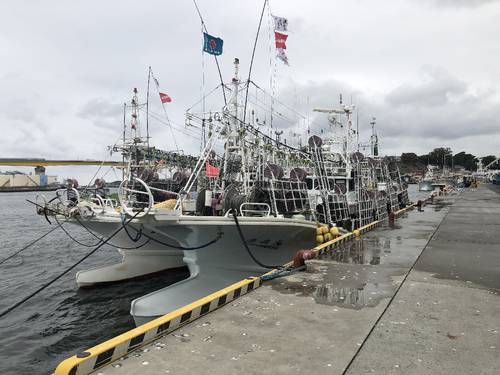
Photo: courtesi NHK
The announcement was made on October 24 by the Minister of Agriculture, Forestry and Fisheries, Norikazu Suzuki, during a press conference following the Cabinet meeting. This is the first time a suspension for exceeding the catch limit has been issued for Japanese flying squid since the introduction of the catch quota system (TAC, or Total Allowable Catch) in the 1990s.
Excess Catches and Government Measures
The announcement was made on October 24 by the Minister of Agriculture, Forestry and Fisheries, Norikazu Suzuki, during a press conference following the Cabinet meeting. This is the first time a suspension for exceeding the catch limit has been issued for Japanese flying squid since the introduction of the catch quota system (TAC, or Total Allowable Catch) in the 1990s.

Excess Catches and Government Measures The decision by the Fisheries Agency responds to an unusually abundant catch of Japanese flying squid this season. Although the catch quota for small fishing vessels had been increased from 2,800 tonnes to 4,900 tonnes for the 2025 season, the actual catch had already surpassed 5,300 tonnes as of October 15.
The total catch quota for the 2025 season was set at 25,800 tonnes, divided among different fishing methods, such as deep-sea bottom trawling and large and medium purse seines. Minister Suzuki noted that despite the suspension for small boats, the measure will not affect the entire fleet, as quotas for larger fishing vessels have not yet reached their limits. He also mentioned a grace period of 5,700 tonnes for catches that could be reallocated.
"We would also like to consider reallocating this amount from the planned allocations to other types of fishing," Minister Suzuki indicated.
Scientific Analysis and Fishing Context
Scientific Analysis and Fishing Context Experts agree that the unusual abundance of Japanese flying squid this season could be related to oceanographic factors. One theory is that a large quantity of fish may survive at the end of the "great meander" of the Kuroshio Current, a warm Pacific current that affects the Japanese marine ecosystem, favouring a larger squid biomass.

Photo: courtesi NHK
According to the Japan Fisheries Research and Education Agency (cited in local sources such as The Japan Times and Nikkei), Japanese flying squid stocks have been on a general declining trend over the last decade, making this unexpected rebound crucial but temporary. The TAC system is fundamental for the long-term management of fishery resources, seeking to ensure the sustainability and recovery of key species.
The mandatory suspension underscores Japan's strict compliance with the TAC system, a policy that aims to balance economic exploitation with the conservation of marine reserves, especially in a context of growing international pressure on oceanic resources.
[email protected]
www.seafood.media
|





 Print
Print