|
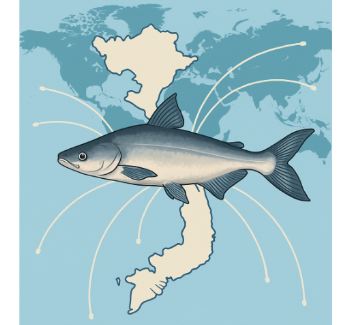
Photo: Stockfile/FIS
Vietnamese Pangasius Charts New Course: Eyes Untapped Niche Markets for Future Growth
 VIET NAM
Wednesday, June 04, 2025, 00:10 (GMT + 9)
Facing saturation in traditional markets, Vietnam's leading seafood export pivots to high-value segments and emerging regions, aiming for sustainable growth and increased product diversification.
HO CHI MINH CITY – As the global seafood industry navigates fluctuating dynamics, Vietnamese pangasius, a cornerstone export vital to millions in the Mekong Delta, is strategically reorienting its focus. With stable annual production of 1.6 to 1.8 million tons and a comprehensive ecosystem spanning breeding .png) to consumption, Vietnamese pangasius currently reaches over 140 countries and territories, leading the world in catfish exports. However, after two decades of rapid expansion, the industry faces saturation in conventional markets like the US, China, and the EU, which are increasingly imposing stricter technical, quarantine, and sustainability standards. to consumption, Vietnamese pangasius currently reaches over 140 countries and territories, leading the world in catfish exports. However, after two decades of rapid expansion, the industry faces saturation in conventional markets like the US, China, and the EU, which are increasingly imposing stricter technical, quarantine, and sustainability standards.
In response, expanding into niche markets — untapped segments or regions — has become an imperative for sustained growth and enhanced product value, as reported by Ms. Thu Hang, Editor of the Vietnam Association of Seafood Exporters and Producers (VASEP).
Unlocking New "Gold Mines": Potential Niche Markets
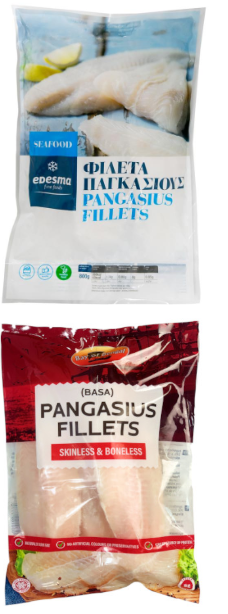 Several promising niche markets have been identified: Several promising niche markets have been identified:
- Muslim Markets (Middle East, North Africa, South Asia): A vast demographic of over 400 million people with high demand for Halal food. Vietnam can dominate this segment by fully meeting Halal certification and traceability standards.
- African Market: With a burgeoning population of 1.4 billion and depleting inland marine fish resources, pangasius can serve as an affordable and easily processed substitute for traditional marine fish.
- South American Markets (excluding Brazil): Beyond initial inroads into Brazil, the rest of South America remains largely untapped. Compatibility with local tastes and a growing trend for convenient food, coupled with potential FTA negotiations between Vietnam and Mercosur, offer significant "springboards."
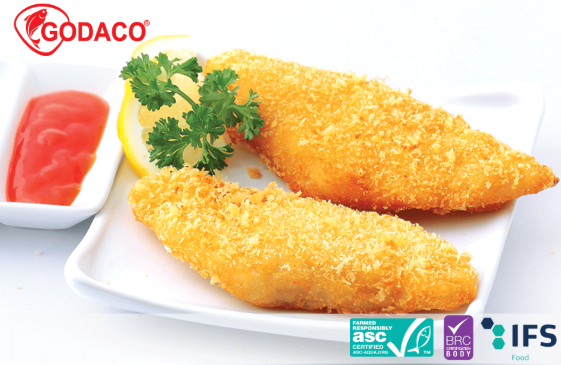
- Ready-to-Eat/Ready-to-Cook (RTE/RTC) Segment: Moving beyond basic frozen fillets, diversified products like fish balls, sausages, seasoned pangasius, canned fish, or even pangasius sushi could cater to the demand for fast, convenient meals, particularly in Asian cities such as Tokyo, Seoul, Singapore, and Kuala Lumpur.
- High-End/Organic Market: As EU and North American consumers increasingly seek "green" and certified products, pangasius farmed under organic, ASC, BAP, GlobalG.AP, or RAS standards could command prices 1.5 to 2 times higher than conventional offerings.
- By-products Segment: Currently underutilized, valuable by-products such as fried fish skin (already successfully exported to Japan and the US), fish oil, collagen, gelatin, and animal feed present a significant opportunity to boost export value and reduce waste.
Vietnam's Untapped Advantages
Vietnam possesses inherent strengths crucial for this market shift:
- Vast Production Capacity & Competitive Pricing: Vietnam is uniquely positioned to supply large, year-round volumes of pangasius at significantly lower prices than salmon, cod, or other white fish.
- Modern Processing Technology: Factories in the Mekong Delta meet international food safety, antibiotic control, and traceability standards, with advanced deep-processing capabilities.
- Complete Supply Chain: The improving supply chain, from breeding to processing and export logistics, with some integrated enterprises like Vinh Hoan and Nam Viet, offers a strong foundation.
- Strategic FTAs: Membership in over 15 new-generation free trade agreements (e.g., EVFTA, CPTPP, RCEP) provides a "passport" for pangasius to penetrate demanding markets.
Navigating the Challenges
Despite the potential, conquering niche markets presents hurdles:
- Lack of Market Intelligence: Many Vietnamese enterprises lack the capacity for in-depth research into consumer behaviors in diverse new markets.
- Technical & Non-Tariff Barriers: Meeting specific requirements like Halal certification or tailored packaging for varied climates and languages remains a challenge.
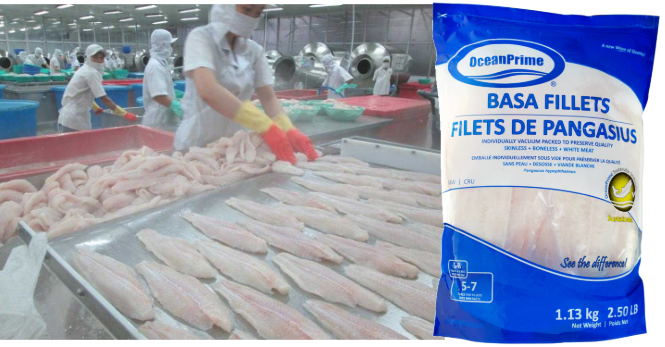
- Product Diversification Gap: The current reliance on frozen fillets (approx. 85% of exports) falls short of the demand for deeply processed, convenient products in certain markets.
- SME Development: While large enterprises may lack flexibility for small-scale niche trade, small and medium-sized enterprises (SMEs) often lack the capital and trade promotion skills required.
- Logistical & Financial Risks: Certain niche markets in Africa, South Asia, and Latin America pose risks related to finance, exchange rates, and underdeveloped infrastructure.
Strategies for Effective Niche Marketing
To successfully tap into these new opportunities, a multi-pronged approach is essential:
- Product Restructuring: Develop specific product lines tailored to regional needs (e.g., skinless fillets for Japan, sliced fish for Africa, fish balls for ASEAN).
- Strengthening Supply Chain Linkages: Foster collaboration with cooperatives and certified farming areas to meet specific orders and quality requirements (Halal, ASC, Organic).
- Investment in By-product Processing: Develop deep processing of pangasius by-products to boost export value through fish oil, fish meal, collagen, and gelatin.
- Proactive International Trade Promotion: Seek support from government bodies (Ministry of Industry and Trade, Ministry of Agriculture and Environment) and VASEP for trade fairs and establishing representative offices in key niche regions.
The global landscape is constantly evolving, and the Vietnamese pangasius industry is poised to adapt. Niche markets, once overlooked, now represent potential "gold mines." With a synchronized and well-executed strategy, Vietnamese pangasius aims to usher in an era of sustainable development, conquering new markets through quality, diversity, and professionalism.
[email protected]
www.seafood.media
|
|





 Print
Print