|
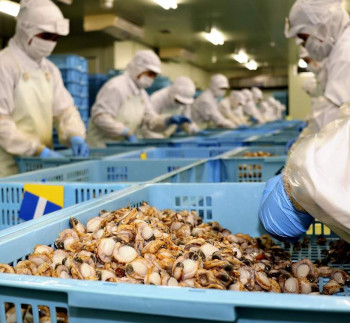
Image: Japan News / FIS
China made things difficult, Japan sent scallops to Vietnam for processing
 VIET NAM
Thursday, January 11, 2024, 07:00 (GMT + 9)
From January 8, a number of Japanese businesses will pilot scallops processing in Vietnam, in the context that Japanese seafood cannot be exported to China.
From January 8, a number of Japanese businesses will pilot scallops processing in Vietnam, in the context that Japanese seafood cannot be exported to China.
Source: TuoiTre Online
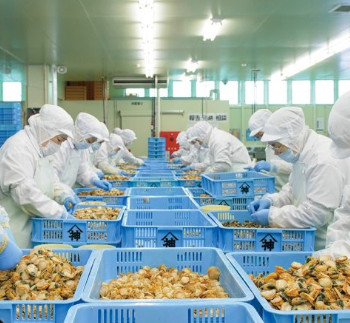
The pilot shipment has been shipped to Vietnam, and processing facilities will produce half-shell clams for cooking, sushi-grade clam meat, and frozen clams for eating raw.
Based on the results obtained, companies will decide whether to deploy more clam processing in Vietnam or not.
Facilities in Vietnam are HACCP certified - an international standard for food safety. Scallops processed from here can be exported to markets outside Japan, so Japanese companies will also consider selling scallops to the US and Europe.
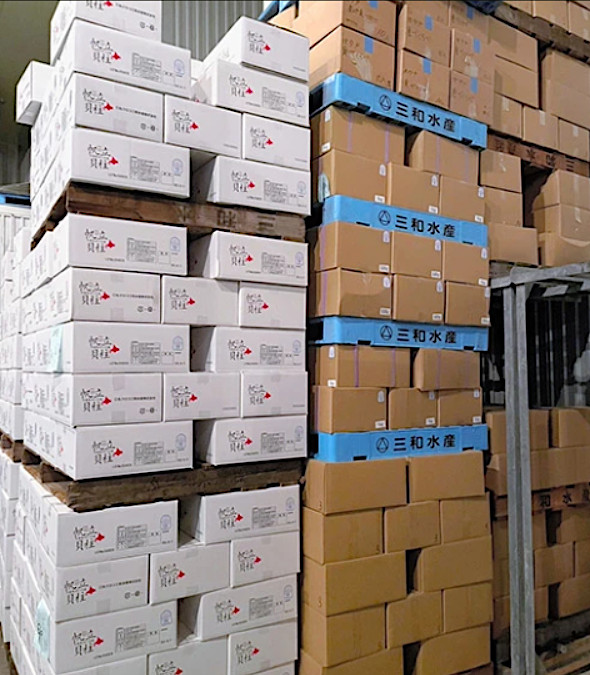 Packages of scallops stacked up in a cold storage warehouse in Monbetsu, Hokkaido, following China’s ban on Japanese seafood imports (Provided by Maruuroko Sanwa Suisan Co.) --> Packages of scallops stacked up in a cold storage warehouse in Monbetsu, Hokkaido, following China’s ban on Japanese seafood imports (Provided by Maruuroko Sanwa Suisan Co.) -->
"If product prices drop, they can be used in conveyor belt sushi chains and convenience stores," the head of Nosui Company's frozen seafood department shared.
Labor costs for processing in Vietnam are only 20 - 30% of the costs in Japan. For scallops used for sushi and eaten raw, the price is expected to be lower when processed in Japan even when shipping costs are included.
Half-shell scallops require less labor and are expected to cost the same as similar varieties prepared in Japan.
Manager Kenichiro Hoshino at Foodison said Japan does not have enough human resources and this processing is time-consuming.
"Instead of leaving unshelled scallops in inventory, it's better to let them be processed abroad and then sold to customers," Mr. Hoshino said.
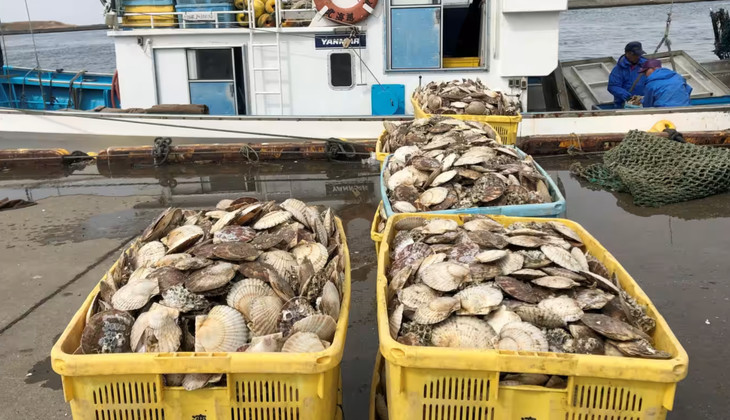
According to the Japan Fisheries Agency, Japan supplied nearly 500,000 tons of shell scallops in 2022. About 140,000 tons were exported to China, of which 100,000 tons were sent in shell for processing.

Source: Vietnam.vn
However, since August 2023, when Beijing banned seafood imports in response to Japan's discharge of radioactive water into the sea from the Fukushima Daiichi Nuclear Power Plant, the number of scallops in stock has not been processed. Japan's popularity is increasing.
Meanwhile, demand for this product in other markets is also limited, and scallops cannot be processed in time in Japan due to labor shortages.
The Japanese government has had to offer many support measures, including subsidies to cover the costs of processing equipment and storage fees.
Author: Nghi Vü | TuoiTre Online (Translated from the original in Vietnamese)

Related News:
.png)
[email protected]
www.seafood.media
|





 Print
Print