|
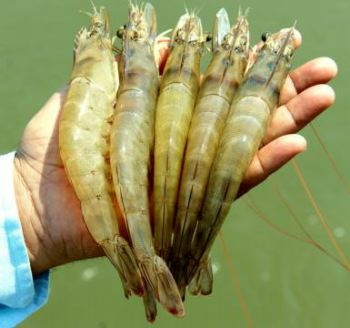
Indian shrimp farmers are highly interested in the production of large shrimp for improved profitability. Photo by Manoj Sharma, Mayank Aquaculture
How India became the world’s top shrimp producer
 INDIA
INDIA
Wednesday, October 07, 2020, 06:00 (GMT + 9)
The following is an excerpt from an article published by Global Aquaculture Advocate:
The president of India’s Society of Aquaculture Professionals details the industry’s growth amid infrastructure, disease and marketplace challenges
Modern shrimp farming commenced in India in the late 1980s, driven by a growing global appetite for shrimp, government policies to promote seafood exports and several corporate entities providing capital to build hatcheries, farms and processing plants. It was based predominantly on the black tiger shrimp (Penaeus monodon) and to a lesser degree the Indian white shrimp (Fenneropenaeus indicus).
The growth of the sector was severely impacted a few years later when the White Spot Syndrome Virus (WSSV) arrived on India’s shores and the Supreme Court of India, heeding the pleas of environmental activists, restricted shrimp farming in coastal waters. It took an act of the Indian Parliament to restart shrimp aquaculture and the phase of growth that followed was marked by the development of independent hatcheries and farms of less than five hectares owned or leased by numerous small farmers. The species of interest continued to be the black tiger shrimp but there was also a significant production of the freshwater prawn (Macrobrachium rosenbergii).
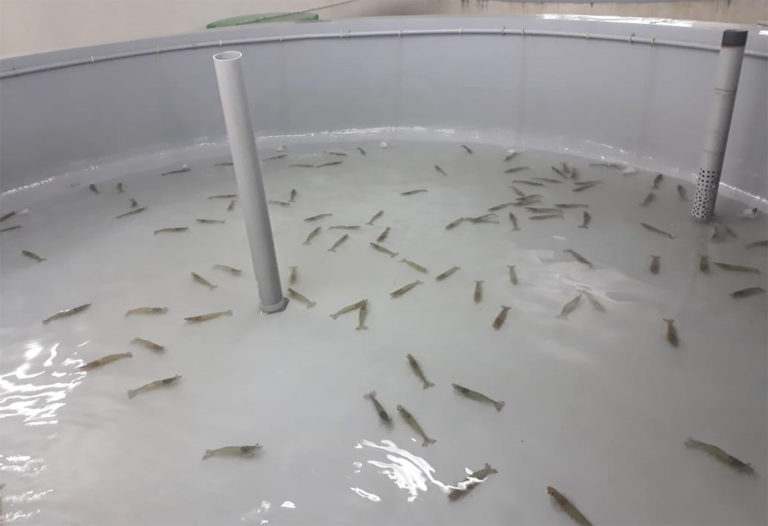
The industry still depends significantly on imports of L. vannamei broodstock. (Photo by Ravi Kumar Yellanki, Vaisakhi Biomarine Hatchery / Global Aquaculture Advocate)
While volumes continued to rise through the mid-2000s, a stagnation was reached in the latter half of the decade due to disease problems, slowed animal growth and size variability. For broodstock, the sector relied on wild-caught black tiger shrimp, which meant that exclusion of pathogens was extremely challenging and breeding for performance was simply impossible. Taking note of the experience of other major Asian producers, India decided to introduce Specific Pathogen Free (SPF) Pacific white shrimp (Litopenaeus vannamei) in 2008. The country introduced the species cautiously by allowing a few selected entities to conduct an experimental import and perform trials, on which rules for further imports were framed and implemented.
To date, L. vannamei broodstock can only be imported from approved sources and quarantined in a government-run facility upon entry into the country. Development of broodstock multiplication centers is being allowed now and the government has expressed its interest to allow entities that can complete the lifecycle of L. vannamei within India in a fully contained and highly biosecure facility and produce broodstock locally.
, with significant events noted.jpg)
Evolution of farmed shrimp production in India, 2010-2020 (est.), with significant events noted.(Image: courtesy A. Victor Suresh/ Global Aquaculture Advocate)
2010-2019: A decade of growth
India’s shrimp farming growth after the introduction of SPF L. vannamei has been phenomenal (Fig. 1). Farms previously culturing the black tiger shrimp experienced a boost in productivity due to higher stocking densities, lower incidence of diseases and animal growth rates that were comparable to those of black tiger shrimp up to 20 grams or even beyond. Farmers switched to SPF L. vannamei swiftly and today more than 90 percent of Indian shrimp production is for this species.(continued...)
Author: A. Victor Suresh, Ph.D. | Read the rest of the story by clicking the link here
[email protected]
www.seafood.media
|





 Print
Print