|

The WTO determined the amendments the US performed to its regulations on 'Dolphin-Safe' labelling does not discriminate Mexican tuna.
US no longer discriminates against Mexican tuna products, according to WTO
 MEXICO
Monday, December 17, 2018, 21:50 (GMT + 9)
The World Trade Organization (WTO) has released the final report of the Appellate Body on the dispute that Mexico initiated in 2008 against the United States for restrictions on Mexican tuna trade.
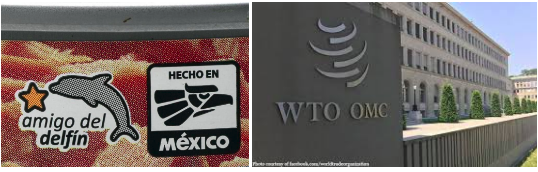
Label that at some point had some cans of tuna from Mexico (left) and the headquarters of the WTO.
The Appellate Body reviewed the latest amendments by the US in terms of labelling "Dolphin-safe" and determined that with them, that country no longer discriminates between Mexican tuna products and US and other tuna products, informed the National Commission of Aquaculture and Fisheries (CONAPESCA).
This report is presented during the second compliance procedure that Mexico initiated to analyze whether the modifications that the US performed in its regulations on labeling "Dolphin-safe" continue to discriminate against Mexican tuna products.
.png)
Tuny is a trademark of Grupomar from Mexico.
In the first two stages of this trade dispute, the WTO ruled in favour of Mexico, given that US regulations allowed tuna products from other countries and their own fleet to use the "Dolphin-safe" label even though it is not certain that the fishing methods they use in their fisheries will protect the dolphins.
The Government of Mexico and its industry have played an important role in protecting dolphins against adverse effects on the tuna fishery. Thanks to its efforts, the US modified its measure twice, which allowed the requirements to be increased in fisheries other than those used by Mexico.
.png)
Certifications that Grupomar has in Mexico, one of the main groups that fishes, processes and distributes tuna products.
CONAPESCA stresses that the method used by the Mexican tuna fleet is regulated by the Agreement on the International Programme for the Conservation of Dolphins, recognized by FAO as the most sustainable one, since in addition to protecting dolphins does not destroy tuna fishing by avoiding the capture of juvenile tunas.
In addition, recently the Mexican tuna fishery with purse seines on dolphins has been certified by the Marine Stewardship Council (MSC) as a sustainable fishery is to maintain the target species and minimize environmental impact.
The Government of Mexico hopes that beyond the ruling, the United States recognize the effect of the fishing methods used by its fleet and that of other countries in the marine ecosystem. Besides, it assures that, through the Ministry of Economy and the Undersecretariat of Agriculture and Rural Development, it will continue working with the industry for its development and for the commitment to sustainability.
[email protected]
www.seafood.media
|





 Print
Print