|
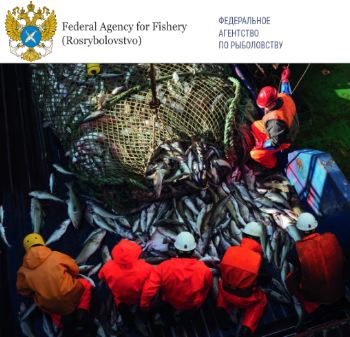
Photo: Norebo/ Federal Agency for Fisheries (Rosrybolovstvo)
Sustained Growth and Challenges in Russia's Fishing and Aquaculture Industry: Catches Exceed 3.2 Million Tonnes in 2026
 RUSSIAN FEDERATION
Friday, August 28, 2026, 01:50 (GMT + 9)
The Russian fishing sector registers an overall increase in extraction volume, deep processing, and aquaculture production, despite the marked contraction observed in the Far Eastern wild salmon season during the first months of the year, according to official data from Rosrybolovstvo and Rosstat.
The fishing and aquaculture sector of the Russian Federation continues to show dynamic performance throughout 2026. From the beginning of the year until August 24, Russian fishermen have caught a total of 3,233,500 tonnes of aquatic biological resources, according to the industrial monitoring system of the Federal Agency for Fisheries (Rosrybolovstvo).
.jpeg)
Breakdown by Fishing Basins
General extractive activity is distributed across the country's main maritime regions:
-
Far Eastern Basin: 2567.3 thousand tonnes in total, highlighting pollock with 1603.5 thousand tonnes (+ 17.5 thousand tonnes compared to the 2025 level); Pacific herring with 497.8 thousand tonnes (+ 126.9 thousand tonnes compared to 2025); cod with 89.9 thousand tonnes (+ 2.3 thousand tonnes compared to 2025) and Far Eastern flounder with 48.1 thousand tonnes.
-
Northern Basin: 236.7 thousand tonnes, with cod production at 108.1 thousand tonnes and haddock at 51.8 thousand tonnes (+ 9.5 thousand tonnes compared to the 2025 level).
-
Western Basin: 50.8 thousand tonnes, of which 33.7 thousand tonnes correspond to sprat (+ 2.4 thousand tonnes compared to 2025) and 13 thousand tonnes to Baltic herring.
-
Azov-Black Sea Basin: 20.8 thousand tonnes, highlighting anchovy catches at 12.4 thousand tonnes.
-
Volga-Caspian Basin: 40.6 thousand tonnes, including 14.4 thousand tonnes of sprat and 9.7 thousand tonnes of ordinary fish species (+ 0.3 thousand tonnes compared to 2025).
Likewise, in the exclusive economic zones of foreign states, conventional areas, and the open part of the World Ocean, the Russian fleet produced 302,533 tonnes.
Wild Salmon Campaign in the Far East
Despite positive general volumes in other species, the Pacific salmon (Oncorhynchus spp.) fishing season in the Russian Far East faces a complex scenario. As of August 25, 2026, the campaign has accumulated a total of 87,647 tonnes, recording a daily growth of 553 tonnes according to official season tracking data.
.jpeg)
Accumulated volumes reflect an overall decline of 59.4% compared to the reference cycle of 2024 and 2025—when 215,876 tonnes were reached—remaining well below initial season forecasts, which were adjusted to 227,028 tonnes, achieving only 38.6% of the general forecast, with pink salmon leading catches but showing a sharp downward trend.
Increase in Deep Processing and Derived Products
Parallel to extractive activity, the Russian industry has promoted the transformation and added value of raw materials domestically.
.png) According to Rosstat data, during the first half of 2026, domestic companies produced 146,000 tonnes of frozen fish fillets, representing an increase of 11% compared to the same period of the previous year. This positive trend consolidates the sustained growth of the sector for the second consecutive year, recalling that in 2025 frozen fillet production increased by 10%, reaching 258,000 tonnes. According to Rosstat data, during the first half of 2026, domestic companies produced 146,000 tonnes of frozen fish fillets, representing an increase of 11% compared to the same period of the previous year. This positive trend consolidates the sustained growth of the sector for the second consecutive year, recalling that in 2025 frozen fillet production increased by 10%, reaching 258,000 tonnes.
Other areas of industrial processing also register upward figures:
-
The production of frozen and prepared crustaceans, mollusks, and other aquatic invertebrates increased by 11%, standing at 92,000 tonnes.
-
The manufacturing of fishmeal and pellets grew by 6%, reaching 96,000 tonnes.
These results allow for a more complete utilization of raw materials within the national territory, generating byproducts such as oil and animal feed components highly demanded by aquaculture and other industrial branches.
Expansion of Commercial Aquaculture
The domestic commercial aquaculture sector maintains a trajectory of constant expansion. Between January and March of 2026, the total volume of commercial aquaculture production, including planting material, reached nearly 245 thousand tonnes.
This growth is supported by the sustained development of key segments over the past decade:
-
The production of valuable aquatic organisms has exceeded 60,000 tonnes per year.
-
Sturgeon production has scaled up to 7,800 tonnes, multiplying by 3.5 compared to ten years ago.
-
The production of carp and herbivorous fish approaches 140,000 tonnes.
.png)
Photo: Inarctica
To ensure the continuity of this trend, the sector relies on the development of domestic breeding, proprietary planting material and feed, in addition to the incorporation of modern farming technologies. The industry's strategic target set for 2030 is to exceed 426,000 tonnes of commercial aquaculture per year.
Regarding the future of the sector, Rosrybolovstvo head Ilya Shestakov previously pointed out that special attention should be paid to salmon farming and seaweed cultivation, whose raw material base exceeds 250,000 tonnes.
🇯🇵 日本語 (Japanese Version) | AIによる自動翻訳
ロシアの漁業および養殖産業における持続的成長と課題:2026年の漁獲量は320万トンを突破
ロスリボロフストヴォおよびロススタットの公式データによると、今年の最初の数か月間において、極東の天然サケ漁における顕著な落ち込みが観測されたものの、ロシアの漁業セクターは全体的な抽出量、深層加工、および養殖生産の増加を記録しています。
ロシア連邦の漁業および養殖セクターは、2026年を通じて動的な実績を示し続けています。連邦漁業庁(ロスリボロフストヴォ)の産業モニタリングシステムによると、年初から8月24日までに、ロシアの漁師は水生生物資源を合計3,233,500トン漁獲しました。
漁区別内訳
一般的な採捕活動は、国内の主要な海域に分散しています。
-
極東海域:合計2567.3千トン。スケトウダラが1603.5千トン(2025年の水準と比較して+ 17.5千トン)、太平洋ニシンが497.8千トン(2025年比+ 126.9千トン)、タラが89.9千トン(2025年比+ 2.3千トン)、極東ヒラメが48.1千トンと際立っています。
-
北部海域:236.7千トン。タラ生産量が108.1千トン、ハドックが51.8千トン(2025年の水準と比較して+ 9.5千トン)。
-
西部海域:50.8千トン。そのうちスプラットが33.7千トン(2025年と比較して+ 2.4千トン)、バルトニシンが13千トン。
-
アゾフ・黒海海域:20.8千トン。カタクチイワシの漁獲量が12.4千トンと目立っています。
-
ヴォルガ・カスピ海海域:40.6千トン。スプラット14.4千トン、一般的な魚種9.7千トン(2025年と比較して+ 0.3千トン)を含みます。
同様に、外国の排他的経済水域、通常海域、および世界海洋の公海において、ロシア船団は302,533トンを生産しました。
極東における天然サケ漁シーズン
他の魚種の全体的な数値が好調であるにもかかわらず、ロシア極東における太平洋サケ(Oncorhynchus spp.)の漁期は複雑な状況に直面しています。公式のシーズン追跡データによると、2026年の8月25日時点で、キャンペーンの累計漁獲量は合計87,647トンに達し、日量553トンの成長を記録しています。
累計量は、2014年および2025年の参照サイクル(215,876トンに達した時期)と比較して59.4%の大幅な減少を反映しており、当初のシーズン予測(227,028トンに調整された)を大きく下回っており、一般予測のわずか38.6%の達成率にとどまっています。カラフトマスが漁獲を主導しているものの、急激な減少傾向を示しています。
深層加工および加工副産物の増加
採捕活動と並行して、ロシア産業界は国内での原材料の加工と付加価値向上を推進してきました。
ロススタットのデータによると、2026年の上半期に、国内企業は冷凍魚の切り身を146,000トン生産し、前年同期比11%増を記録しました。この好調なトレンドは2年連続でセクターの持続的成長を固めるものであり、2025年には冷凍フィレの生産量が10%増加し、258,000トンに達したことを想起させます。
その他の工業的加工分野でも上昇数値が記録されています。
-
甲殻類、軟体動物、その他の水生無脊椎動物の冷凍・調理品の生産は11%増加し、92,000トンとなりました。
-
魚粉およびペレットの製造は6%増加し、96,000トンに達しました。
これらの結果により、国内領土内での原材料のより完全な活用が可能になり、養殖業やその他の産業分野で需要の高い油や動物飼料成分などの副産物が生成されます。
商業養殖の拡大
国内の商業養殖セクターは、継続的な拡大軌道を維持しています。2026年の1月から3月の間に、植え付け材料を含む商業養殖生産の総量は約245千トンに達しました。
この成長は、過去10年間の主要セグメントの持続的な発展に支えられています。
-
価値ある水生生物の生産量は年間60,000トンを超えました。
-
チョウザメの生産量は7,800トンに拡大し、10年前の水準の3.5倍に達しました。
-
コイおよび草食魚の生産量は140,000トンに近づいています。
このトレンドの継続を確実にするため、同セクターは、国内の育種、自社製植え付け材料および飼料の開発、さらに最新の養殖技術の導入に注力しています。2030年に向けた業界の戦略的目標は、年間426,000トンを超える商業養殖です。
セクターの将来に関して、ロスリボロフストヴォのイリヤ・シェスタコフ長官は以前、原材料基盤が250,000トンを超えるサケの養殖と海藻の活用に特別な注意を払うべきであると指摘していました。
🇨🇳 中文 (Simplified Chinese Version) | 由人工智能自动翻译
俄罗斯渔业和水产养殖业持续增长与面临的挑战:2026年捕捞量突破320万吨
根据俄罗斯联邦渔业署(Rosrybolovstvo)和俄罗斯联邦国家统计局(Rosstat)的官方数据,尽管今年年初远东野生鲑鱼捕捞季出现明显收缩,但俄罗斯渔业部门在开采总量、深加工以及水产养殖产量方面均实现了整体增长。
2026年期间,俄罗斯联邦的渔业和水产养殖业继续表现出动态发展的良好势头。根据联邦渔业署(Rosrybolovstvo)的产业监测系统数据,截至8月24日,俄罗斯渔民共捕获水生生物资源3,233,500吨。
各渔区捕捞明细
整体采捕活动分布在国家主要海域:
-
远东渔区:总计2567.3千吨,其中狭鳕为1603.5千吨(比2025年水平增加+ 17.5千吨);太平洋鲱鱼为497.8千吨(比2025年增加+ 126.9千吨);鳕鱼为89.9千吨(比2025年增加+ 2.3千吨);远东比目鱼为48.1千吨。
-
北部渔区:236.7千吨,其中鳕鱼产量为108.1千吨,黑线鳕为51.8千吨(比2025年水平增加+ 9.5千吨)。
-
西部渔区:50.8千吨,其中33.7千吨为小沙丁鱼/西鲱(比2025年增加+ 2.4千吨),波罗的海鲱鱼为13千吨。
-
亚速海-黑海渔区:20.8千吨,其中鳀鱼捕捞量为12.4千吨。
-
伏尔加河-里海渔区:40.6千吨,包括14.4千吨小沙丁鱼和9.7千吨普通鱼类(比2025年增加+ 0.3千吨)。
同样,在外国专属经济区、常规海域和世界大洋公海,俄罗斯船队生产了302,533吨。
远东野生鲑鱼捕捞季
尽管其他鱼类的总体产量表现积极,但俄罗斯远东地区太平洋鲑鱼(Oncorhynchus spp.)的捕捞季正面临复杂的局面。根据官方季度追踪数据,截至2026年 8月25日,该捕捞季累计捕捞量已达87,647吨,日均增长553吨。
累计产量较2024年和2025年的参考周期(当时达到了215,876吨)整体下降了59.4%,远低于调整后的227,028吨初始季节预测,仅达到了总预测的38.6%。其中粉鲑虽然占据捕捞量的主导地位,但呈现出明显的下降趋势。
深加工及衍生产品产量的增加
在开展采捕活动的同时,俄罗斯工业界积极推动国内原材料的加工和增值。
根据Rosstat的数据,2026年上半年,国内企业生产了146,000吨冷冻鱼片,比去年同期增长了11%。这一积极趋势巩固了该行业连续第二年的持续增长,值得注意的是,2025年冷冻鱼片产量增长了10%,达到258,000吨。
其他工业加工领域也录得上升数字:
-
冷冻及加工甲壳类、软体动物及其他水生无脊椎动物的产量增长了11%,达到92,000吨。
-
鱼粉和颗粒饲料的制造量增长了6%,达到96,000吨。
这些成果使得国内能够更充分地利用原材料,生产出水产养殖及其他工业分支高度需求的鱼油和动物饲料成分等副产品。
商业水产养殖的扩张
国内商业水产养殖业保持着持续扩张的轨迹。在2026年的1月至3月期间,包括种植材料在内的商业水产养殖总产量接近245千吨。
这一增长得益于过去十年中关键细分市场的持续发展:
为确保这一趋势的持续性,该行业致力于发展国内繁育、专有种植材料和饲料,并融入现代养殖技术。行业设定的2030年战略目标是年商业水产养殖量超过426,000吨。
关于该行业的未来,联邦渔业署署长伊利亚·舍斯塔科夫(Ilya Shestakov)此前指出,应特别关注鲑鱼养殖和海藻利用,其原料基础已超过250,000吨。
[email protected]
www.seafood.media
|





 Print
Print