Global fishmeal market enters a new bullish phase driven by Peru and China
WORLDWIDE
Monday, July 06, 2026, 00:10 (GMT + 9)
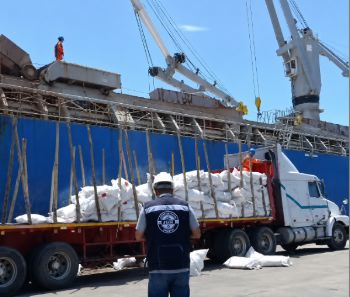
Reduced Peruvian supply availability, tightening inventories and rising raw material costs are pushing international prices to record highs and triggering a new wave of price increases for aquafeed in China.
Click on the image to enlarge it
The international fishmeal market entered July with a fresh acceleration in prices, driven by the combination of increasingly constrained supply from Peru and firm demand in China, where both fishmeal and aquafeed have experienced significant price increases.
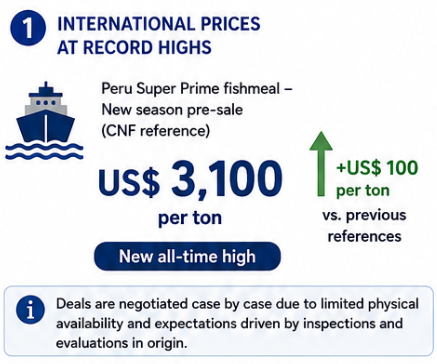
On the international market, the CNF reference price for pre-sales of Peru's new season Super Prime fishmeal reached US$3,100 per metric ton, an increase of US$100 per metric ton from previous quotations and a new all-time high for the product. Transactions continue to be negotiated on a case-by-case basis due to extremely limited physical availability and market expectations surrounding the outcome of on-site inspections and assessments in Peru.
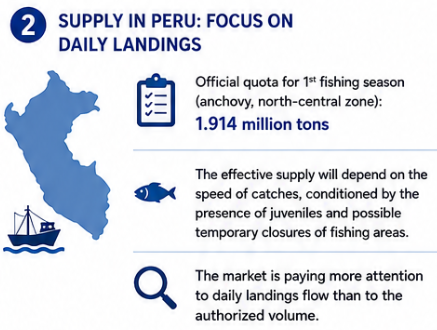
The strength of the market coincides with growing concern over the actual pace of production in Peru. Although the first anchovy fishing season in the north-central region maintains an official quota of 1.914 million metric tons, traders and analysts believe that the decisive factor for future supply will be the actual harvesting pace, which remains constrained by the presence of juvenile anchovy and temporary fishing closures. As a result, the market is paying closer attention to daily landings than to the official quota itself.
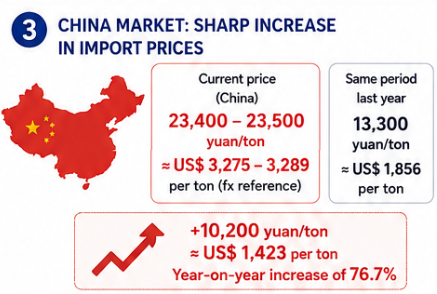
In China, tightening supply conditions are clearly reflected in the import market. Peruvian Super Prime fishmeal is currently trading between 23,400 and 23,500 yuan per metric ton, equivalent to approximately US$3,275–3,289 per metric ton (exchange rate reference), compared with 13,300 yuan per metric ton (approximately US$1,856 per metric ton) during the same period last year. This represents an increase of 10,200 yuan per metric ton, equivalent to approximately US$1,423 per metric ton, or a year-on-year gain of 76.7%.
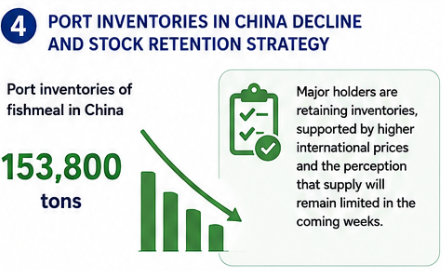
Meanwhile, fishmeal inventories at Chinese ports have continued to decline to 153,800 metric tons, while major holders are concentrating their inventories, supported by stronger international prices and expectations that supply will remain tight in the coming weeks.
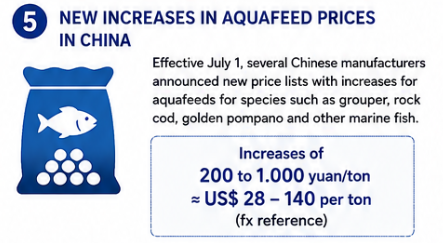
The tightening raw material market has already begun to impact the aquafeed industry. Effective July 1, several Chinese feed manufacturers announced new price lists with increases ranging from 200 to 1,000 yuan per metric ton, equivalent to approximately US$28–140 per metric ton (exchange rate reference), covering feeds for species including grouper, rock grouper, golden pomfret and other marine fish.
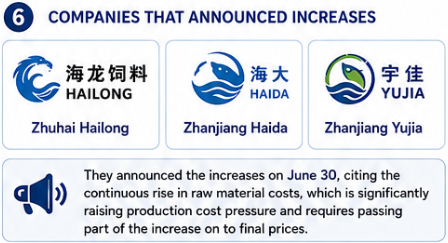
Companies including Zhuhai Hailong, Zhanjiang Haida, and Zhanjiang Yujia announced the increases on June 30, stating that the continued rise in raw material prices has significantly increased production cost pressure, making it necessary to pass part of those costs on to the market.
The current market reflects an increasing risk premium associated with supply availability. Rather than an exceptional surge in demand, the latest price rally is primarily driven by uncertainty over how quickly Peru will be able to convert its authorized anchovy quota into actual fishmeal and fish oil production. As long as this uncertainty persists and Chinese inventories continue to decline, the international market will remain focused on Peru's daily fishing performance, now regarded as the key price driver for the remainder of the third quarter.
Modern technology improves fishing prospects Norway
An unmanned vessel operating ahead of a trawler identifies the highest concentrations of the species in the upper water layers.
Scientists from SINTEF and the Norwegian University of Science and Tech...





 WORLDWIDE
.png)
 Print
Print