|
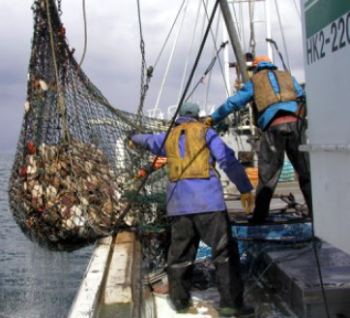
A major share of Okhotsk production continues to consist of 5S size, corresponding to approximately 60-80 pieces per kilogram.
Okhotsk Scallop Landings Down 17% as Industrial Yield Deteriorates
 JAPAN
JAPAN
Wednesday, September 09, 2026, 03:10 (GMT + 9)
Accumulated landings through late August reached approximately 150,890 tonnes, around 70% of the seasonal plan. Although the production delay is narrowing, low meat yields and the prevalence of small sizes pose a growing challenge for Japanese processors and marketers.
Hokkaido — The Okhotsk Sea scallop (Mizuhopecten yessoensis) harvest season is recovering part of the heavy lag observed at the start of summer, but the industry now faces a different challenge: obtaining sufficient commercial product from raw material characterized by lower yields and reduced sizes.
.png)
According to industry data published by Suisan Shimbun, accumulated landings through the end of August reached approximately 150,890 tonnes, down 17% year-on-year and equivalent to nearly 70% of the target program for the season.
The Northern Okhotsk zone produced around 64,990 tonnes, a 19% drop compared to a year earlier, while the Southern zone reached approximately 85,900 tonnes, reflecting a 16% decline.
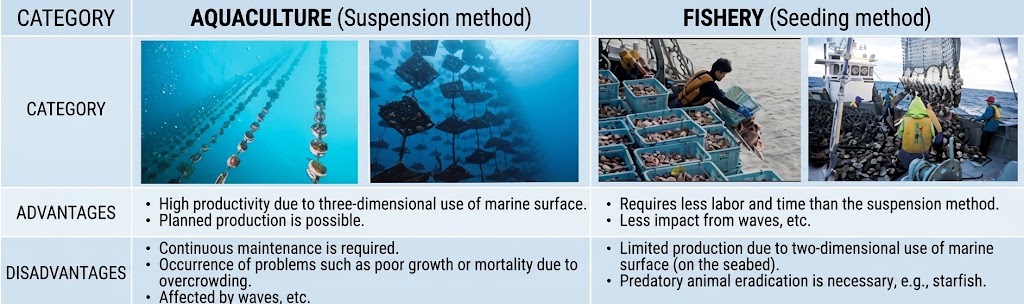
Click on the image to enlarge it
However, this trend marks a recovery compared to the initial months of the season. At the end of June, cumulative production recorded a decline close to 35%, whereas by late July the deficit had narrowed to approximately 24%.
The Challenge Shifts to Processing Yield
.png)
For the processing sector, the volume recovery is not fully resolving supply issues.
Meat yield currently stands around 10%-11%, with some northern areas reporting levels of barely 9%-10%, according to available industry benchmarks.
This means facilities must process a larger quantity of whole seafood to extract the same volume of commercial meat.
This reduction is particularly significant for the production of individually quick frozen (IQF) scallops, one of the Japanese industry's highest-value products.
For reference, technical documentation from the Fisheries Agency of Japan has historically applied a yield close to 11% to estimate frozen meat production from whole scallops.
A drop of even one or two percentage points can exert a substantial impact on costs, processing capacity utilization, and final product availability.
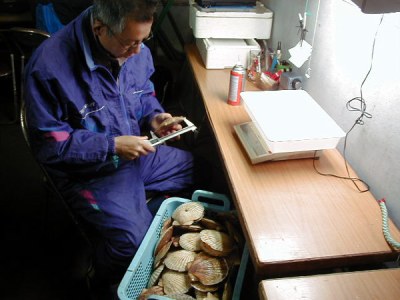
Photo: Stockfile/FIS
Prevalence of Small Sizes
Size distribution represents a second major hurdle.
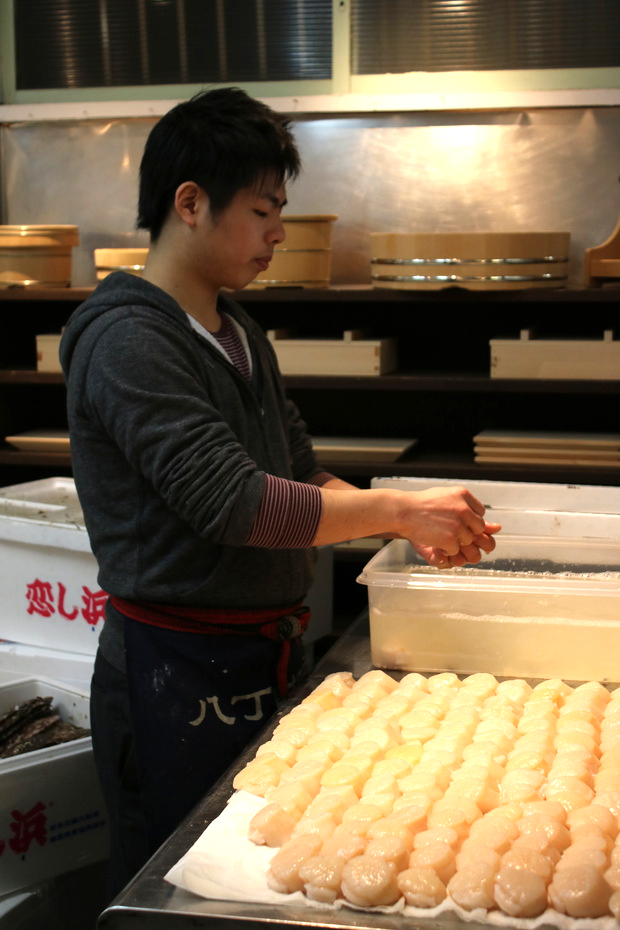
A major share of Okhotsk production continues to consist of 5S size, corresponding to approximately 60-80 pieces per kilogram.
Medium and large sizes typically command better opportunities in high-value international markets, whereas small sizes remain heavily dependent on domestic market absorption and specific processing segments.
The combination of less raw material, lower yields, and a dominance of small pieces is altering the traditional dynamics of a tight-supply campaign.
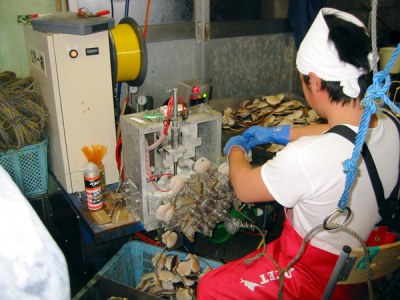
Photo: Stockfile/FIS
The scarcity of whole scallops is not automatically generating an equivalent price spike.
Raw Material Prices Soften
During the early months of the campaign, severe production lags kept dockside prices elevated.
At the end of June, some districts were trading raw material between the high 300 yen (US$ 2.00) level and over 400 yen per kilogram (US$ 2.67/kg), occasionally topping 500 yen/kg (US$ 3.33/kg).
However, as landings recovered, the market weakened, and by late August some reference prices fell into the lower 300 yen/kg (US$ 2.00/kg) range.
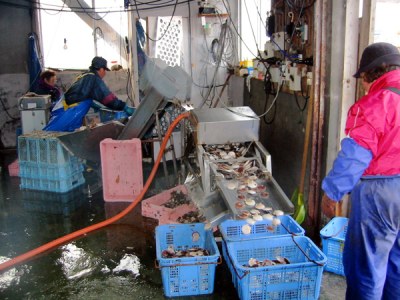
Photo: Stockfile/FIS
The price trajectory indicates that valuations are being shaped not only by landed volume, but also by industrial yield and size composition.
For processing plants, lower procurement prices may partially ease raw material costs, but they do not necessarily offset reduced meat recovery or output heavily skewed toward small sizes.
A Season Programmed Lower
The 2026 production target for Okhotsk is set at approximately 215,000 tonnes, roughly 15% below the previous season's total.
.jpg)
Photo: Stockfile/FIS
With around 70% of the program completed by the end of August, the landing pace leaves room to recover further ground lost earlier in the summer.
The key uncertainty for the market remains how much commercial product can actually be retrieved from that raw volume.
A second trade source, Suisan Keizai, places accumulated landings at approximately 147,900 tonnes, down 20% year-on-year.
This variance appears to reflect differences in statistical scope — such as the inclusion or exclusion of specific operating areas — meaning both series should be tracked separately until detailed breakdowns from local cooperatives or Hokkaido Gyoren become available.
<-- Photo: Stockfile/FIS
Despite the discrepancy, both sources agree on two fundamental facts: roughly 70% of the seasonal plan is complete, and small sizes continue to dominate frozen meat production.
If harvest rates continue to recover while meat yields remain depressed, the primary bottleneck of Japan's 2026 season may not lie in total scallop tonnage landed, but in the actual volume of commercial meat — particularly medium and large sizes — available for domestic and export markets.
🇯🇵 日本語 (Japanese Version) | AIによる自動翻訳
オホーツク産ホタテの水揚げ量が17%減少、歩留まり低下が加工現場の課題に
8月末時点の累計水揚げ量は約150,890トンで計画の約70%に到達。初期の大幅な遅れは回復傾向にあるものの、身肉の低歩留まりと小型サイズの偏りが日本の加工・販売業者にとって深刻な懸念材料となっています。
北海道、日本 — オホーツク海産ホタテ(Mizuhopecten yessoensis)の漁期は、初夏に見られた極端な水揚げの遅れから一部回復を示しているものの、水産業界は現在、低歩留まりと小粒傾向を示す原料からいかに十分な製品量を確保するかという新たな課題に直面しています。
水産新聞が発表した業界データによると、8月末時点の累計水揚げ量は約150,890トンにとどまり、前年同期比で17%減少、今期の計画数量に対して約70%の進捗となりました。
オホーツク北部の生産量は約64,990トンと前年比19%減少、南部は約85,900トンで16%の減少を記録しています。
ただし、この推移は漁期当初と比較すると一定の回復を示しています。6月末時点の累計生産量は前年比約35%減、7月末時点では約24%減まで打開が進んでいました。
課題は「数量」から「歩留まり」へ移行
加工セクターにとって、水揚げ量の回復が必ずしも原料供給問題の解決につながっているわけではありません。
業界の指標によると、現在の身肉歩留まりは10%-11%程度で推移しており、北部の一部の地域ではわずか9%-10%にとどまっています。
これは、従来と同量の製品肉を得るために、加工場がより多くの原貝を処理しなければならないことを意味します。
この歩留まり低下は、日本の水産業界において最も収益性の高い製品の一つである玉冷(個別急速凍結ホタテ貝柱)の製造に直接的な影響を及ぼします。
参考として、水産庁の技術資料では歴史的に、原貝から玉冷製品を換算する際の歩留まり指標として約11%が用いられてきました。
歩留まりが1〜2ポイント低下するだけでも、製造コスト、工場の稼働効率、そして最終製品の供給量に甚大な影響を及ぼします。
小型サイズ主導の生産動向
銘柄(サイズ)の構成比も第二のハードルとなっています。
オホーツク産の生産量の大部分は依然として5Sサイズ(1kgあたり約60〜80粒)に集中しています。
中型および大型サイズは高価格帯の輸出市場で好条件取引されますが、小型サイズは国内市場の消費能力や特定の加工用途に依存せざるを得ません。
原料の不足、低歩留まり、小粒化の重複により、供給制限下における従来の市場ダイナミクスが変化しています。
原貝の不足がそのまま製品価格の急騰へと直結しない状況が生じています。
原料浜価格は軟化傾向
漁期前半の深刻な遅れにより、浜価格は高値圏で推移していました。
6月末時点では、一部地区の浜価格が300円(US$ 2.00)台後半から400円/kg(US$ 2.67/kg)を超え、一時的に500円/kg(US$ 3.33/kg)を上回る局面も見られました。
しかし、水揚げの回復に伴い市場価格は軟化し、8月末には一部の指標価格が300円/kg(US$ 2.00/kg)台前半まで下落しました。
この価格推移は、取引価格が水揚げ数量だけでなく、加工歩留まりやサイズ構成によって強く影響を受けていることを示しています。
加工業者にとって、仕入れ価格の下落は原料コストを部分的に和らげるものの、出肉率の低下や小型サイズへの偏りを完全に補うものではありません。
前年割れを見込んでいた今期計画
オホーツク地域の2026年生産計画は前年実績を約15%下回る約215,000トンに設定されています。
8月末時点で計画の約70%を消化したことから、水揚げペース自体は夏初頭の遅れをさらに挽回する可能性を残しています。
市場における最大の問題は、この水揚げ量から実際にどれだけの製品肉を確保できるにかかっています。
もう一つの業界情報源である水産経済新聞によると、累計水揚げ量は約147,900トン(前年同期比20%減)とされています。
この数値の違いは、対象とする集計範囲や特定の操業区域の有無によるものとみられ、地元漁協やホクレン(北海道漁連)による詳細な確定データが出るまでは両データを分けて捉える必要があります。
ただし、両ソースともに、計画の約70%が完了している点、および玉冷生産において小型サイズが主流を占めているという核心的な点では完全に一致しています。
漁獲ペースの回復が続く一方で歩留まりの低迷が長期化した場合、2026年の日本産ホタテ市場における最大の制約要因は、水揚げ総重量ではなく、国内および輸出市場に供給できる実際の製品肉量(特に中・大型サイズ)となる可能性があります。
🇨🇳 中文 (Simplified Chinese Version) | 由人工智能自动翻译
鄂霍次克虾夷扇贝捕捞量下降17% 工业出肉率恶化引发加工难题
截至8月底的累计捕捞量约为150,890吨,完成季度计划的约70%。尽管生产滞后现象正在收窄,但出肉率偏低和规格偏小对日本加工商及贸易商构成日益严峻的挑战。
日本北海道 — 鄂霍次克海虾夷扇贝(Mizuhopecten yessoensis)捕捞季正在摆脱初夏的严重滞后局面,但水产行业如今正面临一个新的难题:如何从出肉率较低且规格偏小的原料中获取足够的商业成品。
根据水产新闻发布的行业数据,截至8月底的累计捕捞量达到约150,890吨,同比下降17%,约占本季度预定计划的70%。
鄂霍次克北部产区产量约为64,990吨,同比下降19%;南部产区产量约为85,900吨,同比下降16%。
不过,这一趋势相比产季初期的严重滞后已有所改善。截至6月底,累计产量同比下降近35%,而到了7月底,降幅已收窄至约24%。
行业焦点转向加工出肉率
对于加工行业而言,捕捞量的回升并未彻底解决原料供应问题。
根据现有行业参考数据,目前的扇贝出肉率维持在10%-11%左右,而北部部分产区的出肉率甚至低至9%-10%。
这意味着加工厂需要处理更多的带壳活贝,才能获得与往年相同数量的商业贝柱。
这种出肉率的下降对于单冻扇贝柱(IQF)的生产尤为关键,该产品是日本水产加工业中最具高附加值的产品之一。
作为参考,日本水产厅的技术文献在根据带壳扇贝推算冷冻贝柱产量时,历史上一直使用约11%的出肉率作为基准。
出肉率即使仅下降1到2个百分点,也会对生产成本、工厂产能利用率以及最终产品的市场供应量产生重大影响。
小规格产品占主导地位
规格构成代表了第二个主要挑战。
鄂霍次克产区的大部分产量继续集中在5S规格,相当于每公斤约60-80粒。
中大规格产品通常在高价值国际市场上拥有更好的溢价空间,而小规格产品则高度依赖日本国内市场的消化能力及特定深加工领域。
原料减少、出肉率降低以及小规格占主导的多重影响,正在改变供应受限情况下的常规市场动态。
带壳扇贝的紧缺并未自动引发等幅的价格上涨。
原料收购价格走软
在产季前几个月,由于捕捞进度严重滞后,码头收购价格一直居高不下。
截至6月底,部分产区的原料交易价格处于300日元(US$ 2.00)高位至400日元/公斤(US$ 2.67/kg)以上,局部高点甚至一度突破500日元/公斤(US$ 3.33/kg)。
然而,随着捕捞量的逐渐恢复,市场价格开始回落,截至8月底,部分参考价格已跌至300日元/公斤(US$ 2.00/kg)的低位区间。
价格走势表明,行情不仅受到捕捞总量的制约,还深受工业出肉率和规格构成的双重影响。
对于加工厂而言,采购价格的回落虽然可以部分缓解原料成本压力,但并不一定能弥补出肉率下降以及产品过于集中于小规格所带来的损失。
本季计划原本已下调
鄂霍次克产区2026年的生产计划定为约215,000吨,比上一季度的实际产量低约15%。
随着8月底已完成计划的约70%,捕捞节奏仍有可能进一步弥补夏初造成的缺口。
目前市场最大的不确定性在于,从这些捕捞总量中究竟能提取出多少合格的商业贝柱。
另一家行业消息来源水产经济新闻将累计捕捞量定为约147,900吨,同比下降20%。
这一数据差异似乎源于统计口径的不同 — 例如是否包含特定的作业区域或合作社 — 因此在获得当地渔协或北海道渔联(Hokkaido Gyoren)的最终明细数据之前,两套数据应予以分开参考。
尽管存在数据差异,两家机构在两个核心事实上的观点高度一致:产季计划已完成约70%,且小规格产品继续在冷冻贝柱生产中占据主导地位。
如果捕捞进度持续恢复但出肉率保持低迷,2026年日本扇贝产季的主要瓶颈可能不再是带壳扇贝的卸货吨数,而是能够真正供应给国内及出口市场的商业贝柱成品量(特别是中大规格产品)。
[email protected]
www.seafood.media
|





.jpeg)
 Print
Print