IN BRIEF - Western Australia Opens Aquaculture Pathways for Aboriginal Communities
AUSTRALIA
Thursday, September 10, 2026
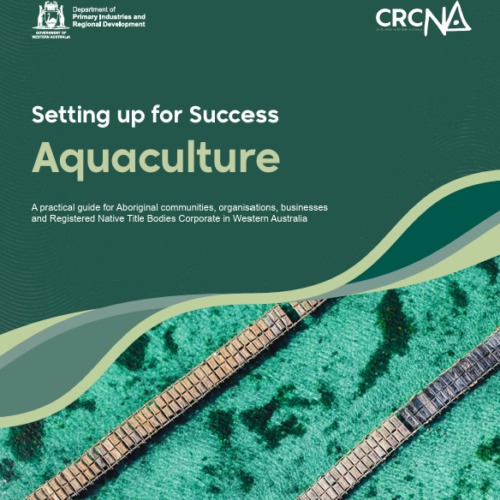
New guide explores species, production systems and business opportunities across northern WA
The Western Australian Government released a practical guide to help Aboriginal communities assess aquaculture ventures. It covers regulation, environmental risks and business models, highlighting sea cucumber, mud crab and black-lip pearl oyster farming.
The guide can serve as a starting point for developing hatcheries, grow-out operations, partnerships with fishing companies, and processing and marketing projects.The initiative creates opportunities for providers of technology, technical assistance, licensing, training, infrastructure, and specialized financing.
ProChile and Chile Mussel from Patagonia strengthen promotion after ABASTUR 2026
A Chilean delegation promoted Patagonian mussels through B2B meetings and gastronomy events in Mexico. ABASTUR gathered 20,000+ buyers and 600 exhibitors. Los Lagos accounts for over 95% of Chile's mussel production.
The delegation included companies representing the brands Landes, St. Andrews, Sudmaris, Camanchaca, and Manuelita, alongside invited firms Pacific Gold and Pesquera Catalunya, as well as representatives from the Chilean Mussel Farmers Association (AmiChile) and Chile Mussel from Patagonia.
New customs procedure links container suitability directly to export clearance
From October 1, 2026, China Customs will require pre-loading container checks via the International Trade Single Window. Electronic validation will be mandatory for export clearance, with approved results valid for 21 days.
According to the official explanation, carriers, freight companies, or their agents must request an inspection before stuffing via the International Trade Single Window and submit a declaration of conformity. Customs will review the documentation and, where appropriate, conduct physical checks before electronically validating the result.
FY2026 allocations secure key raw materials for Japan’s seafood processing industry
Japan’s METI set FY2026 import quotas at 227,000 tonnes of mackerel, 157,000 tonnes of herring and 50,800 tonnes of sardines, totaling 434,800 tonnes. Applications open progressively from October–November, under allocation schemes for importers, industrial users and other authorized operators.
The measure defines the potential import volume for three raw materials that are significant to the Japanese industry producing frozen, salted, and canned goods, as well as other processed products.
Support targets growers in Tainan and Chiayi after significant production losses
Taiwan’s Ministry of Agriculture opened applications Sept. 10–23 for oyster farmers with losses of at least 20%. Aid reaches NT$87,500/ha, NT$25,000 per raft and NT$15,000 per suspended line, subject to local verification.
The program seeks to accelerate the repair of facilities and the replacement of damaged seed stock, materials, and equipment.
Payments are contingent upon verification of losses by local authorities; therefore, the announced figures represent established maximum limits rather than an automatic grant.
German-based international group Saria has purchased 36.5 percent ownership of Chile-based Fiordo Austral – a company that uses organic byproducts and surpluses to produce animal and human nutrition products as well as agricultural products.
The alliance brings together two companies with complementary capabilities, Fiordo Austral said in a release, noting that it brings nearly 30 years of experience, deep knowledge of the Chilean salmon industry, a consolidated operation, and a leading global position in the commercialization of salmon meal and oil. Saria, through its business unit Bioceval, adds wide international experience, technical expertise in processing animal-derived byproducts, a global commercial platform, and a longstanding track record in developing high value-added ingredients.
Author: Christian Molinari / SeafoodSource | Read the full article here
As El Niño strengthens across the Pacific, shrimp farmers could face very different challenges depending on where they operate.
With El Niño dominating news headlines in recent months, it was also a recurring topic at the Global Shrimp Forum. Reinout van den Born, a meteorologist who runs Weerverteller, an online platform focused on weather and climate, outlined what the developing El Niño could mean for shrimp-producing regions around the world.In a short overview shown by video during the opening session, van den Born explained the basics behind El Niño, a natural phenomenon that occurs on average every two to seven years.
Source: The Fish Site | Read the full article here
Fish and seafood consumption globally is on the rise, while consumer interest in sustainability continues to grow, a survey by the Aquaculture Stewardship Council (ASC) has found.
ASC’s latest consumer research surveyed 14,795 seafood consumers across 14 countries between February and March 2026, examining seafood purchasing habits and changing attitudes towards seafood sustainability.
Source: fishfarmingexpert | Read the full article here
Water temperatures are falling, but delayed mortality continues to increase aquaculture losses.
In South Gyeongsang, heat stress has killed 6.58 million fish, 1.09 million abalone and 2,589 sea squirt lines at 365 farms since late July. Losses reached KRW 21.33 billion, despite seawater temperatures dropping below 28°C.
Fisheries and aquaculture output rose 2.63% in January-August
Vinh Long produced 659,661 tonnes of fisheries and aquaculture products in the first 8 months, up 2.63% year-on-year. August alone reached 80,429 tonnes, +2.39%. The province is also stepping up its fight against IUU fishing, with 100% of fishing vessels equipped with active VMS, while inspections and compliance controls will be reinforced.
KKP intensifies enforcement near the Philippine border to protect tuna migration and Indonesian fishers
Indonesia’s KKP removed 25 unlicensed FADs in WPPNRI 715, using patrol vessels Orca 01, Orca 05 and Hiu 13. Illegal FADs can disrupt tuna migration into Indonesian waters. In 2026, KKP has removed 37 FADs, safeguarding an estimated Rp14.8 billion. The operation also detained the 3-GT Philippine vessel Vitran 06 with four crew members for fishing without a permit.





 AUSTRALIA
 New guide explores species, production systems and business opportunities across northern WA
 MEXICO
.jpeg)
 CHINA
CHINA
 JAPAN
JAPAN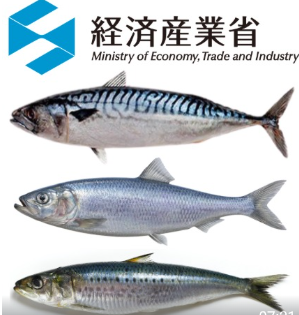 FY2026 allocations secure key raw materials for Japan’s seafood processing industry
 TAIWAN
.png) Support targets growers in Tainan and Chiayi after significant production losses
Support targets growers in Tainan and Chiayi after significant production losses GERMANY
.png) German-based international group
German-based international group  WORLDWIDE
.png) As El Niño strengthens across the Pacific, shrimp farmers could face very different challenges depending on where they operate.
As El Niño strengthens across the Pacific, shrimp farmers could face very different challenges depending on where they operate..png) Fish and seafood consumption globally is on the rise, while consumer interest in sustainability continues to grow, a survey by the
Fish and seafood consumption globally is on the rise, while consumer interest in sustainability continues to grow, a survey by the  SOUTH KOREA
.png)
 VIET NAM
 Fisheries and aquaculture output rose 2.63% in January-August
 INDONESIA
.png)