|
Photo: VASEP/FIS
Vietnam's Seafood Exports Exceed $9 Billion in First Nine Months, but Growth Slows in Fourth Quarter
 VIET NAM
Friday, October 02, 2026, 05:00 (GMT + 9)
Export momentum through September highlights market divergence, with strong gains in China and ASEAN offsetting declines in the US, EU, and Japan
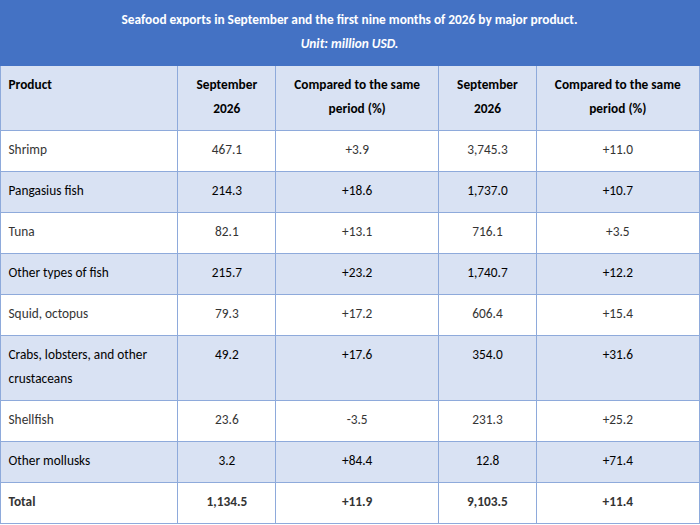
Vietnam's seafood exports reached an estimated US$1.135 billion in September 2026, representing an 11.9% increase compared to the same period last year. This result brought the cumulative total for the first nine months of the year to US$9.103 billion, up 11.4% year-on-year.
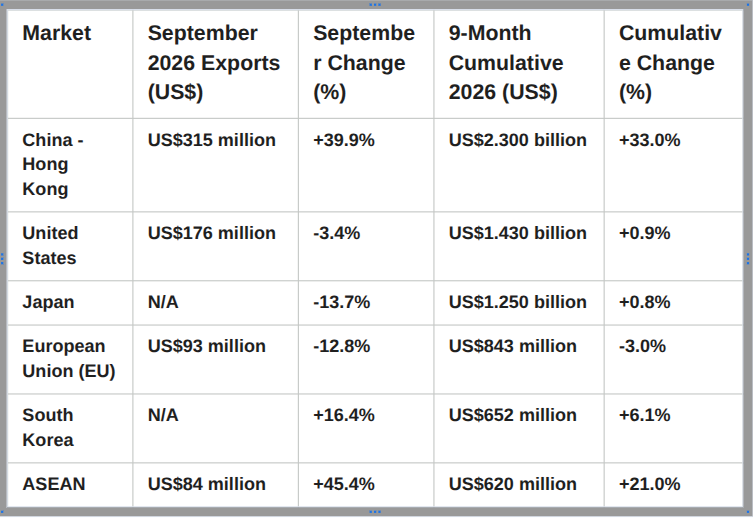
 FIS Seafood Media(2)(3).jpg) Despite double-digit overall growth, market performance diverged significantly across major destinations. China-Hong Kong and ASEAN countries recorded strong expansion, while the United States, the European Union (EU), and Japan all experienced declines in September, according to Ms. Le Hang, Deputy Secretary General of the Vietnam Association of Seafood Exporters and Producers (VASEP).
Although September maintained export turnover above US$1.1 billion with a higher growth rate than August, the total monthly export value was slightly lower than the previous month. This performance indicates that while transaction volumes remain high toward the end of the year, growth momentum is uneven across product categories and regions.
Performance by Key Marine Product Categories
Export results across major product groups varied in growth rates and overall impact on trade balances:
-
Shrimp (Penaeus vannamei / Penaeus monodon): Exports of shrimp—which accounts for approximately 41% of Vietnam's total seafood exports—reached US$467 million in September. Cumulative exports for the first nine months totaled US$3.75 billion, an 11% increase. However, the slower growth rate in September (3.9%) reflects pressure on order expansion due to supply competition and market absorption constraints. In the US, frozen shrimp sales revenue increased due to higher prices, even as sales volumes declined in August. Meanwhile, the EU reduced its imports of raw shrimp.
-
Pangasius (Pangasianodon hypophthalmus): Freshwater catfish performed strongly in September, reaching approximately US$214 million (+18,6%). Cumulative sales reached US$1.74 billion, up 10.7%. Tighter supply of certain wild-caught whitefish created additional market opportunities for pangasius. In Japan, importer Kyokuyo continued introducing pangasius through professional distribution channels.
Source: VASEP. Click on the image to enlarge it
-
Tuna (Thunnus spp.): Export turnover reached US$82 million in September (+13.1%), bringing the nine-month total to US$716 million (+3.5%). Although demand for canned tuna improved in the US, the market outlook remains dependent on US import conditions and fishing documentation requirements in the EU.
-
Other Marine Species: Exports of various marine fish reached US$1.741 billion in the first nine months (+12.2%). Cephalopod exports (squid and octopus) reached US$606 million (+15.4%), while crabs, lobsters, and other crustaceans reached US$354 million (+31.6%). Bivalve mollusks reached US$231 million (+25.2%), despite a 3.5% contraction in September.
The China-Hong Kong market emerged as the primary growth driver, accounting for roughly a quarter of Vietnam's total seafood exports. Additional demand from this market contributed approximately 62% of the overall absolute increase in export value. However, the reopening of fishing grounds in the Yellow Sea-Bohai region in early September and the restoration of export permits for Ecuadorian shrimp facilities could exert downward pressure on prices.
In contrast, exports to the United States fell 3.4% in September, hindered by additional tax costs and MMPA/COA compliance requirements. In the EU, shipments declined 12.8% for the month, taking cumulative results down 3%. Japan also recorded a monthly decline of 13.7%, lowering its nine-month cumulative growth to a marginal 0.8%.
Full-Year Outlook
Following rapid expansion in the third quarter, seafood exports are expected to slow during the fourth quarter. A significant portion of orders for year-end consumption was delivered ahead of schedule, limiting the potential for additional purchasing.
Despite these headwinds, total full-year seafood exports for 2026 are projected to reach approximately US$12.000 billion.
The sector faces challenges across both supply and demand: farmed shrimp, pangasius, and tilapia face raw material supply constraints, while wild-capture fisheries face strict origin and traceability requirements. Fourth-quarter export volumes are expected to be lower than third-quarter levels, narrowing overall annual growth compared to the double-digit pace set through September.
🇯🇵 日本語 (Japanese Version) | AIによる自動翻訳
ベトナムの水産物輸出、第3四半期までに90億ドルを突破も第4四半期に減速傾向
9月までの輸出勢いは市場間で明暗が分かれ、中国およびASEANでの好調が米国、EU、日本での減少を補う
ベトナムの水産物輸出額は2026年9月に推計11億3,500万米ドルに達し、前年同期比11.9%増を記録しました。これにより、年初9か月間の累計輸出額は91億300万米ドルとなり、前年同期比11.4%増となりました。
全体として2桁の成長を維持しているものの、主要市場間での格差が鮮明になっています。ベトナム水産物輸出生産者協会(VASEP)のレ・ハン副事務局長の報告によると、中国・香港およびASEAN向けが堅調な伸びを示した一方で、米国、欧州連合(EU)、日本向けは9月にいずれも減少に転じました。
9月の輸出額は11億米ドル以上の高水準を維持し、8月を上回る増加率を記録したものの、月間輸出額自体は前月をわずかに下回りました。この結果は、年末に向けた取引量が引き続き維持されている一方で、製品分野や地域ごとの成長の勢いが一様ではないことを示しています。
主要水産物カテゴリー別の動向
主要品目別の輸出結果は、成長率および貿易収支への貢献度において多様な動きを見せました。
-
エビ(バナメイエビ / ウシエビ - Penaeus vannamei / Penaeus monodon): 水産物輸出全体の約41%を占めるエビの9月の輸出額は4億6,700万米ドルとなり、最初の9か月間の累計は前年同期比11%増の37億5,000万米ドルに達しました。しかし、9月の伸び率(3,9%)の鈍化は、供給競合や市場の購買力低下により新規受注拡大が圧迫されていることを示しています。米国では単価上昇により冷凍エビの売上高が増加したものの、8月の販売量は減少しました。一方、EUでは生むきエビの輸入が減少しました。
-
パンガシウス(Pangasianodon hypophthalmus): 淡水ナマズ類のパンガシウスは9月に約2億1,400万米ドル(+18.6%)と好調に推移し、累計売上高は17億4,000万米ドル(+10.7%)に達しました。天然白身魚の供給逼迫がパンガシウスの需要を押し上げました。日本市場では、極洋が業務用ルートを通じてパンガシウスの供給を継続的に拡大しています。
-
マグロ(Thunnus spp.): 9月の輸出額は8,200万米ドル(+13.1%)に達し、9か月間の累計は7億1,600万米ドル(+3.5%)となりました。米国では缶詰の売上が回復傾向にあるものの、今後の見通しは米国の輸入条件やEUの漁獲証明文書要求に依存しています。
-
その他の水産物: その他の鮮魚類は9か月間で17億4,100万米ドル(+12.2%)に達しました。頭足類(イカ・タコ)は6億600万米ドル(+15.4%)、カニ・ロブスター等の甲殻類は3億5,400万米ドル(+31.6%)となりました。二枚貝類は9月単月で3.5%減少したものの、累計では2億3,100万米ドル(+25.2%)を記録しました。
主要輸出先市場別の動向
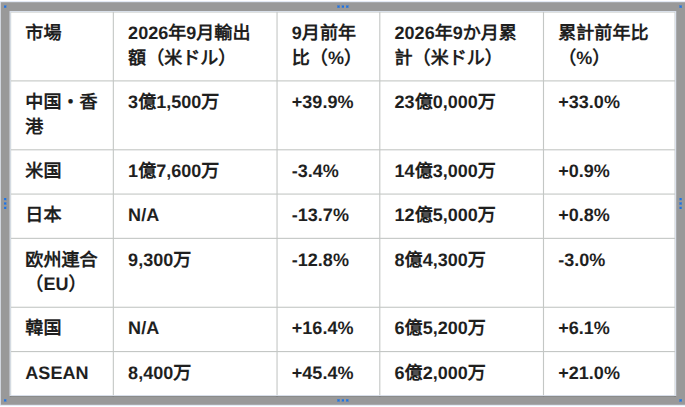
中国・香港市場は最大のエクスポートドライバーであり、ベトナムの水産物輸出全体の約4分の1を占めました。同市場からの増加分は、輸出額全体の対前年増分量の約62%を占めています。しかし、9月上旬からの黄海・渤海海域における休漁期の終了に伴う現地供給の増加や、エクアドル産エビ処理施設に対する輸出許可の再開が、価格に対する下押し圧力となる可能性があります。
対照的に、米国向けは追加税コストやMMPA/COA規制の影響を受けて9月に3.4%減少しました。EU向けは月間12.8%減となり、累計で3%減少しました。日本向けも月間13.7%減を記録し、9か月間の累計成長率は0.8%に留まりました。
通期見通し
第3四半期の急速な拡大の後、第4四半期の水産物輸出は減速すると予想されます。年末消費に向けた受注の多くが前倒しで出荷されたため、追加の購買意欲は限定的です。
これらの課題にもかかわらず、2026年通期の水産物輸出総額は年間目標の約120億米ドルに達する見込みです。
業界は供給と需要の両面で課題に直面しています。エビ、パンガシウス、ティラピアなどの養殖品種は原料不足に直面しており、天然漁獲物もトレーサビリティや原産地証明の厳格化に対応する必要があります。第4四半期の業績は第3四半期を下回る可能性が高く、通期の成長率は第3四半期までの2桁成長から縮小する見通しです。
🇨🇳 中文 (Simplified Chinese Version) | 由人工智能自动翻译
越南水产品出口前九个月突破90亿美元 但第四季度增长放缓
截至9月的出口势头显示出市场分化,中国和东盟的强劲增长弥补了美国、欧盟和日本的下滑
越南 水产品 出口额在 2026年9月 估计达到 11.35亿美元,同比增长 11.9%。这一结果使今年前 9个月 的累计出口额达到 91.03亿美元,同比增长 11.4%。
尽管整体保持了 两位数 的增长,但主要出口市场之间的分化日益明显。根据 越南水产出口商和生产者协会(VASEP) 副秘书长 Le Hang女士 报告,中国-香港 和 东盟 市场实现了强劲增长,而 美国、欧盟(EU) 和 日本 在 9月 均出现下滑。
虽然 9月 的出口额继续保持在 11亿美元 以上,且同比增速高于 8月,但当月的绝对出口额略低于上月。这一结果表明,尽管行业在年底前仍保持着较大的交易量,但各产品类别和区域的增长势头并不均衡。
主要水产品类别出口表现
各大主要水产品类别的出口增长率及其对贸易平衡的贡献呈现多样化:
-
对虾(凡纳滨对虾 / 斑节对虾 - Penaeus vannamei / Penaeus monodon): 对虾约占越南水产品出口总额 glance 的 41%,其 9月 出口额估计为 4.67亿美元,前 9个月 累计达 37.5亿美元,同比增长 11%。然而,9月 较低的增长率(3.9%)表明,由于供应竞争和市场吸收能力有限,扩大订单的潜力面临压力。在 美国,尽管 8月 销售量下降,但由于价格上涨,冻虾销售额有所增加。同时,欧盟 减少了生虾的进口。
-
巴沙鱼(Pangasianodon hypophthalmus): 鲶鱼类产品在 9月 表现较好,出口额约 2.14亿美元(+18.6%);前 9个月 累计销售额达到 17.4亿美元(+10.7%)。部分野生捕捞白肉鱼供应趋紧,为巴沙鱼创造了额外的市场机遇。在 日本,水产巨头 极洋(Kyokuyo) 继续通过专业分销渠道推广巴沙鱼。
-
金枪鱼(Thunnus spp.): 9月 出口额达 8200万美元(+13.1%),前 9个月 累计达 7.16亿美元(+3.5%)。尽管 美国 罐头金枪鱼的需求有所改善,但未来前景仍取决于美国的进口条件和 欧盟 的捕捞证明文件要求。
-
其他海洋物种: 前 9个月 各种海洋鱼类出口额达到 17.41亿美元(+12.2%)。头足类(鱿鱼和章鱼)出口额达 6.06亿美元(+15.4%);螃蟹、龙虾及其他甲壳类达 3.54亿美元(+31.6%)。双壳贝类累计达到 2.31亿美元(+25.2%),尽管 9月 单月下降了 3.5%。
主要出口市场表现
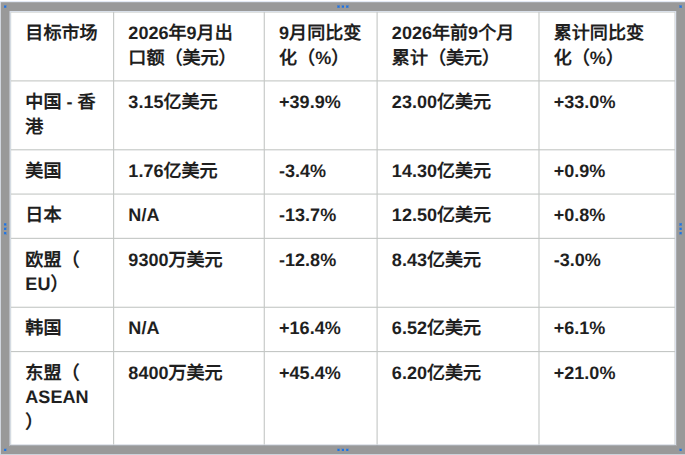
中国-香港 市场是最突出的增长引擎,约占越南水产品出口总额的四分之一。该市场的增量贡献约占越南水产品出口总额同比增量的 62%。然而,自 9月 初以来 黄海-渤海 海域的开捕补充了中国本土水产品供应,加上厄瓜多尔部分虾类加工厂出口资质的恢复,可能会给价格带来下行压力。
相比之下,受额外税收成本和 MMPA/COA 合规要求的影响,对 美国 的出口在 9月 下降了 3.4%。在 欧盟,当月出口下降 12.8%,累计下降 3%。日本 在 9月 也录得 13.7% 的下滑,使其前 9个月 的累计增长率仅为 0.8%。
全年展望
在 第三季度 快速增长之后,预计 第四季度 水产品出口将有所放缓。由于许多年底消费订单已提前进口和交付,维持前几个月的高采购量面临挑战。
尽管面临这些挑战,预计 2026年 全年 水产品 出口总额仍将达到约 120.00亿美元。
该行业在供需两端均面临挑战:对虾、巴沙鱼和罗非鱼等养殖品种面临原料供应限制,而捕捞水产品则受到严格的溯源和原产地要求约束。第四季度的出口业绩可能低于第三季度,全年总增长率相比前九个月的两位数增幅将有所收窄。
[email protected]
www.seafood.media
|




.png)
 Print